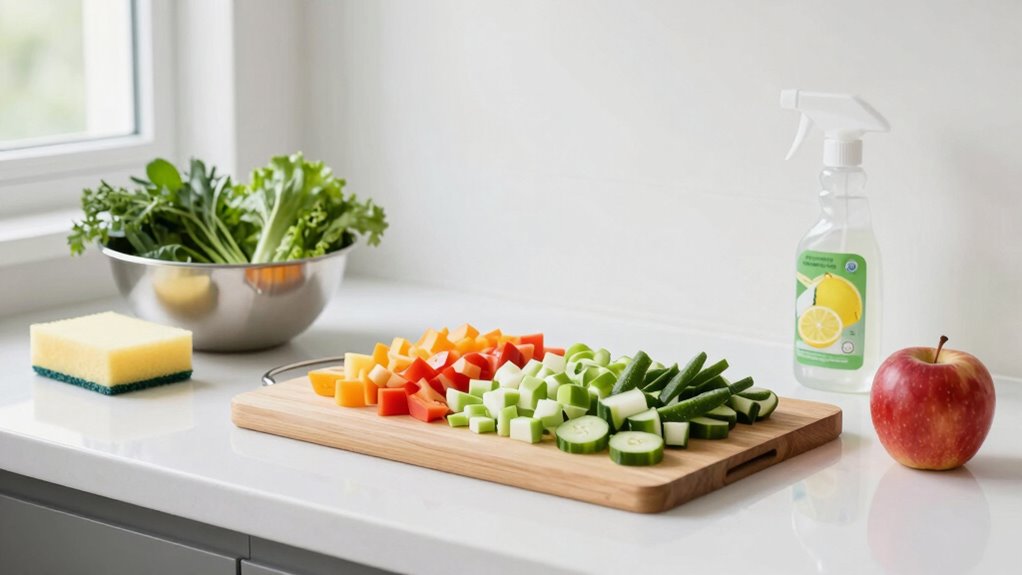
Like a chef’s apron protects against spills, your kitchen habits shield your family from foodborne illness. You’ll want to start by washing your hands thoroughly before touching any food. Keep raw meats separate from vegetables on different cutting boards. Store perishables at proper temperatures and clean surfaces regularly. These simple steps prevent contamination and keep everyone healthy. What other kitchen practices do you follow to maintain food safety at home?
Wash Hands Thoroughly Before Cooking

Before you begin any cooking activity, always wash your hands thoroughly with soap and warm water for at least 20 seconds.
This simple step prevents transferring bacteria and viruses to your food. Wet your hands, apply soap, and scrub all surfaces including palms, backs, between fingers, and under nails.
Don’t forget to clean your thumbs and fingertips where germs typically hide. Rinse thoroughly with warm water and dry with a clean towel.
You should also wash hands after touching raw meat, poultry, or eggs. Proper handwashing reduces foodborne illness risk by up to 20%.
Make this habit automatic – your family’s health depends on it. Remember: clean hands mean safe food for everyone you love.
Sanitize Countertops and Cutting Boards After Prep
After washing your hands thoroughly, you must sanitize countertops and cutting boards immediately after food preparation.
Bacteria spreads quickly on these surfaces, especially when handling raw ingredients. Use a solution of one tablespoon bleach per gallon of water, or commercial sanitizing wipes designed for kitchen surfaces. Focus on areas where you’ve placed cutting boards, bowls, or utensils.
Don’t forget to sanitize the faucet handles themselves. Allow surfaces to air dry rather than wiping them down, which can spread contaminants.
For cutting boards, consider using separate boards for different food types to minimize cross-contamination. Regular sanitization prevents harmful bacteria from multiplying and protects your family’s health.
Make this step part of your routine—your kitchen stays cleaner longer when you sanitize consistently after each cooking session.
Keep Raw and Cooked Foods Separated
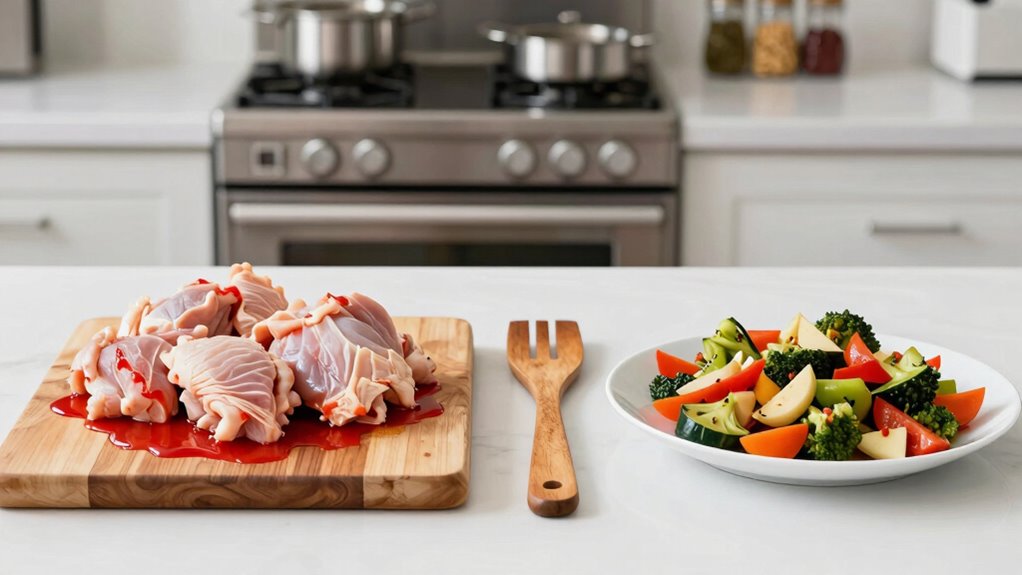
You must use separate cutting boards for raw meats and cooked foods to prevent cross-contamination that can cause foodborne illness.
Store raw ingredients below cooked items in your refrigerator, and always clean utensils thoroughly between handling different food types.
These simple practices stop harmful bacteria from spreading between your raw and ready-to-eat foods.
Use Separate Cutting Boards
Using separate cutting boards for raw and cooked foods prevents cross-contamination that can lead to foodborne illness. You should designate one board for raw meats, poultry, and seafood, and another for vegetables, fruits, and ready-to-eat foods. This simple practice stops harmful bacteria from spreading between foods that won’t be cooked again.
Choose boards made of non-porous materials like plastic or glass for raw proteins since they’re easier to sanitize. Wood boards work well for produce and breads. Color-coding helps you remember which board to use – red for meats, green for vegetables.
Clean your boards thoroughly after each use with hot, soapy water. Sanitize plastic boards with bleach solution or run them through the dishwasher. Replace boards when they become heavily scored or worn.
Store Foods Apart
Separating raw and cooked foods during storage follows the same contamination prevention principle as using different cutting boards.
You should always store raw meats, poultry, and seafood on the bottom shelf of your refrigerator to prevent juices from dripping onto ready-to-eat foods.
Keep cooked foods on higher shelves where they stay protected from raw food contamination.
Use sealed containers or wrapping for both raw and cooked items to create additional barriers.
This simple practice stops harmful bacteria from spreading throughout your fridge and keeps your family safe from foodborne illnesses.
Clean Utensils Thoroughly
While preparing meals, always clean utensils thoroughly after they contact raw meats, poultry, or seafood before using them with cooked foods.
Cross-contamination happens quickly when you use the same spoon for raw chicken and then dip it into your finished soup. You’re not being dramatic—it’s a real health risk.
Keep separate cutting boards for raw proteins and everything else. After handling raw meat, wash knives, spoons, and boards with hot, soapy water immediately.
Sanitize surfaces with a bleach solution or run items through the dishwasher. Don’t leave dirty utensils in the sink with clean ones.
Your family trusts you to keep them safe, and proper cleaning prevents foodborne illnesses that could ruin holidays and family gatherings.
Store Perishables at Safe Temperatures
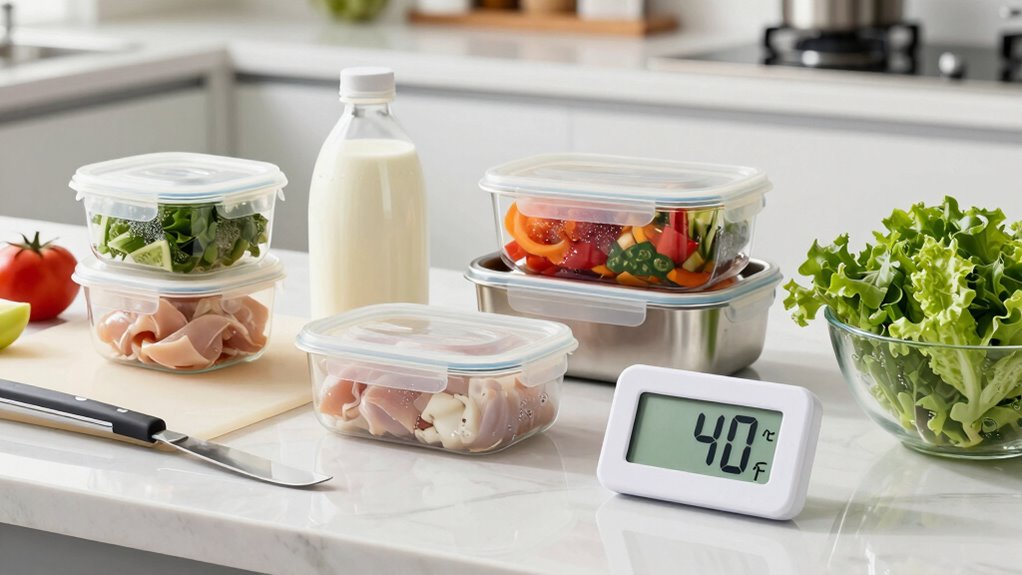
When you store perishables at proper temperatures, you greatly reduce the risk of bacterial growth and foodborne illness.
Keep your refrigerator at 40°F or below and your freezer at 0°F or below for ideal food safety.
- Check your fridge temperature regularly with an appliance thermometer to verify it stays in the safe zone
- Store raw meat on the bottom shelf to prevent juices from dripping onto other foods
- Don’t overload your refrigerator because crowded conditions prevent proper air circulation
- Use the two-hour rule – refrigerate perishables within two hours of cooking or purchasing
These simple steps protect your family’s health while maintaining food quality and freshness.
Use Different Boards for Meat and Produce
Using different cutting boards for meat and produce prevents cross-contamination that can lead to foodborne illness. You should designate specific boards for raw meat, poultry, and seafood, keeping them separate from boards used for fruits and vegetables.
This separation stops harmful bacteria like Salmonella and E. coli from spreading between foods. Color-coded boards work well – red or yellow for meats, green for produce.
Clean your boards thoroughly after each use with hot, soapy water, or run them through the dishwasher when possible. Replace wooden boards when they become deeply scratched or discolored, as bacteria can hide in these grooves.
Having multiple boards ready means you’re always prepared to handle food safely. This simple habit protects your family’s health while building confidence in your cooking skills.
Rinse Fruits and Veggies Before Use

Everyone should rinse fruits and vegetables before eating or cooking with them.
You’ll remove dirt, bacteria, and pesticide residues that accumulate during growing and transport.
- Run cold water over all produce, even items with inedible peels like oranges and bananas
- Use a clean brush to scrub firm produce like potatoes, carrots, and melons
- Pat dry with clean paper towels to remove lingering bacteria
- Don’t use soap or commercial produce washes – plain water works best
Rinsing isn’t just about cleanliness; it’s about protecting your family’s health.
You’re taking simple steps that make a real difference in your kitchen safety.
Check Expiration Dates Before Use
Why shouldn’t you ignore expiration dates on your kitchen items? Expiration dates protect your health by indicating when food loses safety and quality.
You shouldn’t rely on smell or appearance alone – harmful bacteria can grow without detectable changes. Check dates before cooking to prevent foodborne illness that could affect your family.
Always examine “use by” dates on perishables like meat, dairy, and eggs. “Best by” dates matter for peak taste and nutrition.
Store items properly and rotate older products to the front. When in doubt, throw it out – it’s better than risking sickness.
You’re not being wasteful by following expiration guidelines; you’re being responsible. Your family’s health depends on these simple checks.
Make date-checking part of your cooking routine.
Defrost Food Safely Overnight or in Microwave
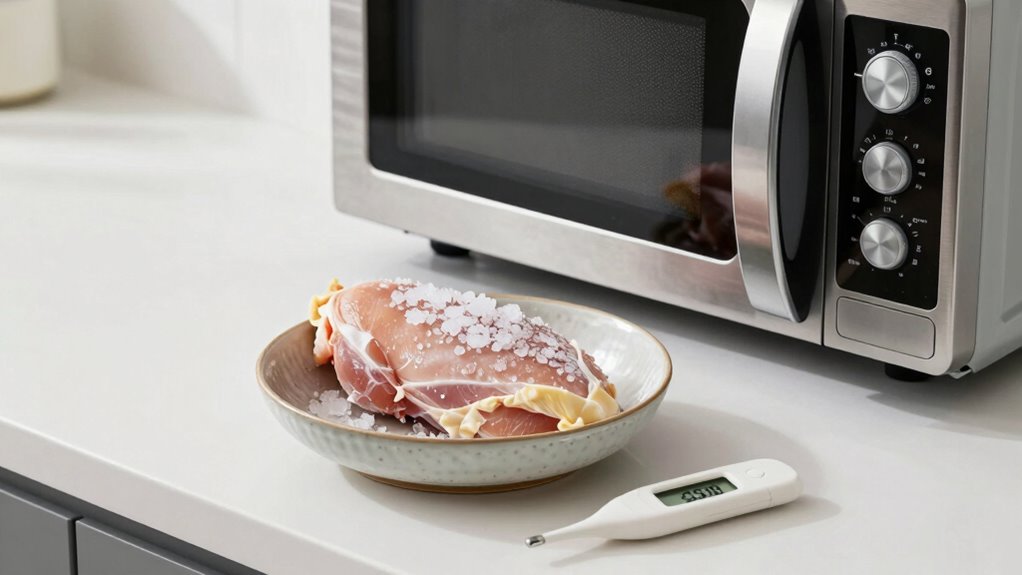
The safest way to defrost food involves planning ahead or using your microwave’s defrost setting properly. You should avoid leaving food at room temperature, which creates bacterial growth opportunities.
- Plan overnight defrosting by moving frozen items from freezer to refrigerator 8-12 hours before cooking.
- Use microwave defrost settings when you forget to plan ahead, but cook immediately after thawing.
- Check food thickness because thicker items need longer defrosting times than thin cuts.
- Rotate food during microwave defrosting to guarantee even thawing and prevent some areas from cooking while others remain frozen.
These methods keep your family safe while maintaining food quality.
Remember that proper defrosting prevents harmful bacteria growth that causes foodborne illness.
Prevent Cross-Contamination With Clean Tools
When you handle raw meat, poultry, or seafood, bacteria can transfer to your hands, utensils, and surfaces, which then spread to other foods and cause illness.
You should always use separate cutting boards for raw proteins and ready-to-eat foods like vegetables or bread. Keep dedicated knives, tongs, and plates for raw items, then switch to clean tools for cooked food.
Wash your hands thoroughly with soap for at least twenty seconds after touching raw ingredients. Sanitize surfaces with hot, soapy water between tasks.
Store raw meat below other foods in your refrigerator to prevent dripping.
Using clean tools consistently protects your family’s health and creates safer meals for everyone you love.
Replace Dirty Dish Towels and Sponges
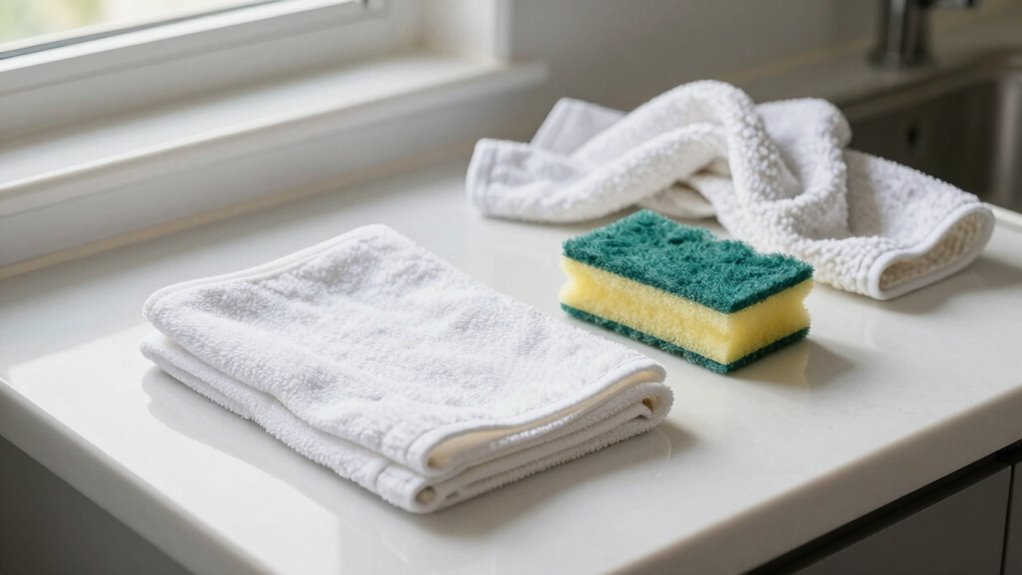
Dirty dish towels and sponges harbor bacteria that can multiply rapidly and contaminate clean dishes, utensils, and surfaces. You need to replace these items regularly to maintain a hygienic kitchen environment.
- Replace sponges weekly – Bacteria colonies double every 20 minutes on moist sponges, making weekly replacement essential for food safety.
- Use separate towels for drying – Designate specific towels only for drying clean dishes, keeping them separate from towels used for wiping surfaces.
- Wash dish towels after each use – Hot water and detergent eliminate 99% of bacteria, preventing cross-contamination between meals.
- Store replacements properly – Keep spare sponges and clean towels in a dry location, away from sink areas where airborne bacteria thrive.
Sanitize Spatulas, Knives, and Tools Daily
Kitchen tools like spatulas, knives, and cutting boards can harbor harmful bacteria even after washing, making daily sanitization a must. You should sanitize these items after each use, especially when handling raw meat, poultry, or seafood.
Simply washing with soap and water isn’t enough to eliminate all pathogens. Use a sanitizing solution of one tablespoon bleach per gallon of water, or run dishwasher-safe items through a sanitizing cycle.
For wooden cutting boards, apply hydrogen peroxide or white vinegar after cleaning. Don’t forget to sanitize handles and hard-to-reach areas where bacteria hide.
This daily habit protects your family from foodborne illness and creates a cleaner, safer cooking environment for everyone.
Cool and Store Leftovers Promptly
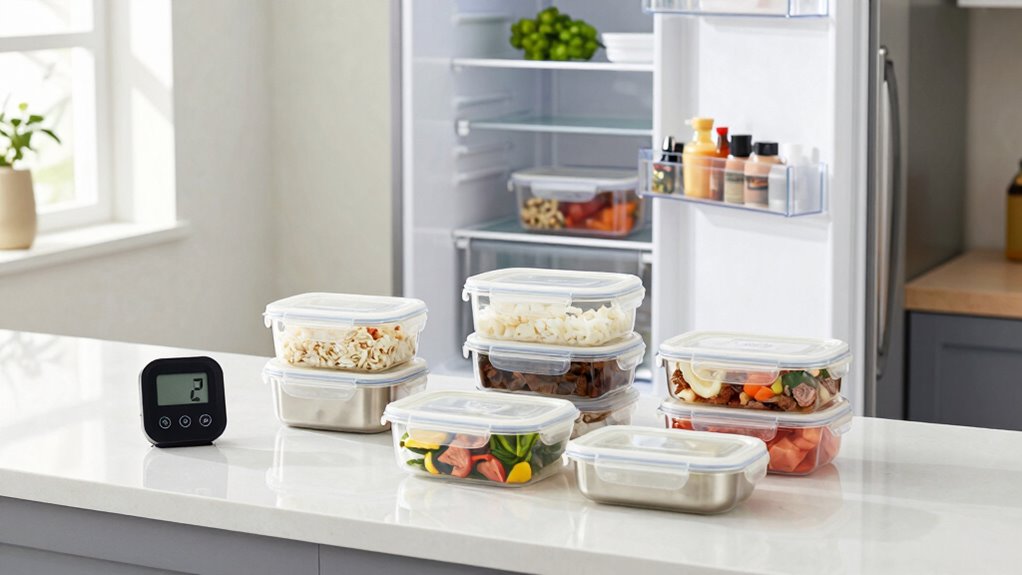
You should cool and store leftovers within two hours of cooking to prevent bacterial growth that can lead to food poisoning.
Don’t let your hard work go to waste or put your family at risk.
- Divide large portions into smaller containers to cool faster and guarantee even temperature distribution.
- Use shallow containers rather than deep bowls to speed up the cooling process.
- Place hot food directly into the refrigerator – modern fridges can handle the heat.
- Label containers with dates so you know when to consume items first.
Following these simple steps protects your family’s health while maintaining food quality.
Everyone deserves safe, delicious meals at home.
Seal Food to Prevent Pest Access
Properly sealing food containers prevents pests like ants, roaches, and rodents from accessing your stored food items. You should always use airtight containers made of glass, plastic, or metal with tight-fitting lids.
Transfer bulk items like flour, sugar, and rice from their original packaging into sealed containers immediately. Check container seals regularly and replace damaged ones promptly.
Store pet food in sealed containers too, as it attracts the same pests. Keep pantry items off the floor on shelves or in cabinets.
You’ll find that proper food storage eliminates common entry points pests use to contaminate your kitchen supplies. This simple step protects your family’s health and saves money by preventing food waste from pest damage.
Clean Sink and Drain Regularly
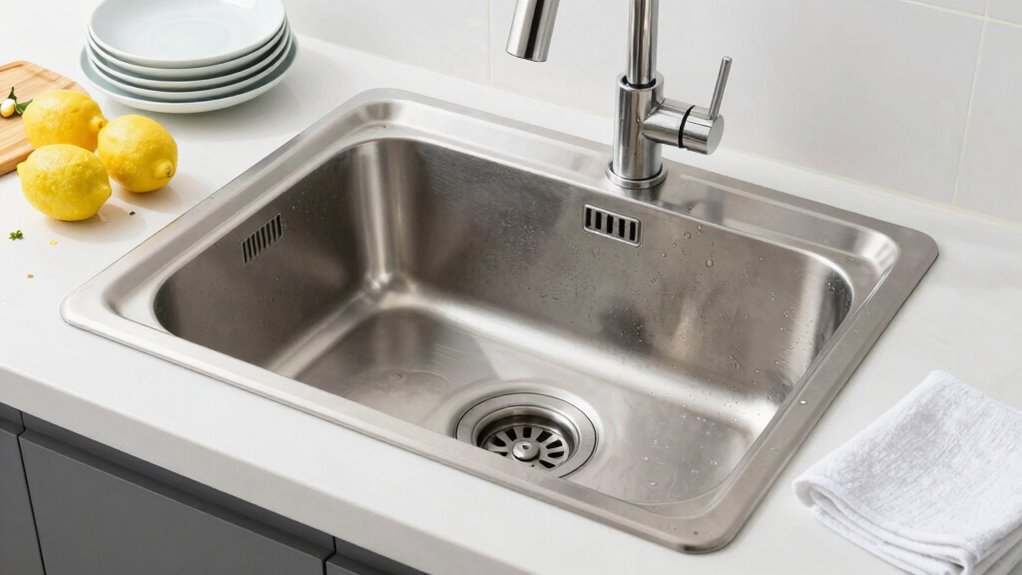
While keeping food sealed prevents pests from entering your pantry, maintaining a clean sink and drain stops them from thriving in areas where they’re most likely to gather.
You should clean these areas regularly because bacteria and food particles accumulate quickly.
- Scrub your sink with hot, soapy water daily to remove food residue that attracts pests.
- Pour boiling water down drains weekly to kill bacteria and clear buildup.
- Use baking soda and vinegar monthly to deep clean drains and eliminate odors.
- Wipe down faucet handles and sink edges regularly since these spots collect grease and bacteria.
Regular cleaning prevents pest infestations and keeps your kitchen hygienic for food preparation.
Refrigerate Food Within Two Hours
When food sits at room temperature for more than two hours, bacteria multiply rapidly and increase your risk of foodborne illness.
You should refrigerate leftovers, prepared meals, and perishable items immediately after cooking or purchasing. Bacteria growth accelerates between 40°F and 140°F, making prompt refrigeration essential for food safety.
Don’t wait until tomorrow to store today’s meals. Your family’s health depends on proper food handling practices. Make it a habit to transfer hot foods to shallow containers for faster cooling. Set timers if you’re unsure when two hours have passed.
Remember that this two-hour rule includes the time food spends traveling from store to home. You’re not just protecting yourself, but everyone who shares your meals.
Safe food storage shows you care about your loved ones’ wellbeing.
Store Fridge Items in Zones Safely
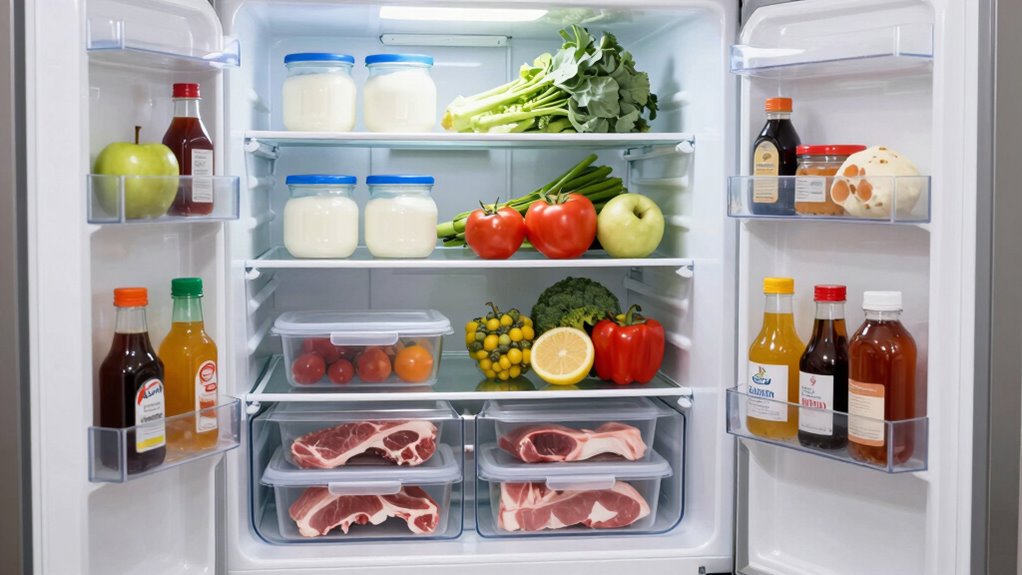
You should organize your refrigerator into three safe zones to prevent cross-contamination and maintain food safety standards.
The top shelf works best for ready-to-eat foods and leftovers that won’t be heated before consumption.
Middle shelves accommodate dairy products and eggs, while bottom drawers efficiently store raw meats and vegetables separately.
Top Shelf Safe Storage
Store raw meat, poultry, and seafood on the bottom shelf of your refrigerator to prevent juices from dripping onto other foods below. This simple practice protects your family from cross-contamination while keeping your fridge organized.
You should store these items strategically:
- Ready-to-eat foods like leftovers, drinks, and prepared meals belong on top shelves where temperatures stay most consistent.
- Fresh produce thrives in designated crisper drawers with controlled humidity settings.
- Dairy products maintain freshness better on upper shelves away from fluctuating temperatures.
- Condiments and preserves with natural preservatives tolerate door storage where temperatures vary most.
Following these placement guidelines creates safer eating habits for everyone in your household.
You’ll reduce foodborne illness risks while extending ingredient shelf life. These small changes make big differences in your family’s health and your kitchen’s efficiency.
Middle Zone Organization
The middle section of your refrigerator offers ideal storage space for items that need moderate temperatures and easy access. You should store dairy products like milk, yogurt, and cheese here because they require consistent cooling without freezing.
Place eggs in their original carton on the middle shelf rather than the door, where temperature fluctuations occur frequently. Keep condiments and sauces in this zone since they remain stable at these temperatures.
Store leftover meals and prepared foods in sealed containers on the middle shelves for quick access during meal preparation. Remember to check expiration dates regularly and organize items by frequency of use.
Place items you use daily at eye level for convenience. This strategic organization prevents cross-contamination while maintaining food safety standards everyone in your household can follow easily.
Bottom Drawer Efficiency
While many people overlook the bottom drawer of their refrigerator, this zone serves as an essential cold storage area that requires strategic organization to maintain food safety and maximize efficiency.
You should keep this space clean and well-organized for peak performance.
- Store raw meats on the bottom shelf to prevent cross-contamination from dripping juices
- Keep vegetables in crispers with proper humidity settings to extend freshness
- Place items you use daily within easy reach to avoid unnecessary bending
- Check expiration dates weekly and discard spoiled food immediately
Maintaining proper bottom drawer organization protects your family’s health while reducing food waste.
You belong in the kitchen, confidently managing safe food storage practices that keep everyone happy and healthy.
Stick to a Daily Kitchen Hygiene Habit
Because you cook and eat in your kitchen every day, maintaining consistent hygiene habits prevents harmful bacteria from multiplying on surfaces and utensils. You should wipe down countertops, sinks, and faucets daily with antibacterial cleaner.
Wash cutting boards, knives, and utensils immediately after use. Don’t let dirty dishes sit overnight – bacteria thrive in warm, moist environments.
Empty your trash daily and clean the bin weekly. Sweep floors after each meal preparation.
These simple actions become automatic when you do them consistently. Your family deserves a clean cooking space, and you’ll feel more confident knowing your kitchen meets basic safety standards.
Daily habits take minutes but protect everyone’s health. Make these practices part of your routine.
Conclusion
You’ve got the power to keep your kitchen safe and healthy. By following these simple hygiene habits, you’re not just preventing foodborne illness – you’re creating a foundation of good health for your family. Cleanliness isn’t optional when it comes to food prep. Make these practices second nature, and your kitchen will become a fortress against harmful bacteria. Stay consistent, stay informed, and keep cooking safely.