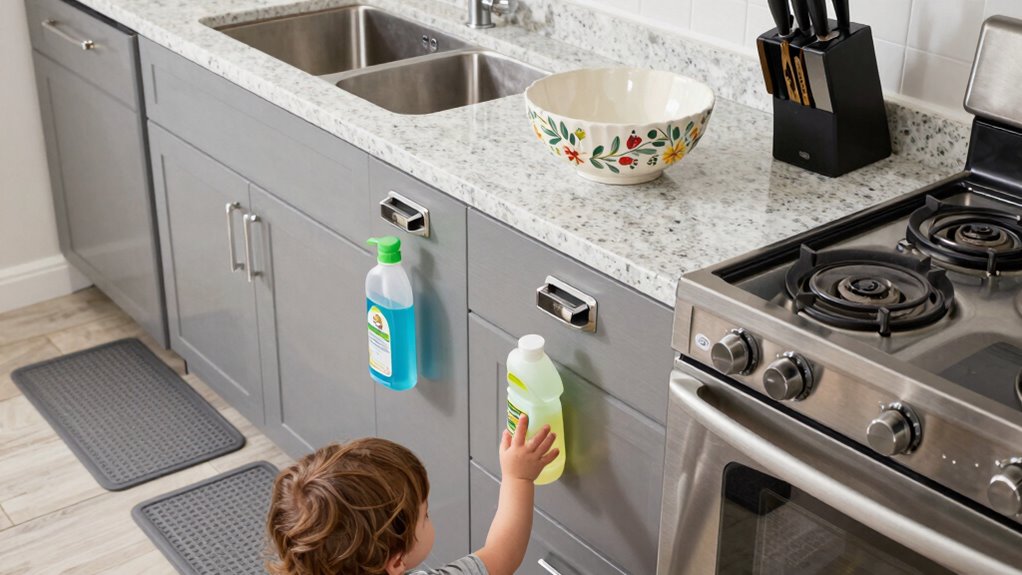
Nearly 300 children visit emergency rooms daily due to kitchen-related injuries at home. You probably haven’t considered how many hazards lurk within arm’s reach of your little ones. What simple changes could instantly protect your child from burns, cuts, or poisoning? Keep going to discover the essential safety measures every parent needs to know.
Why Kitchen Safety Matters for Toddlers and Preschoolers
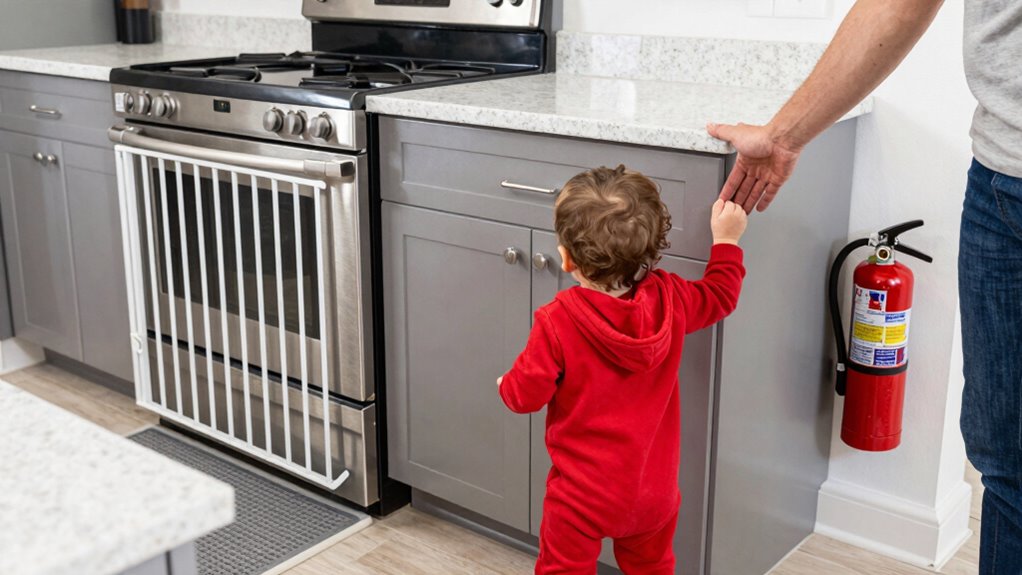
Kitchen safety matters for toddlers and preschoolers because young children lack the judgment and coordination to recognize dangerous situations. You’re responsible for creating safe boundaries while they explore.
Toddlers don’t understand hot surfaces or sharp objects pose risks. Their natural curiosity drives them toward whatever catches attention, especially busy kitchen areas where you prepare meals.
Preschoolers develop better motor skills but still make impulsive decisions. They want to help you cook, which brings them closer to potential hazards.
Your role involves teaching through demonstration and consistent rules. Establishing kitchen safety habits early builds their confidence while protecting them from burns, cuts, and other injuries during this vulnerable developmental stage.
Common Hazards Found in Every Kitchen
Every home’s cooking space harbors multiple dangers that toddlers and preschoolers can’t instinctively recognize as threats. You need to identify these common hazards to protect your little ones effectively.
- Sharp objects like knives, scissors, and can openers sit within easy reach on countertops and in drawers where curious hands love to explore.
- Hot surfaces including countertops, microwave doors, and coffee makers retain heat long after use, creating invisible burn risks.
- Electrical outlets positioned low on walls invite investigation, while dangling cords become tempting pull toys that can topple heavy appliances.
- Cleaning supplies stored under sinks mix dangerous chemicals within crawling distance of food preparation areas.
These everyday items transform your kitchen into a minefield requiring constant vigilance and strategic safety planning.
How to Childproof Your Stove and Oven
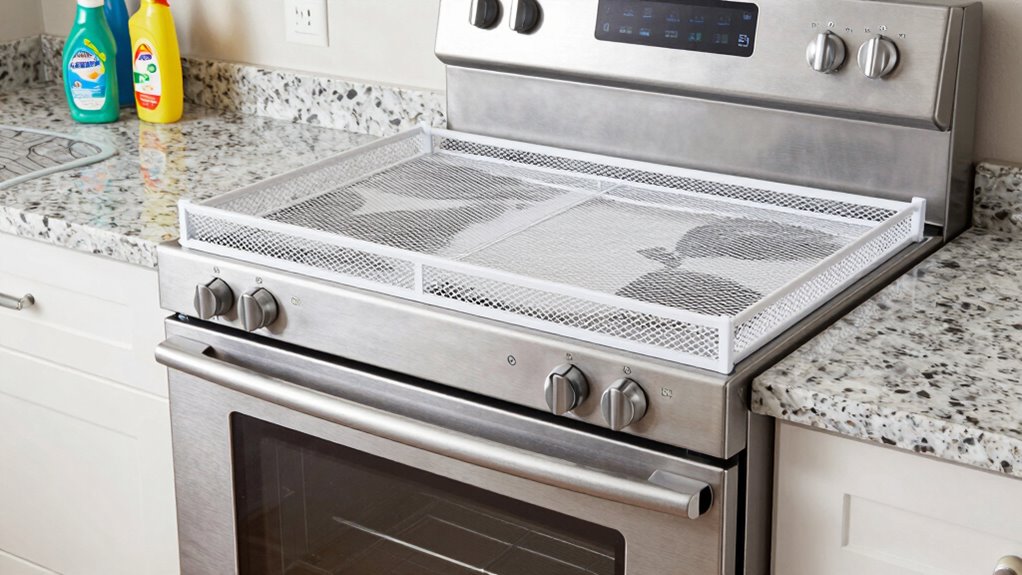
The hazards you’ve identified in your kitchen demand immediate attention, especially around your stove and oven where burns and injuries occur most frequently.
You should install stove knob covers to prevent curious fingers from turning on burners. Consider using a stove lock or gate that creates a physical barrier between your child and the cooking surface.
Oven locks are essential too, preventing little ones from opening hot oven doors. You’ll want to secure oven racks with rack locks to stop removal attempts.
Temperature control knobs need covering or locking mechanisms. Store pot handles turned inward and away from edges where children might grab them.
You should also install safety straps on cabinet doors containing dangerous items.
These simple modifications create a safer cooking environment while maintaining your kitchen’s functionality for family meals everyone can enjoy.
Storing Knives and Sharp Tools Away From Curious Hands
While you’re securing your stove and oven, don’t overlook the critical importance of safely storing knives and sharp tools where children can’t access them.
Young children are naturally curious and can quickly grab dangerous items when you’re not looking.
Keep your kitchen safe with these essential storage practices:
- Use locked knife blocks or magnetic knife holders mounted high on walls, well above children’s reach.
- Store all sharp utensils in closed drawers with safety latches to prevent little hands from opening them.
- Keep kitchen shears and box cutters in locked cabinets or drawers, separate from regular utensils.
- Organize your workspace so sharp tools are always put away immediately after use, never left on counters or tables.
These simple steps protect your family while keeping your kitchen functional for everyday cooking.
Burn Prevention Tips for Hot Surfaces and Liquids
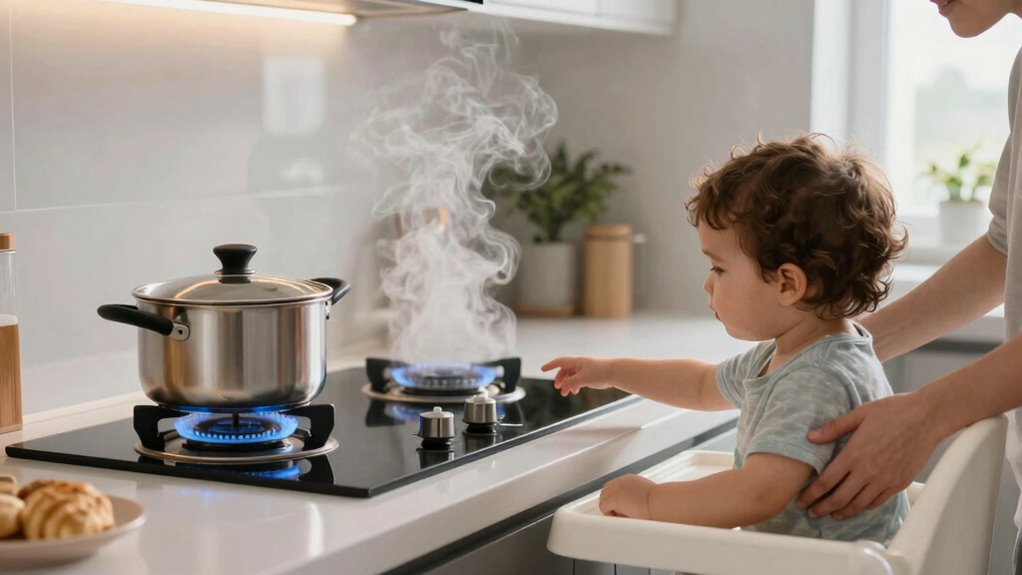
Anyone can accidentally burn themselves in the kitchen, but young children are especially vulnerable to scalds and burns from hot surfaces and liquids.
You should always keep pot handles turned inward, away from edges where little hands might grab them. Test temperatures before giving food or drinks to children. Store hot liquids away from table edges and never carry them while holding a child. Use back burners whenever possible and keep children at least three feet from cooking areas.
Install safety gates around the kitchen during meal preparation. Remember that items like coffee, tea, and microwaved foods can cause severe burns even when they appear cool.
You must stay vigilant because preventable burns happen too frequently in homes just like yours.
Keep Cleaning Products Locked and Out of Sight
Young children’s natural curiosity makes them particularly vulnerable to household hazards beyond just hot surfaces and liquids. Cleaning products pose serious risks when left accessible, so you need to secure them properly.
Keep your family safe by following these essential steps:
- Store all cleaning supplies in high, locked cabinets that children can’t reach or open.
- Use safety latches on existing cabinets if you don’t have locked storage options.
- Never leave cleaning products unattended on countertops or in open areas.
- Place products in their original containers with clear labeling to avoid confusion.
These simple measures create a safer environment where everyone can feel secure.
Your children deserve protection from preventable accidents, and securing cleaning products shows you’re taking responsibility seriously. Don’t risk exposure to harmful chemicals – make locking and hiding these items your priority today.
Dangers of Unsecured Cabinets and Drawers Explained
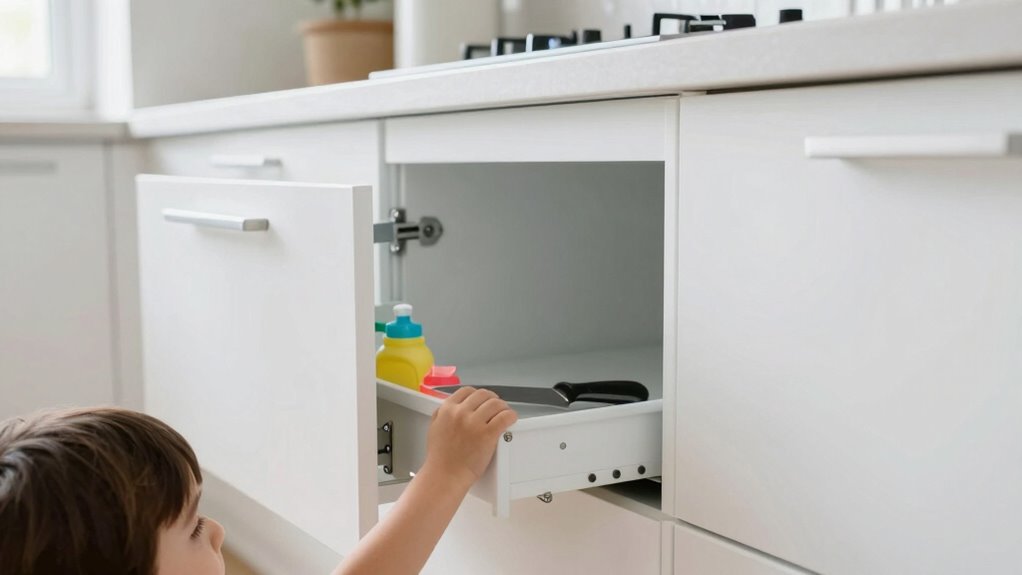
You must secure cabinets and drawers because sharp objects like knives and scissors can cause serious cuts if they’re within reach.
Storing chemicals in unsecured spaces creates dangerous poisoning risks when children access them accidentally.
Small items tucked away in drawers pose choking hazards that can turn a quick exploration into a life-threatening emergency.
Sharp Objects Within Reach
Sharp objects pose serious risks when children can access them freely. Unsecured knives, scissors, and other cutting tools turn your kitchen into a hazard zone for curious little hands.
You need to protect your family by securing these dangerous items immediately:
- Install safety locks on all knife drawers and cabinets containing sharp objects.
- Store cutting boards and knives in high, locked cabinets above counter height.
- Use magnetic knife strips positioned away from children’s reach.
- Keep scissors and can openers in locked drawers or high shelves.
These simple steps prevent serious cuts and emergency room visits.
Don’t wait for an accident to happen before taking action. Your children’s safety depends on you securing sharp objects properly today.
Chemical Storage Hazards
Chemicals stored in unsecured kitchen cabinets and drawers create hidden dangers that parents often overlook. You mightn’t realize how easily children access cleaning supplies, dish soap, or other household chemicals when cabinet doors swing open freely. These substances pose serious poisoning risks if ingested accidentally.
Young children explore everything with their mouths, making unsecured chemical storage particularly hazardous.
Install child safety locks on all cabinets containing chemicals. Move dangerous items to high, locked cabinets whenever possible. Keep cleaning supplies away from food storage areas completely. Regularly check that safety mechanisms work properly.
Your vigilance prevents emergency room visits and protects your family’s wellbeing effectively. Simple precautions eliminate these unnecessary risks entirely.
Choking Risk From Small Items
When cabinets and drawers lack proper childproofing, small items inside become choking hazards that threaten your child’s safety unexpectedly.
Young children explore everything with their mouths, making unsecured kitchen items dangerous.
- Small appliances like blenders and food processors often have detachable parts that fit perfectly in tiny airways.
- Loose hardware from cabinet doors, including screws and hinges, pose immediate choking risks.
- Food items such as nuts, grapes, and popcorn should never be accessible to toddlers.
- Plastic wrap and twist ties stored in drawers can cause suffocation if swallowed.
You need to install safety locks on all cabinets containing hazardous items.
Regularly check that drawers close completely and latches function properly.
Your family’s safety depends on these simple but essential precautions.
Protect Kids From Electrical Outlet Risks
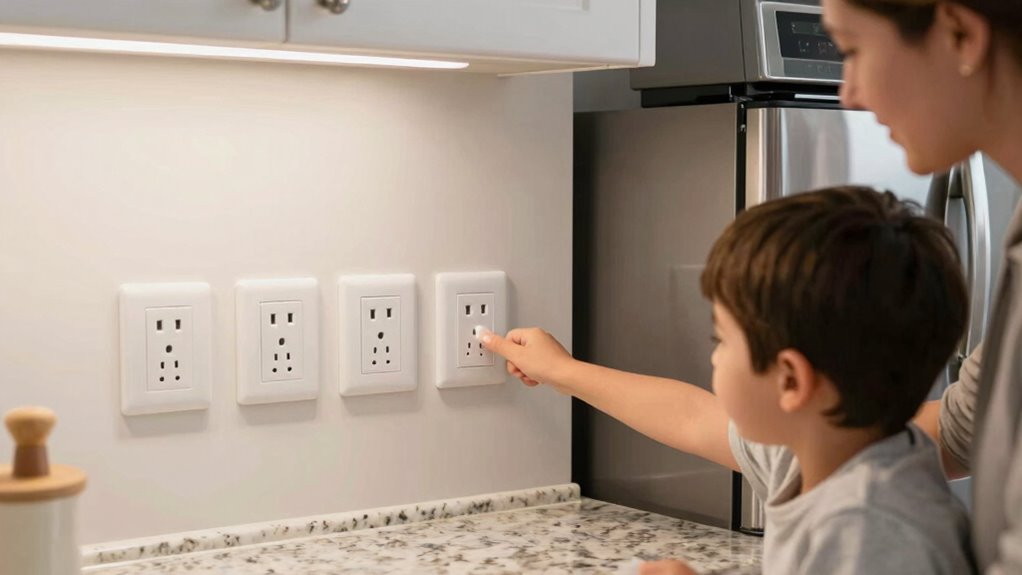
Electrical outlets pose serious hazards that parents must address immediately. You should install safety covers on all unused outlets throughout your kitchen. These simple plastic inserts prevent curious fingers from accessing dangerous electrical contacts.
Choose sliding outlet covers that automatically close when not in use. You’ll want to test these covers regularly to verify they function properly. Don’t overload outlets with multiple appliances, as this creates fire risks.
Keep electrical cords away from counter edges where children play. You should unplug small appliances when children are nearby.
Consider having GFCI outlets installed, which automatically shut off power when detecting problems. These outlets provide extra protection against electrical shocks.
Always supervise young children around any electrical devices. Teaching kids early about electrical safety helps them develop responsible habits. Your family’s safety depends on taking these precautions seriously today.
Secure the Fridge and Pantry Against Climbing Accidents
Young children are naturally curious and will climb anything within reach, making it essential that you secure your refrigerator and pantry areas immediately.
These climbing accidents can cause serious injuries and costly food spills.
- Install refrigerator locks or latches to prevent climbing attempts
- Use safety straps or bolts to secure tall pantry shelves to walls
- Add anti-tip brackets to freestanding appliances and cabinets
- Place heavy items on lower shelves, keeping climbing temptations minimal
You belong in the kitchen with your children when it’s safe.
These simple modifications create peace of mind while cooking together.
Your kids can explore safely while you focus on preparing meals.
Secure these areas today – your family’s safety matters.
Teach Toddlers These Kitchen Rules Before Cooking Starts
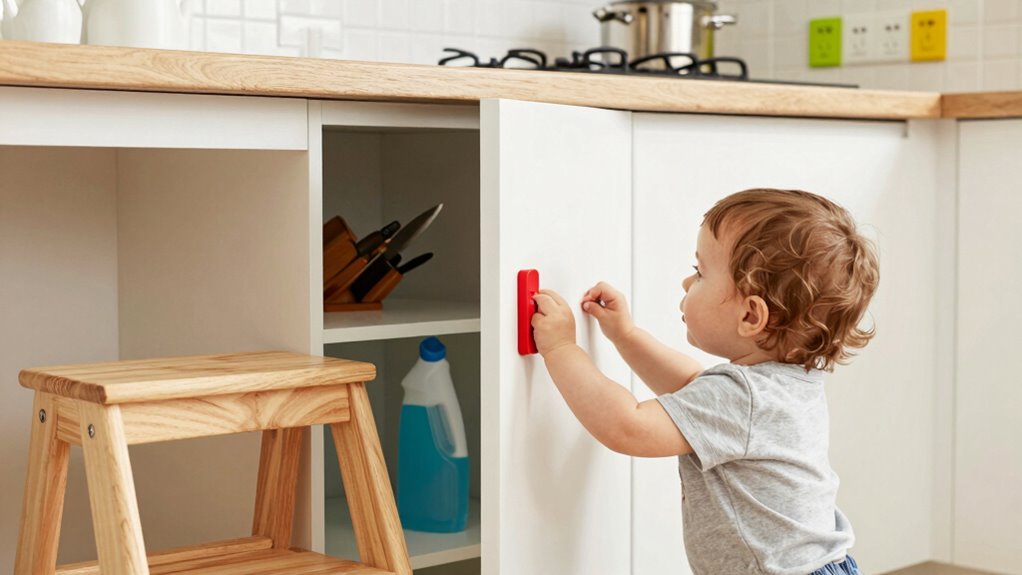
You must teach toddlers to stay away from hot surfaces like stovetops, oven doors, and heated pans before you start cooking.
Keep their hands clean and dry to prevent slips and burns while they’re in the kitchen.
These basic rules protect your child from serious injuries during meal preparation.
Stay Away From Hot Surfaces
When cooking with toddlers present, keeping them away from hot surfaces prevents serious burns and injuries. You need to establish clear boundaries before you start cooking.
- Create a safe zone – Designate a specific area away from the stove and oven where your toddler can play or help safely.
- Use back burners when possible, turning pot handles inward to prevent accidental grabbing.
- Teach “hot” means danger – Help your child understand that red stove lights and steam mean stay back.
- Stay one step ahead – Anticipate your toddler’s movements and redirect them before they approach dangerous areas.
Your kitchen becomes safer when you actively supervise and guide your child’s behavior around heat sources.
Keep Hands Clean And Dry
One essential rule toddlers must learn before entering the kitchen is keeping their hands clean and dry. You should always wash your hands thoroughly with soap and warm water before touching any food or kitchen surfaces.
Make sure you dry your hands completely with a clean towel afterward. Wet or dirty hands can spread germs and bacteria throughout your kitchen, contaminating food and surfaces.
Teach your toddler to avoid touching their face, hair, or other objects while cooking. If their hands become wet or dirty during cooking, stop immediately and clean them again.
Keeping hands clean prevents foodborne illness and maintains a safe cooking environment for everyone.
First Aid Guide for Minor Burns and Cuts
Having basic first aid knowledge becomes essential once your child suffers a minor burn or cut in the kitchen.
You need to act quickly and confidently to help your little one heal properly.
1. Cool burns immediately – Run cool (not cold) water over the affected area for ten minutes.
Remove any jewelry or tight clothing near the burn before swelling occurs.
2. Clean cuts gently – Wash the wound with mild soap and water.
Apply gentle pressure with a clean cloth to stop bleeding.
3. Apply proper dressings – Cover burns with sterile, non-adhesive bandages.
Use antibiotic ointment on cuts before applying bandages.
4. Monitor for infection – Watch for increased redness, swelling, or pus.
Consult your pediatrician if symptoms worsen or don’t improve within a few days.
Handle Burn Emergencies With Confidence
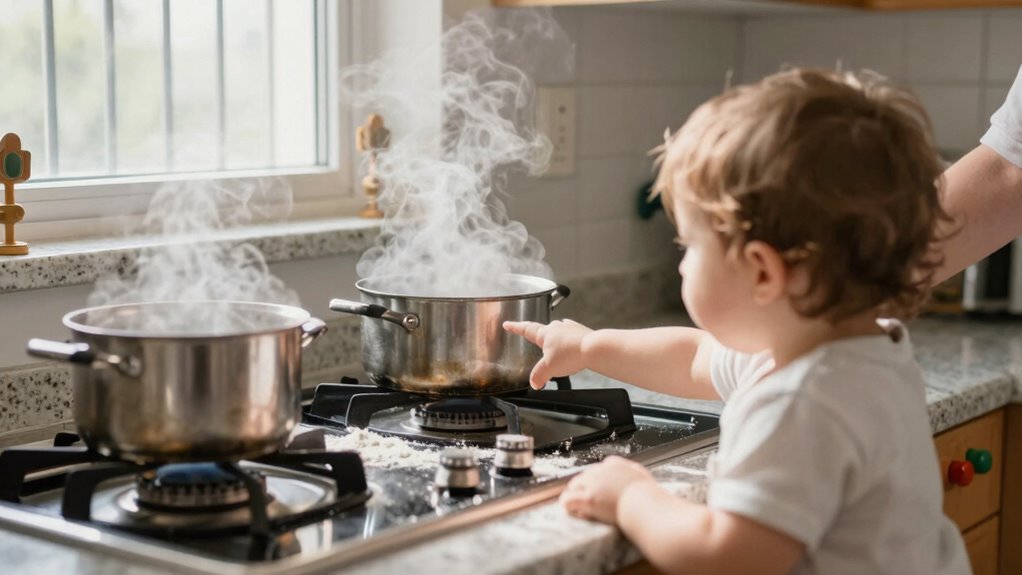
You need to quickly assess burn severity to determine the proper response.
Cool burns immediately with cool (not cold) water for at least ten minutes.
Know when to call emergency services rather than treating minor burns at home.
Recognize Burn Severity Levels
Three distinct burn severity levels exist, and recognizing them quickly can make all the difference during a kitchen emergency.
You need to act fast when burns happen.
- First-degree burns affect only the outer skin layer, causing redness and pain without blisters.
- Second-degree burns create blisters and severe pain, damaging deeper skin layers.
- Third-degree burns destroy all skin layers, appearing white or charred, often numb due to nerve damage.
- Fourth-degree burns extend through skin into muscles, bones, or tendons requiring immediate emergency care.
You must understand these levels because your response time matters.
Recognizing severity helps you decide when to call 911 versus when basic first aid suffices.
Don’t guess—know the differences.
Your child’s safety depends on your ability to assess burn severity accurately and respond appropriately.
Stay informed, stay prepared.
Immediate Cooling Techniques
When a burn occurs, immediate action can greatly reduce tissue damage and pain.
You must cool the burn right away, but avoid ice or butter—these cause more harm. Run cool tap water over the burn for ten to twenty minutes.
Remove any jewelry or tight clothing near the burn before swelling occurs. Keep the burn under running water until pain decreases greatly.
Cover the area gently with a clean, dry cloth afterward. Don’t break blisters if they form. Stay calm throughout this process.
Your quick response helps prevent deeper injury and reduces healing time. Remember, cool water is your best first aid tool for minor burns.
When To Seek Medical Help
How do you know if a burn requires professional medical attention? You should seek immediate help when injuries exceed minor first-degree burns. Trust your instincts—if you’re unsure, it’s better to err on the side of caution.
- Burn size matters – Any burn larger than three inches across demands medical evaluation.
- Depth concerns – Second or third-degree burns with blistering or white/grey skin need professional treatment.
- Location sensitivity – Burns on face, hands, feet, genitals, or major joints require immediate attention.
- Age vulnerability – Children under five or adults over sixty need medical evaluation for any moderate burn.
Don’t wait if breathing becomes difficult or if you notice signs of infection. Your family’s safety matters most.
When in doubt, call your doctor or visit urgent care. You’re not alone in this—professional guidance is always available when you need it.
Kitchen Tasks That Match Each Child’s Age
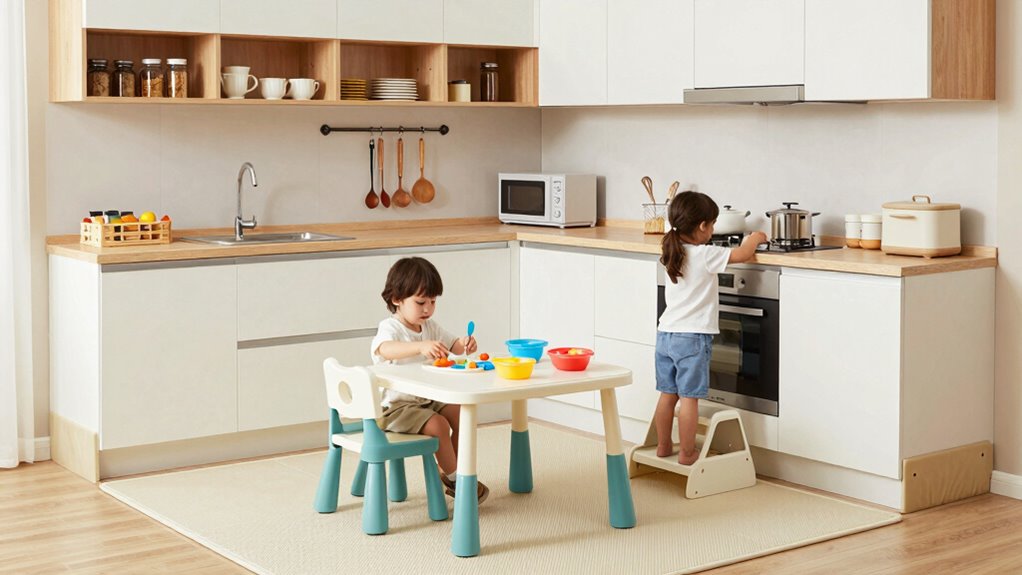
While young children should never be left unsupervised in the kitchen, assigning age-appropriate tasks helps them learn responsibility and basic cooking skills safely.
Toddlers can wash fruits and vegetables, stir ingredients, and set the table.
Three-year-olds handle measuring cups, pouring dry ingredients, and kneading dough with supervision.
Four-year-olds operate the microwave safely, spread butter, and arrange food on plates.
Five-year-olds use can openers with help, crack eggs, and mix batter independently.
Six-year-olds manage simple recipes, use timers, and prepare basic sandwiches.
You’re building their confidence while keeping everyone safe.
Remember that each child develops differently, so adjust tasks based on individual abilities rather than age alone.
Start with simple activities and gradually increase complexity as their skills improve.
Cookware Designed for Safer Family Meals
You should choose cookware made from safe materials like stainless steel or ceramic that won’t leach harmful chemicals into your food.
Look for pots and pans with child-proof handles that stay cool and won’t burn little hands, plus secure lids that prevent spills.
Always verify that your cookware features non-toxic coatings free from PFOA and other dangerous substances.
Safe Cookware Materials
Several cookware materials stand out as safest for families with young children.
You’ll want to choose options that won’t leach harmful chemicals or create dangerous situations.
- Stainless steel remains your best bet – it’s non-reactive, durable, and won’t chip or peel like other materials.
- Cast iron works excellently when properly seasoned, providing even heating without toxic coatings that could harm your family.
- Glass cookware offers transparency so you can monitor food cooking while staying completely non-toxic and easy to clean.
- Ceramic-coated pans give you non-stick convenience without PFOA or PTFE concerns, but check that coatings are intact regularly.
These materials create safer meal preparation environments where your children can be around the kitchen without exposing them to harmful substances.
Child-Proof Handles
One essential feature that makes cookware safer for families involves handles designed to prevent burns and accidents.
You should look for handles that stay cool during cooking, reducing 烫伤 risks when children accidentally touch them.
These child-proof handles often feature heat-resistant materials like silicone or plastic coatings that insulate against high temperatures.
You’ll find them on pots and pans specifically engineered for family safety.
Cool-touch handles prevent little fingers from getting burned while exploring the kitchen.
Spring-loaded or secure-locking mechanisms stop lids from accidentally opening, preventing spills that could harm curious toddlers.
Smart design features like 这些 make meal preparation safer when kids are nearby.
You can cook confidently knowing your cookware actively protects your family.
Non-Toxic Coatings
Beyond protecting little hands from burns, cookware safety extends to what touches your food during meal preparation.
You need cookware with non-toxic coatings that won’t leach harmful chemicals into family meals.
- Ceramic coatings offer excellent non-stick properties without PFOA or PTFE chemicals that can harm children’s developing systems.
- Stainless steel options provide durable, inert surfaces that won’t react with acidic foods or release toxins when heated.
- Cast iron with natural seasoning creates safe, chemical-free cooking surfaces that actually add beneficial iron to diets.
- Glass cookware eliminates metal concerns entirely while providing clear visibility for monitoring food preparation.
These choices protect your family’s health while delivering reliable cooking performance every parent needs.
Create a Safe Cooking Space for Little Helpers
When you’re teaching children to cook, you’ll want to establish a designated area where they can participate safely.
Choose a lower counter space or kitchen island where kids can reach comfortably without climbing. Keep this zone free from sharp objects, hot surfaces, and breakable items.
Store child-sized utensils, unbreakable bowls, and safe ingredients within easy reach. Position yourself nearby to supervise while maintaining clear boundaries around heat sources and electrical appliances.
Make sure children wear fitted clothing and tie back long hair before entering this cooking zone. Keep a small step stool handy for shorter helpers to access their designated workspace independently.
This safe space builds confidence while protecting curious little ones from kitchen hazards.
Make Kitchen Safety Stick With Playful Lessons
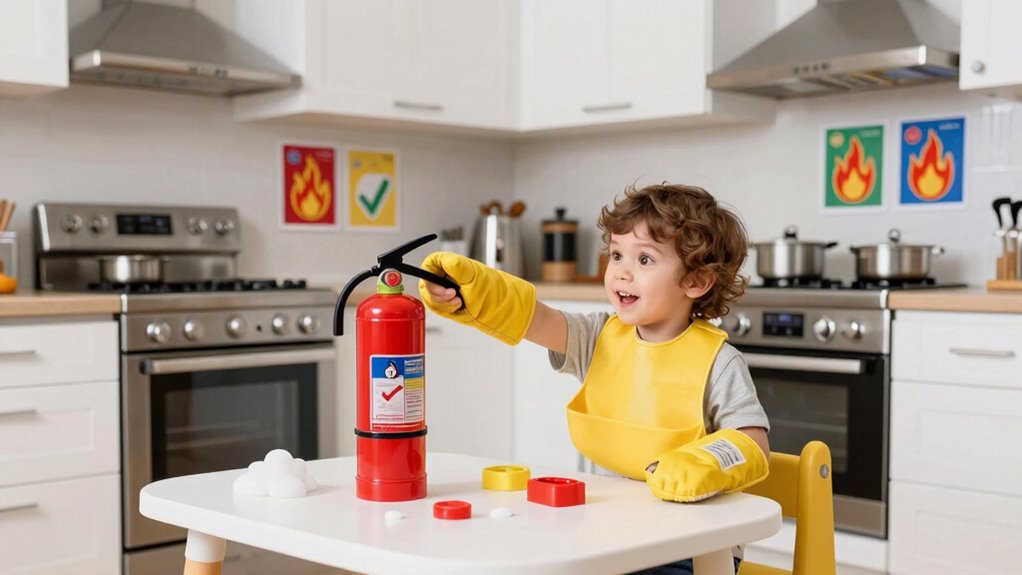
Young chefs need more than just a safe space to learn effectively. You’ve created the perfect cooking environment, but now it’s time to make safety lessons memorable through play.
- Turn rules into songs – Create catchy tunes about hot stove warnings and clean-up routines that kids actually want to sing along with.
- Use superhero role-play – Let children become “Kitchen Safety Heroes” who protect their families from dangerous situations.
- Practice with real scenarios – Act out what to do when someone gets burned or spills hot liquid instead of just telling them.
- Reward safe choices – Celebrate when kids remember to use oven mitts or ask before touching sharp objects.
These playful approaches help safety lessons stick while building confidence in young cooks.
Conclusion
You’ve got this kitchen safety thing down pat. Remember Sarah, who turned her curiosity into a career? She once grabbed a hot pan handle at age three, but thanks to her parents’ prep work, it was just a minor scare. Install those locks, cover those knobs, and create that safe play zone. Your little chef will thank you when they’re old enough to actually use those skills. Prevention isn’t just smart—it’s everything.