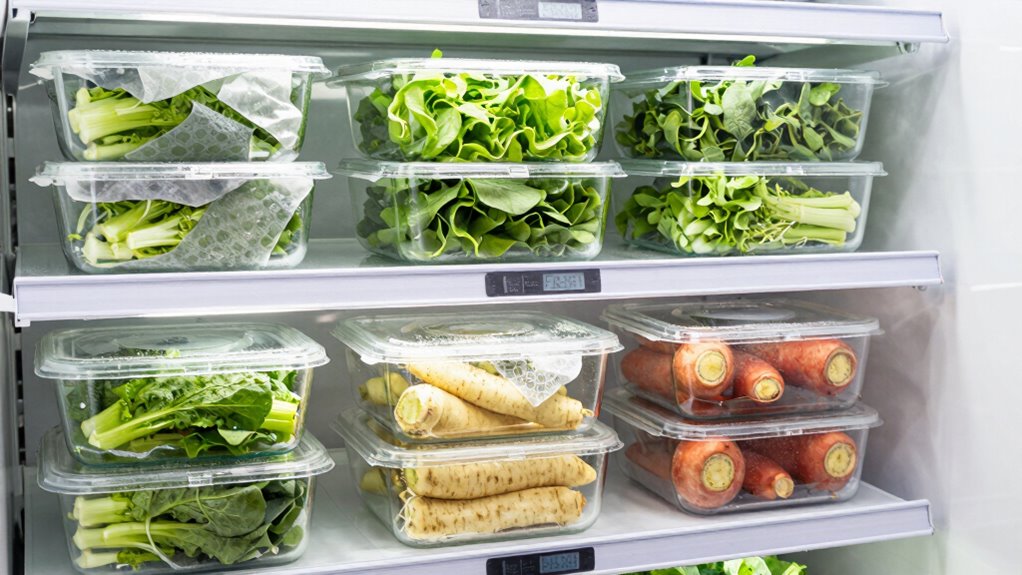
You’re wasting money on spoiled vegetables because your small fridge isn’t working against you—it’s working with outdated storage habits. Most people overlook three critical mistakes that accelerate decay: improper humidity control, ethylene gas buildup, and poor air circulation. Without addressing these fundamentals, even the freshest produce turns within days. Ready to fix your fridge’s hidden design flaws?
Maximize Every Inch of Fridge Space
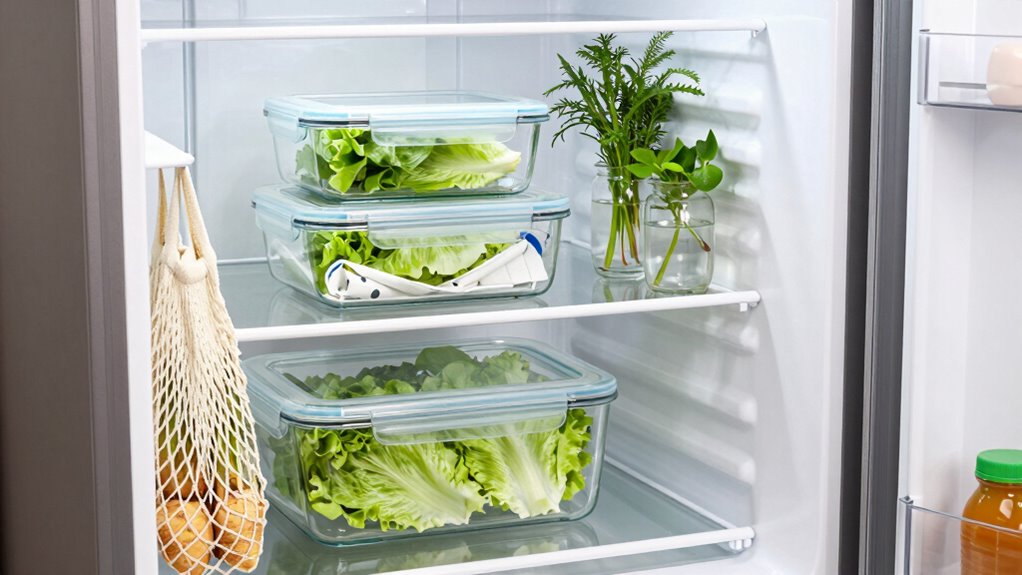
When storing vegetables in a small fridge, maximizing every inch of space becomes essential. You should use stackable containers and adjustable shelves to create flexible storage solutions.
Place taller items like celery and carrots in door compartments where they won’t block access to other foods. Store leafy greens in crisper drawers after removing excess moisture and wrapping them in paper towels.
Use vertical space by installing shelf liners or small baskets. Group similar vegetables together to streamline organization and prevent overcrowding.
Remove packaging that takes up unnecessary room, but keep produce bags that maintain freshness. You’ll find that proper organization prevents waste and makes meal preparation more efficient.
Set the Right Humidity for Fresh Vegetables
You should adjust your fridge’s humidity settings to keep vegetables fresh longer, since most produce thrives at 85-95% humidity levels.
Proper ventilation prevents moisture buildup that causes wilting and spoilage, so you’ll want to check that your crisper drawers aren’t sealed too tightly.
These simple adjustments help your vegetables stay crisp and nutritious while maximizing your small fridge’s storage potential.
Optimal Humidity Levels
While your refrigerator’s humidity settings might seem like a minor detail, they substantially impact how long your vegetables stay fresh. You need to adjust these levels based on your produce type for maximum shelf life.
Different vegetables require specific humidity conditions to prevent wilting or moisture buildup that leads to spoilage. Leafy greens need high humidity around 90-95%, while root vegetables prefer lower levels near 85-90%.
Here’s what you should know:
- Leafy greens: Set humidity to high (90-95%) to prevent wilting
- Root vegetables: Maintain medium humidity (85-90%) to avoid softening
- Fruiting vegetables: Keep humidity moderate (85-90%) for best results
- Herbs: Require high humidity (90-95%) like leafy greens
- Onions/garlic: Need low humidity (70-80%) to prevent mold
You’ll notice significant improvements in vegetable longevity when you match humidity levels to each produce type’s natural requirements.
Proper Ventilation Techniques
Proper ventilation works hand-in-hand with humidity settings to extend your vegetables’ freshness, so adjusting both factors correctly prevents moisture buildup and maintains ideal storage conditions.
You should keep your refrigerator’s vents unblocked by storing vegetables away from the back wall and sides. Create airflow channels by leaving small gaps between storage containers and produce. Use perforated plastic bags or mesh produce bags instead of sealed containers for items like leafy greens and herbs.
Check that your refrigerator’s internal fan isn’t obstructed by overcrowded vegetables. Position vegetables so air can circulate freely around them. Remove any spoiled produce immediately since it releases ethylene gas that accelerates decay in nearby vegetables.
Regularly clean your refrigerator’s ventilation system to prevent odors and maintain prime airflow patterns throughout the appliance.
Choose Containers That Fit Small Spaces
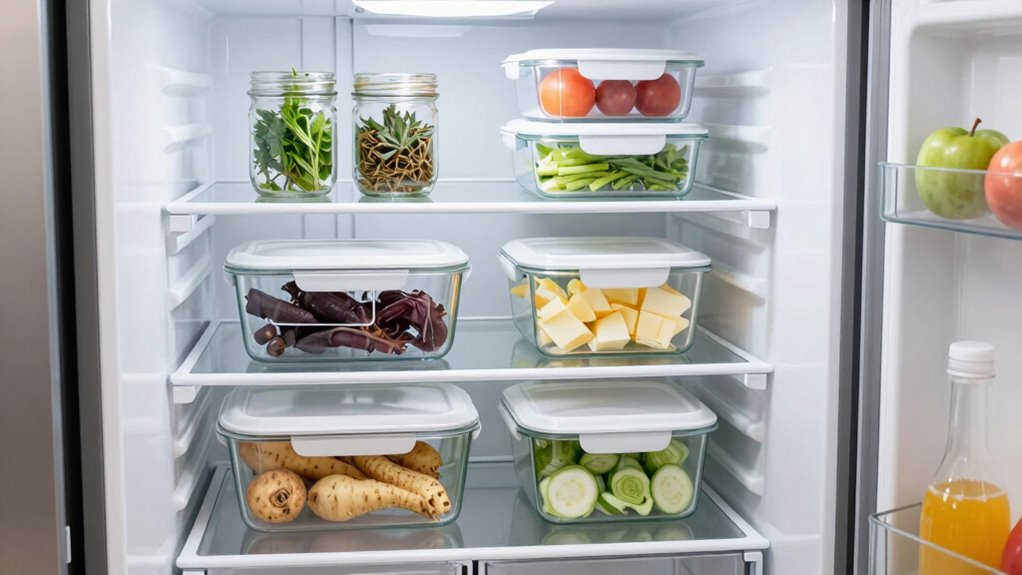
You should choose slim, stackable containers that maximize your fridge’s limited space while keeping vegetables fresh longer.
Compact bins with tight-fitting lids prevent moisture loss and protect produce from absorbing odors.
These space-saving options help you organize efficiently without sacrificing storage capacity.
Compact Container Options
Several compact container options work best for small fridge storage. You’ll maximize your limited space by selecting containers that stack efficiently and fit standard shelf dimensions.
- Glass jars with narrow profiles – Store herbs and small vegetables vertically.
- Rectangular plastic containers – Slide easily onto shelves and stack securely.
- Vacuum-sealed bags – Remove air to reduce volume considerably.
- Tiered storage containers – Utilize vertical space with built-in compartments.
- Magnetic containers – Attach to fridge sides when shelves are full.
These containers help you organize vegetables efficiently while maintaining proper airflow.
Choose options that complement your specific fridge dimensions and storage needs.
Maximize Shelf Life
When containers fit snugly in your small fridge, vegetables last longer because they’re protected from temperature fluctuations and moisture loss.
You should choose glass or BPA-free plastic containers with tight-fitting lids to create ideal storage conditions. These containers prevent ethylene gas buildup while maintaining proper humidity levels.
Stackable containers maximize your limited space while keeping vegetables organized and visible. You’ll want to select containers that fit standard shelf dimensions, typically 12×12 inches or smaller.
Clear containers help you quickly identify contents without opening multiple boxes.
Vacuum-sealed containers work exceptionally well for leafy greens and herbs. They remove excess air that accelerates spoilage.
You should also consider containers with built-in drainage systems for vegetables that release moisture during storage.
Organize Your Fridge for Optimal Freshness
Effective fridge organization maximizes freshness while minimizing waste. You’ll extend vegetable life considerably when you arrange items strategically.
- Keep temperature zones in mind – Store sensitive vegetables in consistent cold areas, not door shelves where temperatures fluctuate frequently.
- Rotate older items forward – Place newly purchased vegetables behind existing ones to guarantee nothing gets forgotten and spoils.
- Create designated spaces – Assign specific areas for different vegetable types so you always know where to find them.
- Use vertical space efficiently – Stack containers and use shelf risers to maximize limited fridge real estate.
- Maintain proper humidity levels – Keep crisper drawers at recommended settings for your specific vegetable varieties.
Smart organization prevents premature spoilage. You’ll save money while enjoying fresher produce throughout the week.
Use Drawer Dividers to Keep Veggies Separate
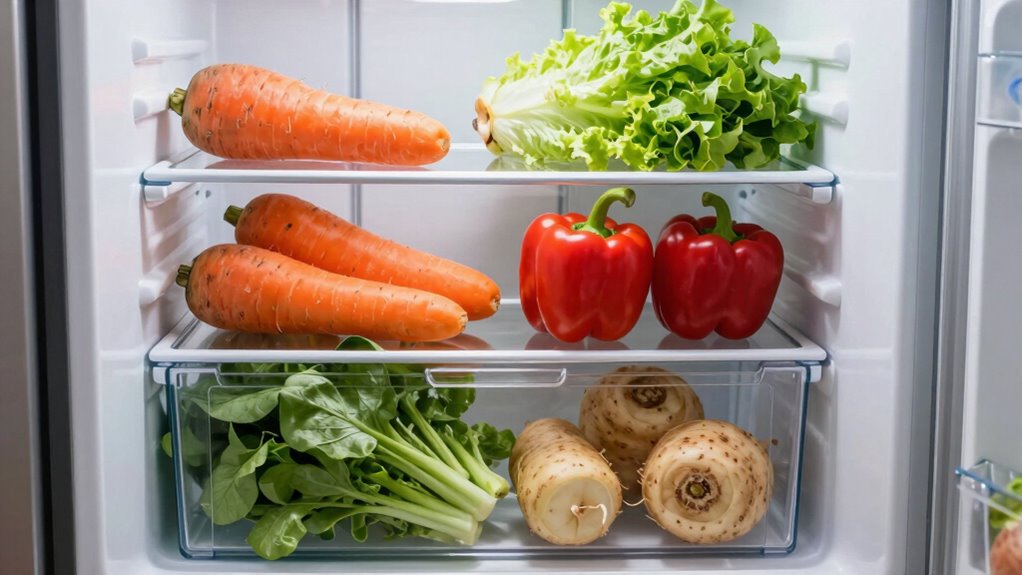
You should use drawer dividers to prevent moisture and ethylene gas from spreading between different vegetables, which extends their shelf life considerably.
Dividers help maximize your limited fridge space by creating separate zones for items like leafy greens, root vegetables, and herbs that have different storage requirements.
These simple organizers keep your vegetables fresher longer while making it easier to see and access everything in your crisper drawers.
Prevent Cross-Contamination Between Vegetables
While storing multiple vegetables in the same drawer seems convenient, cross-contamination can quickly spoil your produce and spread ethylene gas that accelerates ripening. You need simple strategies to keep your vegetables fresh longer.
- Separate ethylene-producing vegetables like tomatoes, bananas, and apples from ethylene-sensitive items like leafy greens and broccoli.
- Use clean hands or gloves when handling different vegetables to prevent bacteria transfer.
- Store root vegetables separately from leafy greens since they’ve different moisture requirements.
- Keep strong-smelling vegetables like onions away from absorbent items like mushrooms.
- Place new vegetables separately from older ones to prevent accelerated spoilage.
These practices help maintain freshness while protecting your investment in healthy foods. Everyone deserves crisp, nutritious vegetables that last longer.
Maximize Storage Space With Dividers
When storing vegetables in a small fridge, drawer dividers create physical barriers that prevent produce from crushing each other and mixing odors.
You should use adjustable dividers to separate leafy greens from root vegetables, keeping celery away from ethylene-producing fruits.
Place lettuce and herbs in individual compartments to maintain crispness. Store onions separately since they emit gases that accelerate spoilage in other vegetables.
Use vertical dividers for tall items like leeks or bunching onions. You’ll maximize your limited fridge space while extending vegetable lifespan.
Moisture-prone vegetables need their own drainage areas. Don’t overcrowd compartments; allow air circulation around each vegetable type.
Regular cleaning prevents bacteria buildup between divider sections. This organized approach helps you quickly locate specific vegetables while maintaining ideal storage conditions for each produce category.
Which Vegetables Shouldn’t Go in the Fridge?
Although many vegetables benefit from refrigeration, several common varieties actually deteriorate faster in cold storage.
You’ll waste food and money if you chill these items improperly.
Store these vegetables at room temperature instead:
- Tomatoes lose flavor and become mealy in the fridge
- Potatoes develop starch and sprout faster when cold
- Onions become soft and moldy in humid conditions
- Garlic deteriorates quickly and loses its pungent flavor
- Bananas ripen unevenly and turn black when chilled
Keep these items in cool, dry pantry spaces where you store other staples.
Your vegetables will last longer and taste better when stored properly.
You’re not alone in making these storage mistakes – many people refrigerate everything automatically.
Trust your instincts and follow these simple guidelines.
Keep Leafy Greens Crisp in Tight Spaces
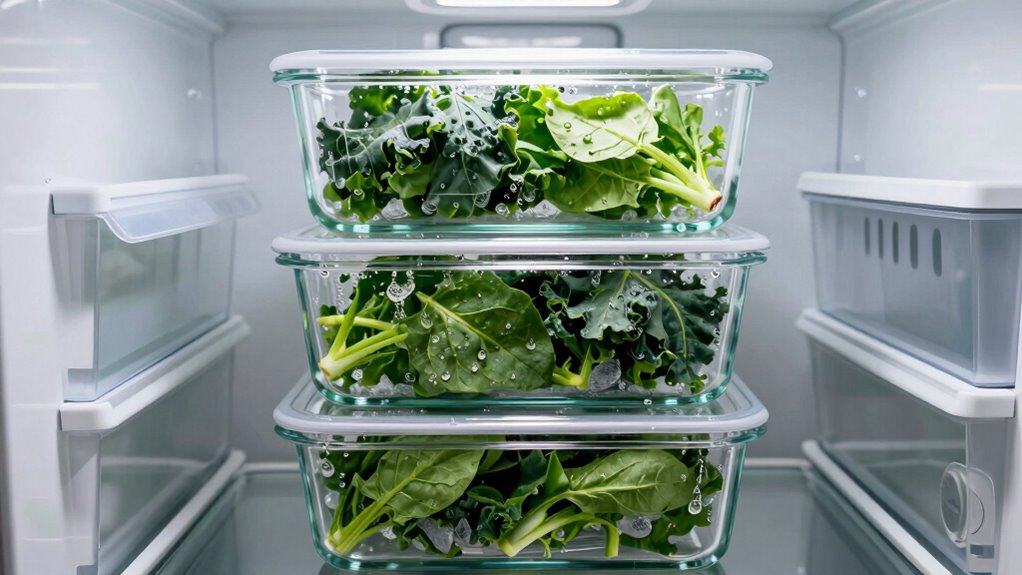
You can maximize your crisper drawer space by removing excess air from storage containers and stacking leafy greens vertically rather than horizontally.
Proper storage containers with adjustable humidity controls help maintain the ideal moisture balance that prevents wilting and browning.
These containers should be filled appropriately to allow air circulation while maintaining suitable humidity levels between 85-95% for most leafy greens.
Maximize Crisper Drawer Space
The crisper drawer becomes your most valuable real estate when storing leafy greens in a small fridge.
You’ll maximize every inch by implementing these proven strategies:
- Layer greens horizontally instead of stacking vertically to prevent crushing and allow air circulation.
- Remove damaged leaves immediately since they release ethylene gas that spoils nearby produce faster.
- Use the roll-and-store method – roll lettuce and spinach into tight cylinders to save 40% more space.
- Keep humidity controls adjusted properly; leafy greens need high humidity environments to stay crisp.
- Organize by expiration date placing older items in front so you use them first.
These techniques help your vegetables last longer while creating harmony in your limited storage space.
You’re not just organizing; you’re joining a community of smart frugal cooks who refuse to waste food.
Use Proper Storage Containers
When storing leafy greens in small fridge spaces, proper containers make all the difference in maintaining freshness while maximizing storage efficiency.
You should use perforated plastic bags or breathable containers that allow air circulation while preventing moisture buildup. Glass containers with tight-fitting lids work well for spinach, lettuce, and herbs.
Store greens in single layers to prevent crushing and bruising. Remove any damaged leaves before storing, as they accelerate spoilage. Clear containers help you quickly identify contents without opening multiple bags.
Stack containers strategically, placing heavier items on bottom shelves. You’ll notice greens stay crisp longer when stored in appropriate containers rather than loose in bags.
Invest in containers specifically designed for produce storage. These simple changes create organized storage that fits your fridge’s limited space while keeping vegetables fresh longer, reducing waste and saving money.
Maintain Optimal Humidity Levels
While proper containers prevent moisture loss, maintaining ideal humidity levels keeps leafy greens crisp and fresh longer in cramped refrigerator spaces. You need controlled moisture to preserve vegetable quality.
- Use produce drawers – These compartments maintain 85-95% humidity perfect for greens
- Add damp paper towels – Place these around lettuce and spinach to boost moisture
- Create humidity pockets – Store vegetables in sealed bags with tiny air holes
- Monitor temperature zones – Keep humidity-sensitive items away from cold vents
- Check regularly – Remove excess moisture buildup to prevent bacterial growth
Leafy vegetables contain 90% water content, making humidity control essential. When you master these simple techniques, your vegetables stay vibrant and nutritious.
Your family deserves fresh, crisp greens even with limited fridge space. These methods work because they mimic ideal storage conditions found in professional coolers.
Store Root Vegetables in Compact Fridges
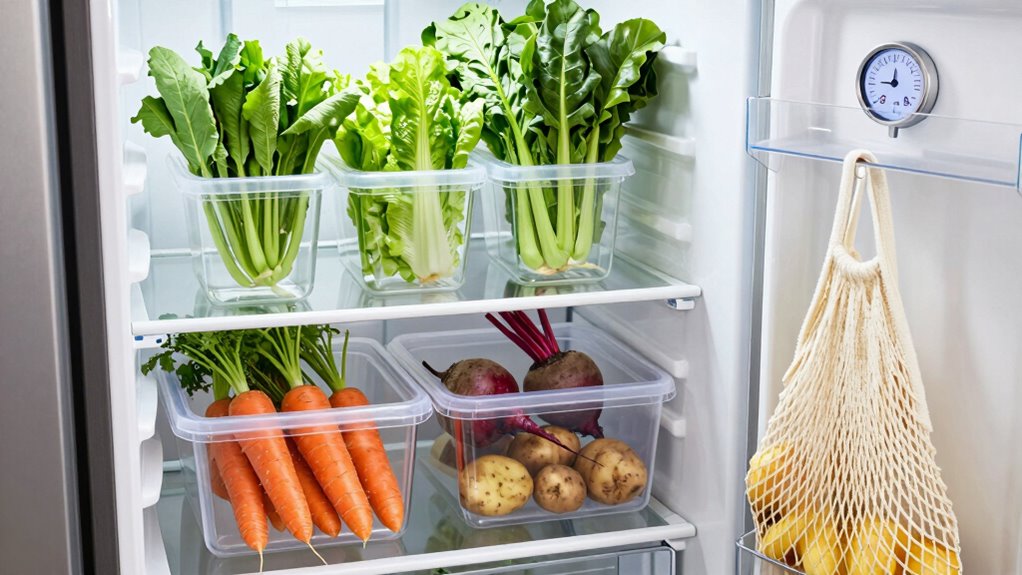
Root vegetables like carrots, beets, and radishes don’t need much space to stay fresh in your compact fridge. You should store them in the crisper drawer where humidity stays higher. Remove any leafy tops before storing, as they draw moisture from the roots.
Wrap carrots and beets loosely in perforated plastic bags to maintain proper airflow while retaining moisture. Radishes stay crisp longer when you remove their greens and store them in sealed containers with damp paper towels.
Keep potatoes and onions separate from other vegetables since they release gases that cause spoilage. Check your root vegetables weekly and remove any that show signs of sprouting or soft spots.
These simple steps help you maximize your fridge’s limited space while keeping your vegetables fresh longer.
Make Room With Vertical Storage Hacks
Because space is at a premium in small fridges, you’ll want to maximize every inch by thinking vertically.
Smart vertical storage transforms cramped conditions into organized efficiency.
- Install adjustable shelves to create custom heights for different vegetables
- Use door racks for jars and containers, freeing up shelf space inside
- Stackable bins let you organize similar items while maximizing vertical space
- Hang mesh produce bags on door hooks to store onions or potatoes
- Place taller items like celery or lettuce in door compartments
These simple hacks work because they utilize often-wasted vertical space.
You’re not just storing vegetables—you’re joining a community of smart cooks who refuse to let small appliances limit their fresh food storage.
Vertical thinking creates belonging among those who make the most of what they have.
Control Ethylene Gas in Your Fridge
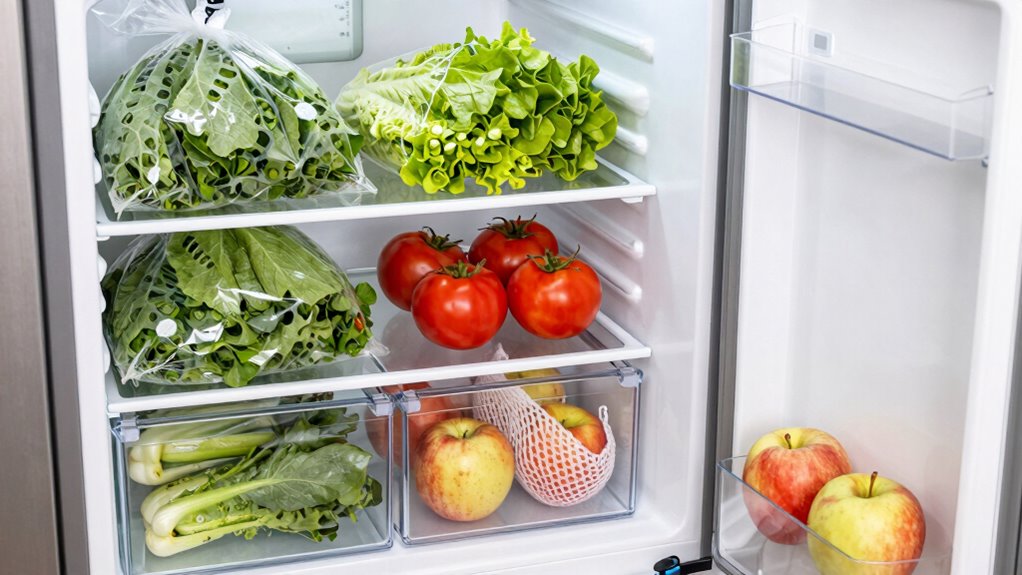
Ethylene gas naturally occurs in your fridge and affects how long your vegetables stay fresh. This invisible compound accelerates spoilage, causing your produce to wilt, soften, and decay faster than expected.
You can control ethylene levels by separating high-producing items like apples, bananas, and tomatoes from ethylene-sensitive vegetables such as leafy greens, carrots, and broccoli.
Store ethylene producers in sealed containers or plastic bags with holes for ventilation. Keep sensitive vegetables in ethylene-absorbing bags or containers lined with paper towels.
Regular cleaning reduces ethylene buildup. You’re not alone in facing this challenge—every small fridge owner deals with ethylene gas management. Taking these steps helps your vegetables last longer, reduces waste, and saves money.
Slow Down Ripening in Small Fridges
While managing ethylene gas helps preserve freshness, you can further extend vegetable shelf life by slowing down the ripening process in your compact refrigerator.
You’ll maximize your vegetables’ longevity by implementing these proven storage techniques:
- Store produce in perforated plastic bags to maintain ideal moisture levels while allowing gas exchange.
- Keep temperature-sensitive items like tomatoes and bananas at room temperature until ripe, then refrigerate.
- Wrap leafy greens in paper towels before placing in containers to absorb excess moisture.
- Separate ripening fruits from vegetables to prevent accelerated spoilage.
- Check your refrigerator’s temperature settings regularly; aim for 35-38°F for most vegetables.
These simple adjustments help your vegetables stay crisp longer, reducing waste and saving money.
You’re not just storing food—you’re actively preserving nutrients and flavor.
Small changes make a significant difference in compact kitchen setups where every inch counts.
Rotate Veggies to Prevent Spoilage
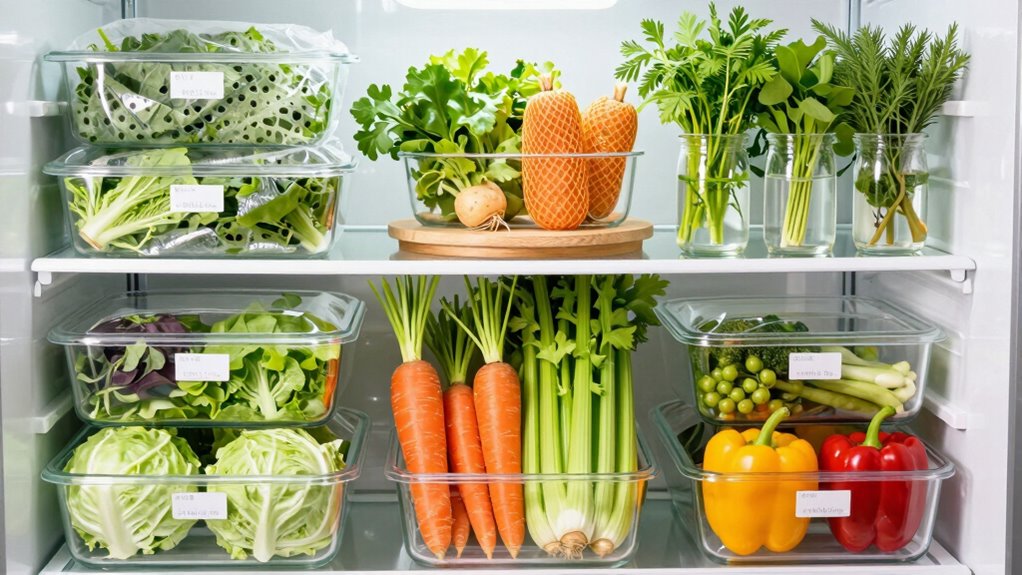
When you organize your small fridge properly, rotating vegetables becomes a simple yet powerful strategy to prevent spoilage and extend freshness.
You should check your produce weekly, moving older items to the front where you’ll notice them first. This first-in, first-out approach prevents forgotten vegetables from deteriorating in back corners.
Place newer vegetables behind existing ones, creating a natural rotation system. You’ll find this method particularly effective for leafy greens, carrots, and broccoli that tend to wilt or soften over time.
Regular rotation also helps you spot spoiled items quickly, preventing mold from spreading to fresh produce. Make this habit part of your weekly meal planning routine for maximum effectiveness.
Store Fresh Herbs Without Losing Flavor
Fresh herbs lose their vibrant flavor quickly if you don’t store them properly, so treat them like the delicate ingredients they are.
You’ll maximize their lifespan with these simple techniques:
- Trim stems and change water every two days – This prevents bacterial growth that dulls flavors
- Store tender herbs in refrigerator crisper – Basil, cilantro, and parsley last longer in cool, humid conditions
- Wrap woody herbs in damp paper towels – Rosemary and thyme stay fresh longer with consistent moisture
- Use airtight containers for chopped herbs – Prevents flavor loss and cross-contamination
- Freeze excess herbs in oil – You’ll preserve peak flavor for months
These methods work because they control moisture, temperature, and air exposure – the three factors that cause herbs to deteriorate.
Your dishes will taste more vibrant when you implement these storage solutions.
Avoid Cross-Contamination in Tight Storage
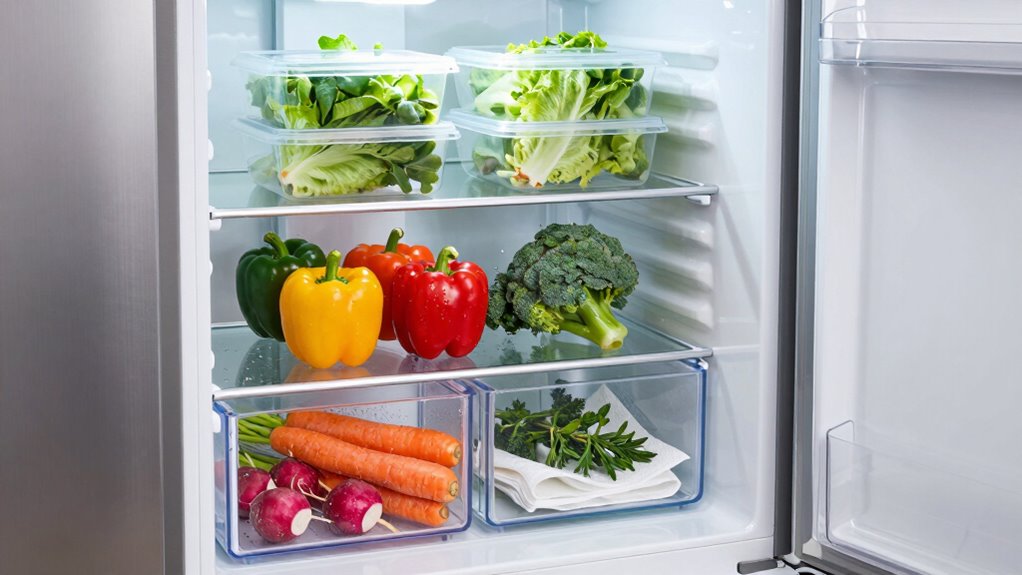
Cross-contamination becomes a serious concern when you’re cramming multiple vegetables into limited fridge space, so you’ll need strategic separation methods to keep everything safe.
Store raw vegetables separately from ready-to-eat foods using designated bins or containers. Keep ethylene-producing vegetables like tomatoes away from ethylene-sensitive ones like leafy greens.
Use perforated plastic bags for moisture control while maintaining airflow. Place new vegetables behind older ones to guarantee proper rotation.
Wipe down storage containers regularly to prevent bacterial buildup. Separate strong-smelling vegetables like onions from delicate herbs.
Create designated zones within your fridge for different vegetable types. Use clean hands and utensils when handling vegetables.
Store cut vegetables in sealed containers immediately. These practices protect your family’s health while maximizing your small fridge’s efficiency.
Daily Tips to Maintain Freshness Longer
While you’re organizing your small fridge, remember that maintaining vegetable freshness requires consistent daily attention to storage conditions and handling practices. Your daily routine makes the difference between crisp vegetables and wilted waste.
Keep your fridge temperature at 40°F or below for ideal vegetable preservation. Check your refrigerator’s thermometer regularly.
- Inspect vegetables daily – Remove any wilted or spoiled pieces immediately to prevent spreading.
- Maintain proper humidity – Adjust crisper drawers based on vegetable type.
- Rotate stock regularly – Use older vegetables first to minimize waste.
- Keep vegetables dry – Wipe up moisture and avoid washing until ready to use.
- Check expiration dates – Stay aware of when items need consuming.
These simple daily habits extend freshness considerably.
Why Vegetables Spoil Early and How to Fix It
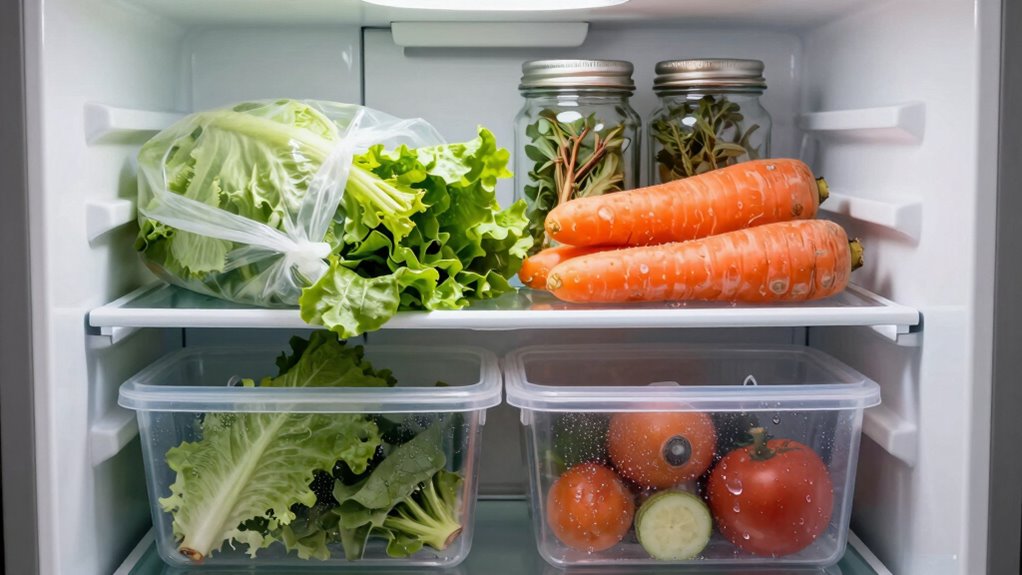
Understanding why vegetables spoil early helps you make better storage decisions in your small fridge. Ethylene gas accelerates ripening and decay, so you need to separate ethylene-producing vegetables like tomatoes and bananas from sensitive ones like leafy greens.
Temperature fluctuations cause moisture buildup, creating mold-friendly environments. You should store vegetables at consistent temperatures between 32-40°F.
Humidity levels matter too – some vegetables prefer high humidity while others need dry conditions. Improper ventilation traps gases and moisture, speeding spoilage.
You can fix these issues by using crisper drawers correctly, wrapping vegetables appropriately, and maintaining proper fridge organization. Regular temperature monitoring guarantees your vegetables stay fresh longer.
These simple adjustments prevent premature spoilage.
Extend Shelf Life With Smart Fridge Habits
Because ethylene gas accelerates spoilage, you should store fruits and vegetables separately to maximize freshness. This simple habit prevents premature decay and keeps your produce crisp longer.
Smart storage makes all the difference in your small fridge:
- Wrap leafy greens in paper towels to absorb excess moisture
- Store herbs upright in water like flowers
- Keep mushrooms in paper bags instead of plastic
- Place ethylene-producing fruits away from sensitive vegetables
- Maintain consistent fridge temperature between 34-38°F
These evidence-based practices help your vegetables stay fresh longer, reducing waste and saving money.
You’re not just storing food—you’re creating a system that works with your lifestyle. Small changes like these make a big difference in how long your produce lasts.
Conclusion
You’ve learned the secrets to fridge efficiency, but what happens when you’re away for days? Spoilage doesn’t wait. Master these techniques—humidity control, strategic separation, smart containers—and watch your vegetables outlast expectations. The real test? Maintaining freshness while you’re gone. Can your current system handle that challenge?