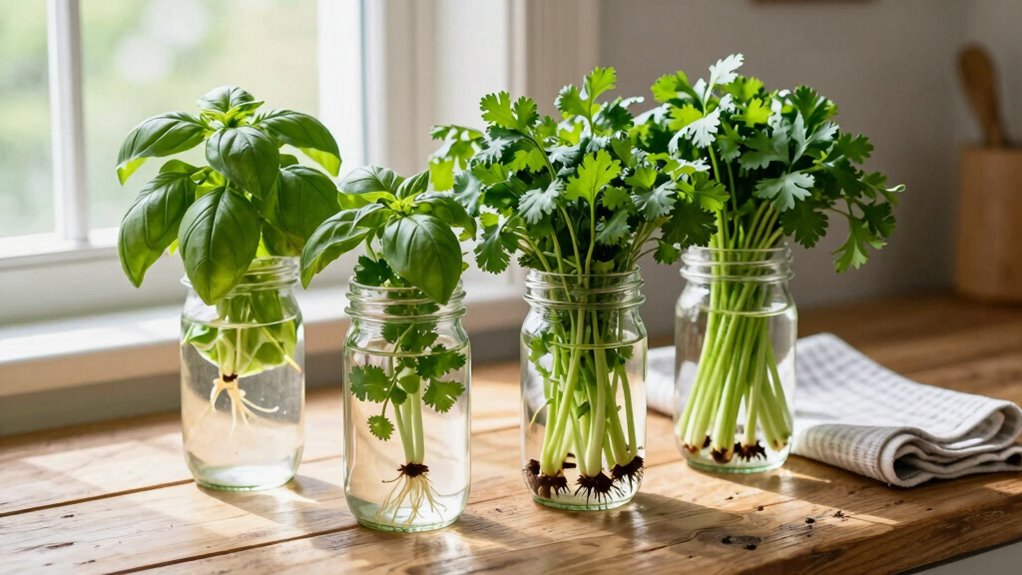
You probably throw away nearly 30% of fresh herbs before using them, wasting money and flavor. Storing herbs properly extends their life considerably, but most people don’t know the simple techniques that make the difference. Soft herbs need different treatment than woody varieties, and temperature control matters more than you’d expect. Understanding these methods will save you money while ensuring vibrant flavors stay preserved longer.
Why Do Fresh Herbs Spoil So Fast?
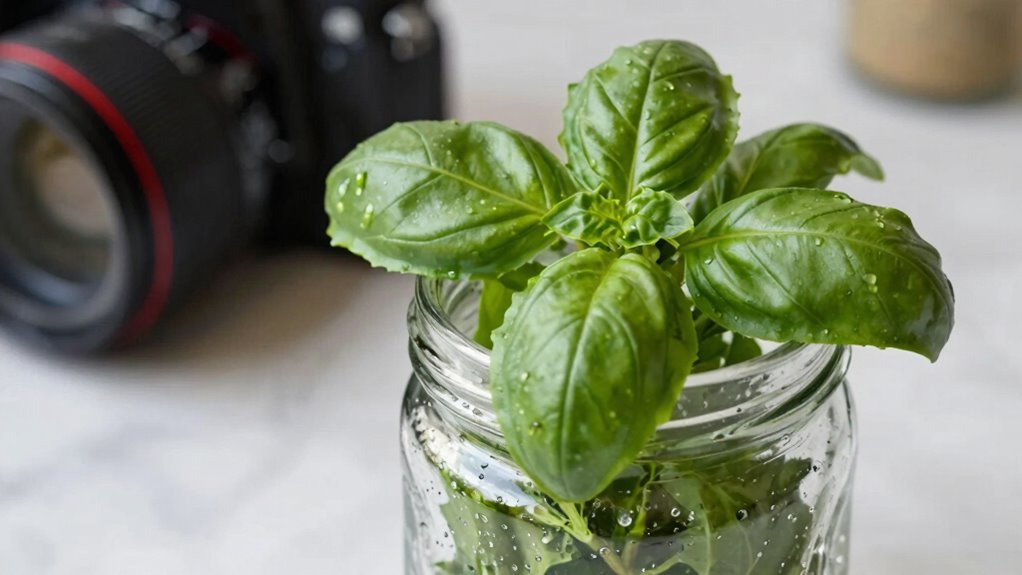
Fresh herbs spoil quickly because they’re living plant tissues that continue respiring after harvest, rapidly depleting their stored nutrients and moisture.
You witness this process as leaves wilt, stems become limp, and vibrant colors fade to brown. These delicate plants lack protective barriers that hardier vegetables possess. Their thin cellular structures lose water rapidly through transpiration, causing irreversible damage.
You notice how basil, cilantro, and parsley deteriorate within days because they can’t replenish lost resources once separated from roots. The respiration process accelerates in warm environments, making temperature control essential for preservation.
Understanding this biological reality helps you appreciate why proper storage techniques matter. You belong to a community that values fresh ingredients, so recognizing these spoilage mechanisms empowers you to extend herb lifespan effectively.
This knowledge transforms how you approach kitchen organization and meal planning.
Soft Herbs: Paper Towels & Plastic Bags
One effective method for preserving soft herbs like basil, cilantro, and parsley involves combining absorbent paper towels with perforated plastic bags.
You wrap your herbs gently in dry paper towels first, which absorb excess moisture that causes spoilage.
Place them in plastic bags with small holes punched throughout for ventilation. Seal the bag partially, allowing air circulation while maintaining humidity.
Store in your refrigerator’s crisper drawer where temperatures stay consistently cool.
Check your herbs every few days, replacing damp paper towels immediately to prevent mold growth.
This method works because it controls moisture levels while allowing proper airflow. You’ll extend your herbs’ freshness by several days compared to storing them loosely in bags.
The paper towels protect delicate leaves from bruising while maintaining ideal conditions for preservation.
Woody Herbs: Treat Them Like Fresh Flowers
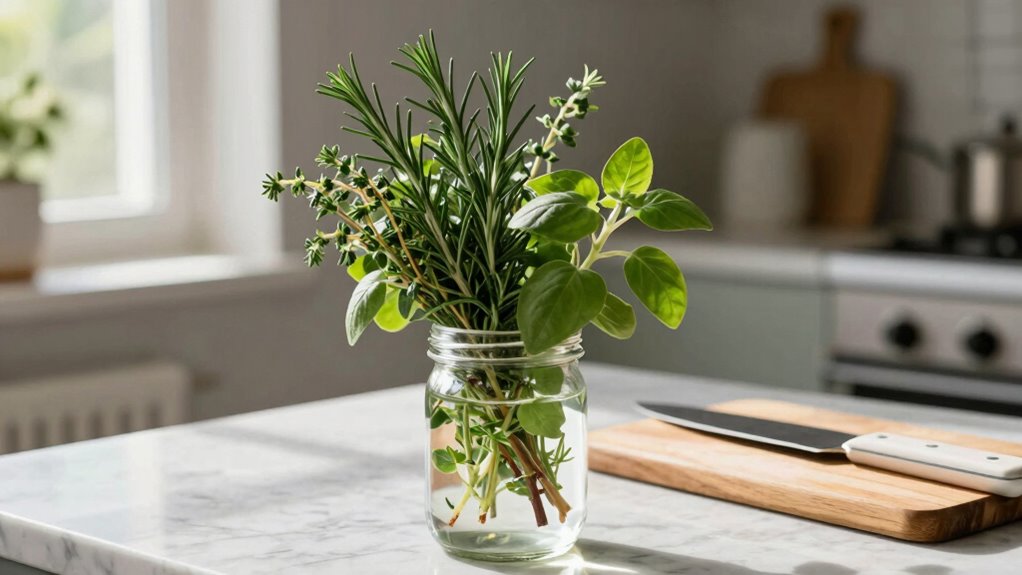
You should trim woody herb stems at an angle every two days to maximize water absorption and prevent bacterial buildup.
Change the water completely each morning to maintain ideal freshness and prevent wilting.
Remove any leaves that show signs of yellowing or softening immediately to protect the remaining herbs.
Trim Stems Regularly
Trim woody herb stems at an angle every few days to maximize water absorption and extend freshness. You’ll want to cut about half an inch from the bottom using sharp scissors or a knife.
This angled cut increases surface area for better water uptake while preventing the stem from sitting flat against the container bottom. Rosemary, thyme, and sage especially benefit from this treatment.
Don’t wait until stems become slimy or discolored – preemptive trimming keeps herbs vibrant longer. Cut stems immediately after purchasing, then repeat every two to three days.
Place freshly trimmed ends directly into clean water. The angled cut should face upward, allowing maximum water contact.
This simple technique mimics how florists maintain cut flowers, giving you that same professional-level freshness preservation.
Change Water Daily
While keeping woody herbs fresh requires consistent attention to water quality, changing the water daily prevents bacterial growth that rapidly deteriorates herb quality.
You should pour out stale water completely each morning, then thoroughly rinse the container with warm water. Fill with fresh, cool water that’s been filtered or left sitting overnight to dissipate chlorine.
Submerge stems immediately, ensuring they’re fully underwater. Check water levels twice daily, topping off as needed.
Woody herbs like rosemary, thyme, and oregano demand this floral care approach because their dense stems harbor bacteria more readily than tender herbs.
You’re not just hydrating stems—you’re maintaining a clean environment that mimics their natural growing conditions. This simple daily routine extends freshness by three to five days, letting you enjoy garden-quality herbs long after purchase.
Remove Wilting Leaves
Fresh water alone won’t preserve woody herbs if decaying foliage contaminates the container. You must remove wilting leaves immediately to prevent bacterial growth that spoils entire bunches.
Check stems daily for yellowing or soft spots. Pinch off damaged leaves at their base using clean fingers or scissors. Don’t let fallen leaves sit in water or they’ll create slimy buildup.
Treat woody herbs like fresh flowers by trimming stems every few days. Remove any leaves that show signs of browning or wilting before placing herbs in storage. This simple step extends freshness dramatically.
Your herbs will last longer when you actively monitor and remove deteriorating foliage. Regular maintenance prevents contamination that ruins whole containers. Keep your storage area clean and inspect herbs before each use.
Which Fresh Herbs Should You Store in Water?
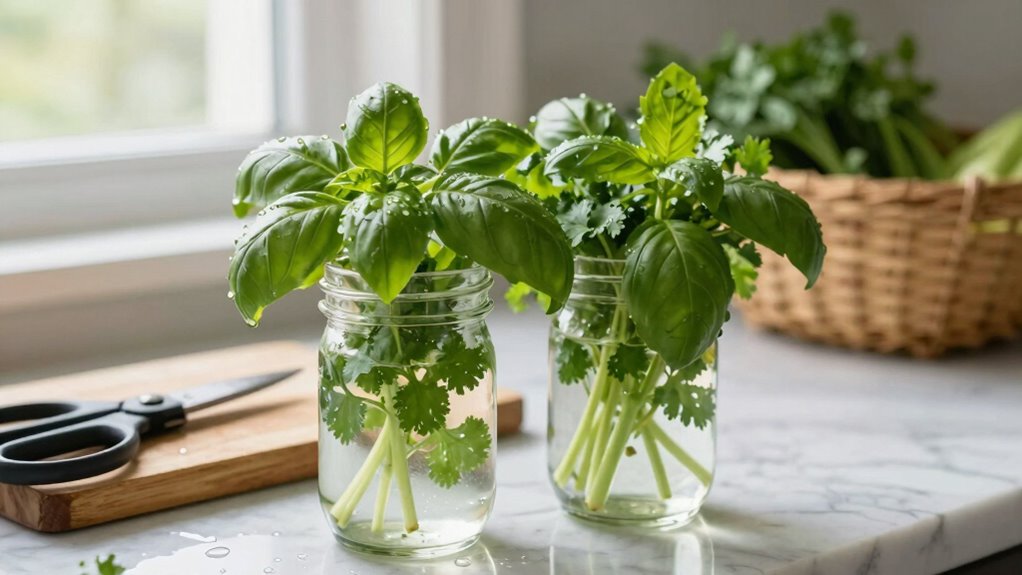
You should store certain fresh herbs in water to maximize their shelf life, particularly those with woody stems that can absorb moisture effectively.
Basil, cilantro, parsley, mint, and dill thrive when their stems sit in water. These herbs have vascular systems that transport water upward, keeping leaves fresh longer.
Avoid storing delicate herbs like oregano or thyme in water, as they’ll become soggy. Instead, focus on herbs with sturdier stems that won’t wilt quickly.
Trim the bottom of each stem before placing them in clean water. Change the water every two days to prevent bacterial growth.
Store these herbs in cool, indirect light away from heat sources. You’ll notice herbs stored properly in water maintain their vibrant color and robust flavor considerably longer than those left in plastic bags.
Storing Fresh Herbs in the Fridge
You should wrap fresh herbs in damp paper towels before placing them in the refrigerator’s crisper drawer, where the controlled humidity extends their natural shelf life by preventing moisture loss.
Maintaining proper refrigerator storage methods involves checking the paper towels every few days and replacing them when they become dry or moldy.
These preservation-focused techniques help your herbs retain their vibrant color and robust flavor for up to two weeks longer than improper storage methods.
Proper Refrigerator Storage Methods
One effective method for extending herb freshness involves proper refrigerator storage techniques that maintain perfect moisture levels and airflow.
You should wrap tender herbs like basil, cilantro, and parsley in damp paper towels before placing them in resealable plastic bags. Store these bags in your refrigerator’s crisper drawer where humidity levels remain consistent.
For hardier herbs such as rosemary and thyme, trim the stems and place them in small containers with minimal water, covering loosely with plastic wrap. Confirm your refrigerator temperature stays between thirty-five and forty degrees Fahrenheit for best preservation.
Check herbs regularly and remove any wilted leaves immediately to prevent spoilage from spreading.
These systematic approaches help maintain your herbs’ vibrant colors, robust flavors, and nutritional value while maximizing their usable lifespan in your kitchen.
Extending Herb Shelf Life Naturally
Building on proper refrigerator storage methods, extending herb shelf life naturally requires maintaining ideal conditions that preserve freshness without artificial preservatives.
You should regulate humidity levels between seventy-five to eighty-five percent to prevent wilting or molding. Store herbs in perforated plastic bags or breathable containers that allow air circulation while retaining moisture.
Maintain refrigerator temperature at forty degrees Fahrenheit or below. Check herbs regularly and remove any deteriorating leaves immediately to prevent spoilage spread.
Trim stems every few days under running water to promote water absorption. You can also store herbs upright in small water bottles, covering loosely with plastic bags. Replace water every two days.
These natural preservation techniques help your herbs retain flavor and nutrients longer, making you feel more confident about reducing food waste while maximizing your investment.
How to Freeze Fresh Herbs for Later
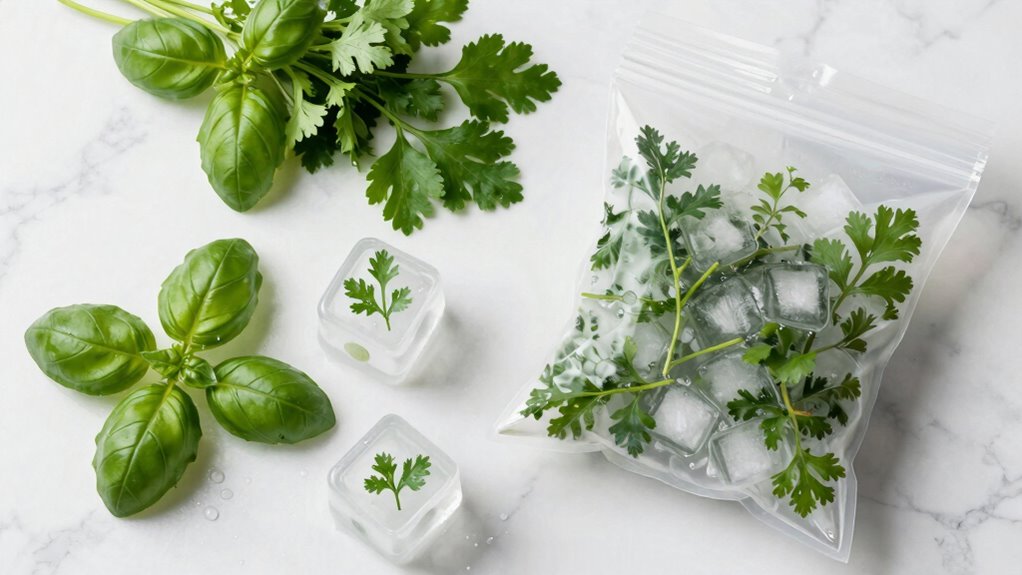
Freezing fresh herbs requires careful preparation to maintain their flavor and texture for future use. You should wash herbs gently in cold water, then pat them completely dry with paper towels.
Remove any wilted or discolored leaves before proceeding. For best results, freeze herbs in small portions you typically use for cooking. You can chop them finely and place teaspoons into ice cube trays, covering with water or olive oil before freezing.
Alternatively, lay whole sprigs on parchment-lined baking sheets, freeze until solid, then transfer to airtight containers. Label everything with dates and herb names.
Frozen herbs work perfectly for cooked dishes, though they won’t retain crispness for garnishes. This method lets you enjoy garden-fresh flavors all year round, connecting you to seasonal abundance regardless of your living situation.
Herb Storage Mistakes Killing Your Fresh Herbs
While proper storage techniques can extend your herbs’ lifespan considerably, several common mistakes actively shorten their freshness and flavor.
You might be washing herbs immediately after purchase, which introduces excess moisture that promotes bacterial growth. Storing herbs near ethylene-producing fruits like apples and bananas accelerates deterioration.
Leaving herbs in plastic bags without ventilation creates a humid environment that kills delicate leaves. You shouldn’t tie herbs too tightly when bundling, as this crushes stems and restricts airflow.
Placing herbs in direct sunlight or hot areas causes rapid wilting. Using wet paper towels or containers introduces mold spores.
Finally, storing different herb varieties together creates flavor transfer issues. These errors dramatically reduce your herbs’ usable life, forcing you to buy replacements sooner than necessary.
Pro Tips for Long-Lasting Fresh Herbs
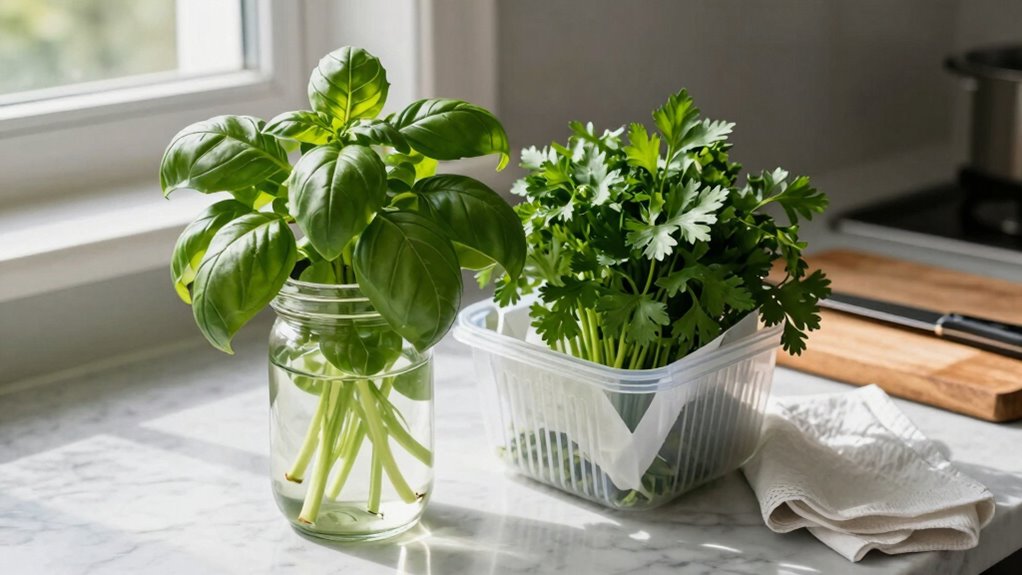
Although you’ve avoided common storage mistakes, implementing specific preservation techniques will maximize your fresh herbs’ longevity.
You should trim stems at an angle under running water to improve water absorption. Place herbs in glass jars with two inches of water, covering tender leaves with plastic bags. Store basil at room temperature away from direct sunlight, while other herbs thrive in refrigerator crisper drawers.
Change water every two days and remove wilted leaves promptly. You can extend shelf life by wrapping herbs in damp paper towels before refrigeration.
Freeze excess herbs in ice cube trays filled with water or oil for future cooking. Dry surplus herbs by hanging small bundles upside down in ventilated areas.
These methods preserve flavor compounds and prevent bacterial growth effectively.
Conclusion
You’ll be amazed how these simple storage techniques can keep your fresh herbs vibrant for weeks instead of days. Wrap soft herbs in paper towels, treat woody stems like cut flowers, and always store everything in the crisper drawer away from ethylene-producing fruits. Your herbs will last so long, you’ll forget when you bought them.