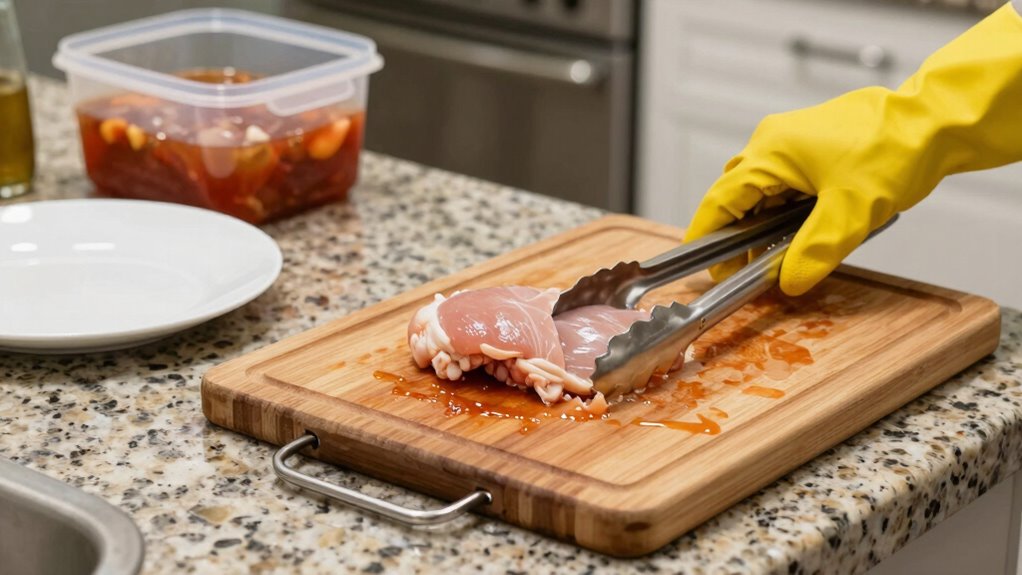
You might not realize that raw meat can contaminate your kitchen surfaces and other foods within seconds of contact. Cross-contamination happens when harmful bacteria spread from raw meat to cutting boards, utensils, or ready-to-eat items. Without proper prevention methods, you’re risking foodborne illness for everyone who eats your meals. Let’s explore the essential steps that keep your food safe.
What Is Cross Contamination?
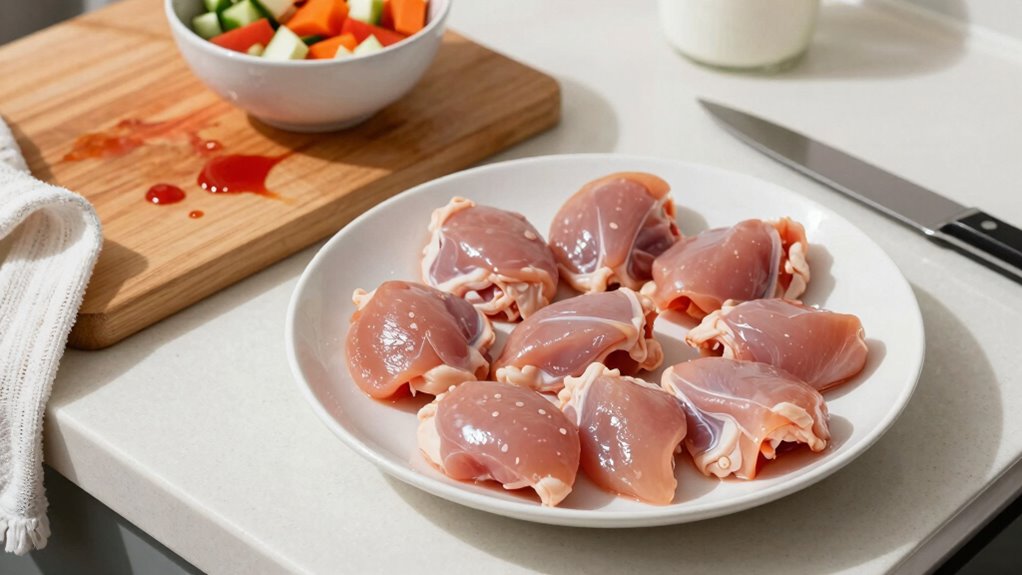
Cross contamination occurs when harmful bacteria spread from one surface, food item, or area to another, creating a pathway for foodborne illness.
You become vulnerable when bacteria transfer between raw meat, cutting boards, utensils, and ready-to-eat foods. Your kitchen surfaces harbor invisible pathogens that multiply rapidly under favorable conditions. Without proper handling, you’re unknowingly creating a breeding ground for E. coli, Salmonella, and other dangerous microorganisms.
Understanding cross contamination helps you protect your family’s health.
You must recognize how bacteria travel through contact, airborne particles, and improper storage. Every time you place raw meat near vegetables or use the same knife for different foods, you’re risking contamination. Your awareness prevents illness outbreaks that could affect everyone you care about.
How to Prevent Cross Contamination When Cooking Meat
You must handle raw meat carefully to prevent harmful bacteria from spreading to other foods, surfaces, and utensils.
Store meat properly in sealed containers on the bottom shelf of your refrigerator to avoid dripping onto other items.
These essential practices form the foundation of safe meat preparation in your kitchen.
Safe Handling Practices
When handling raw meat, always wash your hands thoroughly with soap and warm water for at least twenty seconds before and after touching any raw meat products.
You should use separate cutting boards for raw meat and other foods to prevent bacterial transfer.
Never place cooked meat on surfaces that previously held raw meat without cleaning them first.
Keep raw meat away from ready-to-eat foods in your refrigerator and during preparation.
You must clean and sanitize all utensils, plates, and surfaces that come into contact with raw meat immediately after use.
Don’t reuse marinades that have touched raw meat unless you boil them first.
Always use tongs or spatulas when turning meat, and never place cooked meat back on the same plate that held raw meat.
Proper Storage Techniques
Store raw meat on the bottom shelf of your refrigerator to prevent juices from dripping onto other foods.
You should always keep raw meat separate from ready-to-eat items. Place meat in sealed containers or wrapped tightly in plastic wrap.
Check your refrigerator temperature regularly – it should stay at 40°F or below.
Don’t leave raw meat at room temperature for more than two hours.
You’re safer when you follow first-in, first-out rotation – use older meat before newer purchases.
Marinades and meat juices are breeding grounds for bacteria, so handle them carefully.
Store meat away from vegetables and fruits.
You belong in the kitchen when you master these storage basics.
Keep your family healthy by maintaining proper refrigerator organization. Your diligence prevents foodborne illness and protects everyone you feed.
Store Raw Meat Safely to Stop Bacteria Before It Spreads
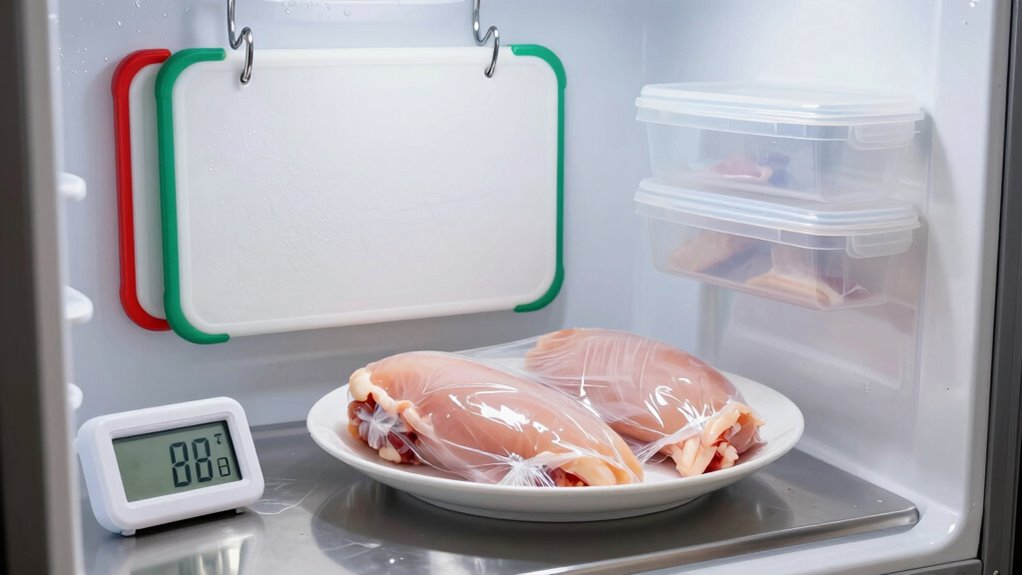
You must store raw meat at the correct refrigerator temperature to prevent bacterial growth.
Choose appropriate storage containers that won’t leak or contaminate other foods.
These basic storage practices stop dangerous bacteria before they can spread throughout your kitchen.
Proper Refrigerator Temperature Settings
One essential step in preventing cross contamination starts before you even begin cooking: maintaining your refrigerator at the proper temperature to keep raw meat safe.
You should set your refrigerator between 32°F and 40°F to effectively slow bacterial growth. Keep your freezer at 0°F or below for long-term storage. Don’t rely on guesswork—invest in a reliable thermometer to monitor temperatures accurately.
Check your fridge’s temperature regularly, especially after power outages or when adding warm items. Store raw meat on the lowest shelf to prevent juices from dripping onto other foods.
Remember that bacteria multiply rapidly between 40°F and 140°F, so keeping your refrigerator cold stops contamination before it begins. Proper temperature control gives you peace of mind that your food stays safe.
Safe Meat Storage Container Options
Proper container selection plays an essential role in preventing raw meat juices from contaminating other foods in your refrigerator.
You should always use leak-proof containers with tight-fitting lids when storing raw meat. Glass containers work excellently because they’re non-porous and easy to clean thoroughly. Plastic containers designed specifically for meat storage also function well, but avoid using cheap alternatives that might crack or leak.
Place raw meat on the bottom shelf of your refrigerator to prevent dripping onto other foods. You’ll want to use containers that fit properly in your fridge without overcrowding.
Never store raw meat in its original packaging for extended periods – transfer it to proper storage containers immediately. Metal containers aren’t ideal since they can react with acidic meat juices.
Always label your containers with dates so you can track freshness and prevent bacterial growth from prolonged storage periods.
Use Separate Cutting Boards for Meat and Everything Else
Using separate cutting boards for raw meat and other foods prevents harmful bacteria from spreading throughout your kitchen. You should designate one board exclusively for raw meat, poultry, and seafood. Use different boards for vegetables, fruits, and bread. This simple habit protects your family from foodborne illness.
Choose boards made of wood, plastic, or bamboo. Avoid porous materials that harbor bacteria. Clean your meat board immediately after use with hot, soapy water. Sanitize it regularly.
Don’t risk cross-contamination by switching between foods on the same surface. Keep your kitchen safe by maintaining this essential separation.
Your family’s health depends on these basic food safety practices. Make separate cutting boards standard procedure in your cooking routine.
Keep Raw Meat Juices Away From Ready-To-Eat Foods
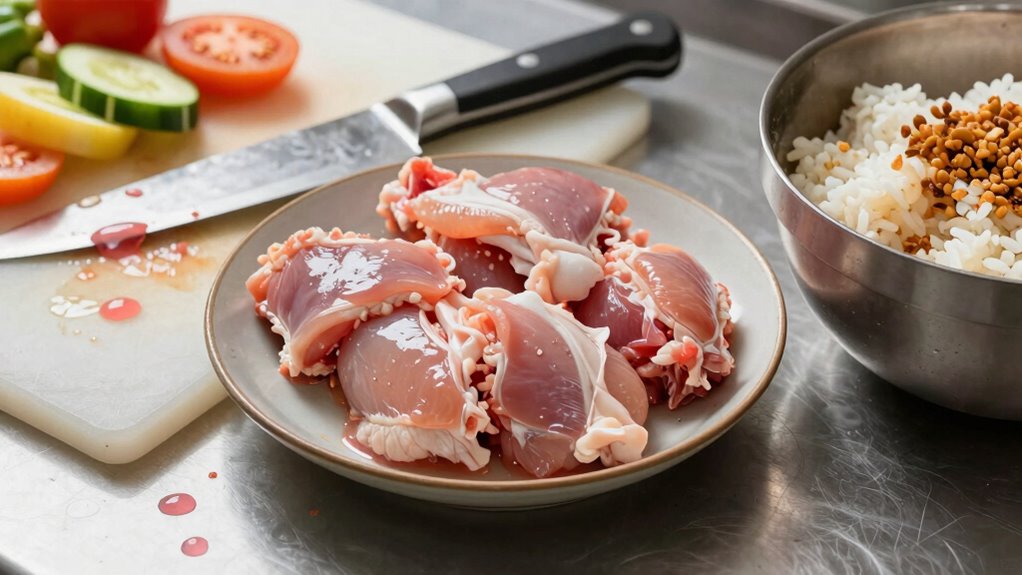
Raw meat juices contain harmful bacteria that can easily contaminate foods you won’t cook again, so keeping them separated is essential for food safety.
You must actively prevent cross-contamination by following these vital steps:
- Store raw meat on the bottom shelf of your refrigerator to prevent dripping onto other foods. Keep it in sealed containers or wrapped tightly.
- Use separate plates and utensils for raw and cooked meats. Never place cooked food on surfaces that touched raw meat juices.
- Handle ready-to-eat foods carefully by keeping them away from areas where raw meat sits. Move salads, fruits, and other uncooked items to clean spaces.
These practices protect your family’s health while building confidence in your cooking abilities.
Clean and Sanitize Kitchen Surfaces After Every Use
Kitchen surfaces harbor dangerous bacteria after contact with raw meat, so you must clean and sanitize them thoroughly after every use.
Don’t rely on wiping alone – visible cleanliness isn’t enough.
First, wash surfaces with hot, soapy water to remove food particles and oils.
Then, apply a sanitizing solution. You can use commercial sanitizers or create your own by mixing one tablespoon of unscented bleach with one gallon of water.
Let the solution sit on surfaces for at least one minute before air-drying.
Pay special attention to cutting boards, countertops, and any areas where raw meat rested.
This two-step process eliminates harmful pathogens that cause foodborne illness.
Make this cleaning routine automatic – your family’s health depends on it.
Always Wash Your Hands the Right Way
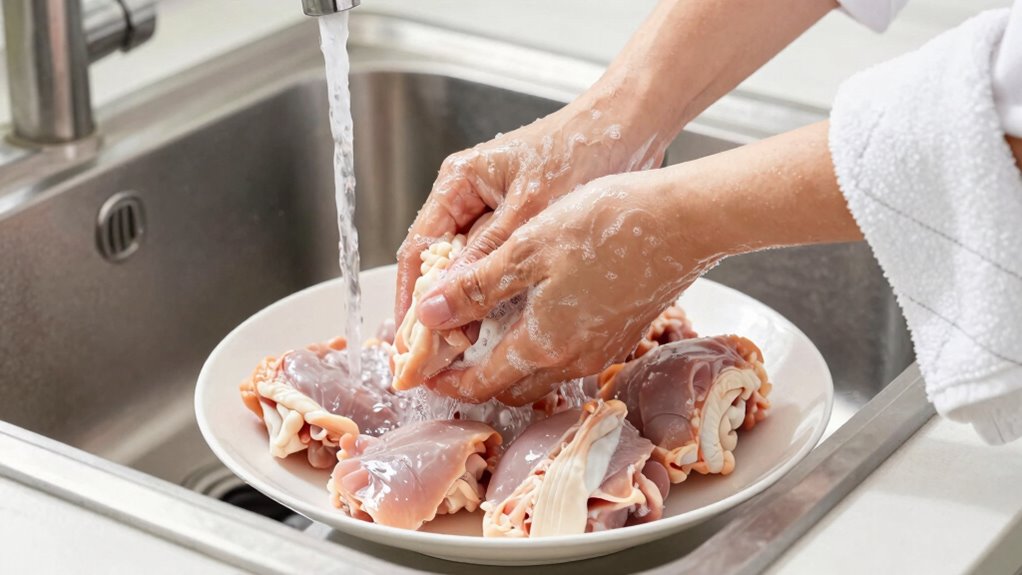
You must wash your hands correctly after handling raw meat to stop bacteria from spreading.
Use antibacterial soap and scrub thoroughly for at least 20 seconds, making sure you clean under your nails and between your fingers.
Dry your hands completely with a clean towel or air dryer afterward.
Proper Hand Washing Technique
Because bacteria from raw meat can easily transfer to your hands during food preparation, proper hand washing becomes essential for preventing cross-contamination.
You must master the correct technique to protect yourself and your family.
- Wet your hands with clean, running water before applying soap. Warm water works best for breaking down oils and bacteria effectively.
- Scrub all surfaces including palms, backs of hands, between fingers, and under nails for at least twenty seconds. Don’t forget wrists and fingertips.
- Rinse thoroughly under clean, running water and dry with a clean towel or air dryer.
This simple routine eliminates harmful bacteria and prevents foodborne illness.
Make it second nature.
Use Antibacterial Soap Thoroughly
While handling raw meat during cooking, always wash your hands thoroughly with antibacterial soap to eliminate harmful bacteria that can cause foodborne illness.
You must lather soap between all fingers, under nails, and around wrists for at least twenty seconds. Don’t rush this critical step – proper hand washing prevents transferring pathogens to other surfaces or foods.
Make sure you clean your palms, backs of hands, and fingertips completely. Rinse thoroughly under warm running water afterward.
Using antibacterial soap provides extra protection against salmonella, E. coli, and other dangerous microorganisms commonly found on raw poultry, beef, and pork.
Dry Hands Completely Afterward
After washing your hands thoroughly with antibacterial soap, dry them completely using a clean towel or paper towels.
Wet hands spread bacteria more easily than dry ones, so proper drying is vital for preventing cross-contamination.
You should follow these essential drying steps:
- Use clean drying materials – Always grab a fresh paper towel or verify your cloth towel was recently laundered to avoid recontaminating your hands.
- Dry thoroughly between fingers – Bacteria thrive in moist spaces, so spend extra time drying between your fingers and around your nails where moisture lingers.
- Turn off faucets properly – Use a paper towel to shut off the faucet after drying your hands completely, preventing recontamination from faucet handles.
Never Reuse Marinades Without Cooking Them First
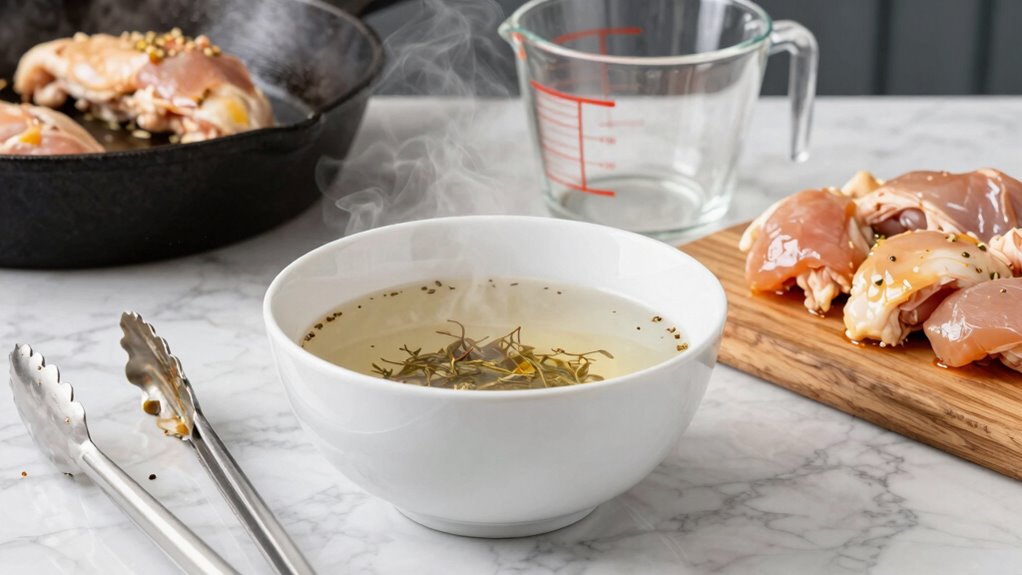
Marinades that have contacted raw meat carry harmful bacteria and should never be reused unless you cook them first. You might think it’s okay to use leftover marinade as a sauce, but this creates serious food safety risks.
Bacteria from raw meat transfers to the marinade, making it unsafe to consume without proper heating. Always discard used marinades or bring them to a rolling boil for at least one minute before using. This kills dangerous pathogens like Salmonella and E. coli.
Keep new marinades separate from used ones to avoid cross-contamination. When marinating, reserve some clean marinade for basting during cooking.
Store it separately and use only the reserved portion that hasn’t touched raw meat. Your family deserves safe, healthy meals every time.
Use Different Plates and Utensils for Raw and Cooked Meat
One essential rule for safe meat preparation is keeping raw and cooked meat separated on different plates and utensils. You shouldn’t risk transferring harmful bacteria from raw meat to your finished dish.
- Designate specific cutting boards – Use one board exclusively for raw meat and another for cooked foods and vegetables.
- Keep separate serving platters – Never place cooked meat back on the same plate that held raw meat unless you’ve washed it first.
- Use distinct utensils – Assign different tongs, spatulas, and knives for raw and cooked meat handling.
This separation prevents cross-contamination and keeps your family safe. You’re not just following rules – you’re protecting everyone you cook for.
Make this practice second nature in your kitchen routine.
Handle Thawing Meat Without Risking Contamination
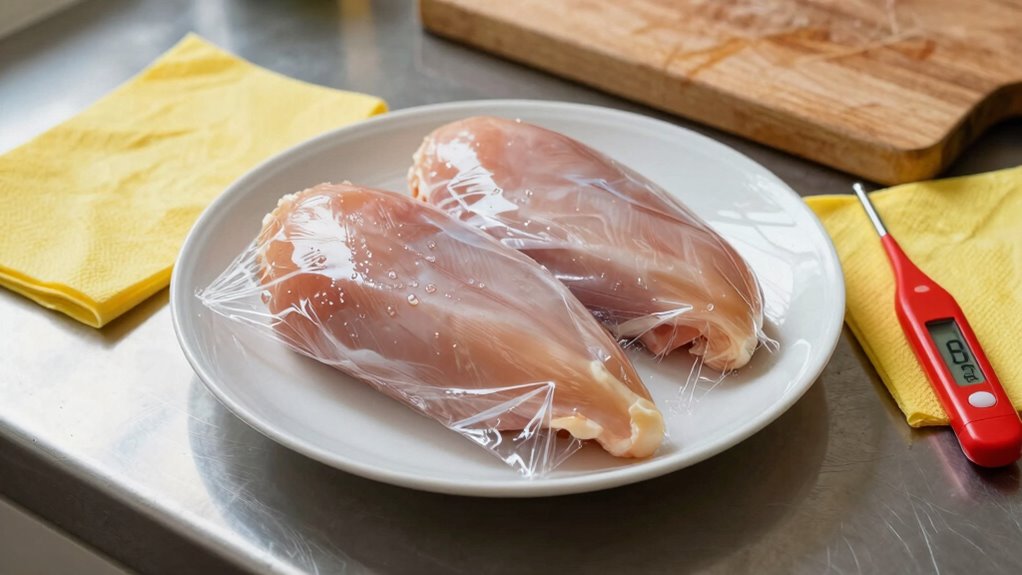
When you’re thawing frozen meat, you must prevent harmful bacteria from spreading throughout your kitchen.
Don’t thaw meat on countertops or in warm water, as these methods promote bacterial growth. Instead, thaw meat safely in your refrigerator, allowing twenty-four hours for every four to five pounds.
You can also use cold water thawing by submerging sealed meat in cold water, changing the water every thirty minutes. Microwave thawing works for immediate cooking, but you must cook the meat immediately afterward.
Always place thawing meat on a plate or tray to catch drips. Never refreeze thawed meat without cooking it first.
Keep raw meat separated from other foods during thawing. Store thawed meat at temperatures below forty degrees Fahrenheit until you’re ready to cook it.
Know Which Foods Are Most Vulnerable to Contamination
You must understand which foods pose the highest contamination risks when handling raw meat.
High-risk items include leafy greens, fruits eaten raw, and any cooked foods that won’t be reheated before consumption.
Knowing these vulnerable foods helps you prioritize safe handling practices and prevent dangerous bacterial transfer.
High-Risk Foods To Avoid
While cooking raw meat poses the greatest contamination risk, other foods also demand careful handling to prevent cross contamination.
You need to recognize which items require extra vigilance in your kitchen.
- Raw eggs and egg products – These harbor salmonella easily, especially when cracked shells contaminate nearby surfaces or foods.
- Unwashed fruits and vegetables – They carry bacteria from soil, transportation, and storage, making them dangerous when mixed with raw meats.
- Dairy products and juices – These support rapid bacterial growth when exposed to contaminants, particularly at room temperature.
You must treat these foods as potential hazards requiring separation from raw meat preparation areas.
Your family’s health depends on recognizing these vulnerabilities. Don’t risk contamination by assuming anything is safe during meat preparation. Stay alert and protect everyone you cook for.
Safe Food Handling Practices
Understanding which foods are most vulnerable to contamination directly impacts your ability to prevent cross contamination effectively.
You need to recognize that raw meats, poultry, and seafood pose the highest risks, along with their juices. These foods carry harmful bacteria like Salmonella and E. coli that can easily spread to other items.
Focus on protecting ready-to-eat foods like salads, fruits, and cooked dishes from raw meat contact. You should always wash your hands thoroughly after handling raw proteins.
Keep raw meats separated from other groceries during shopping and storage. Use dedicated cutting boards for raw meats only. Store raw meats on the bottom shelf of your refrigerator to prevent dripping onto other foods.
You’re creating safer meals when you prioritize these vulnerable foods.
Safe Meat Handling Before Cooking
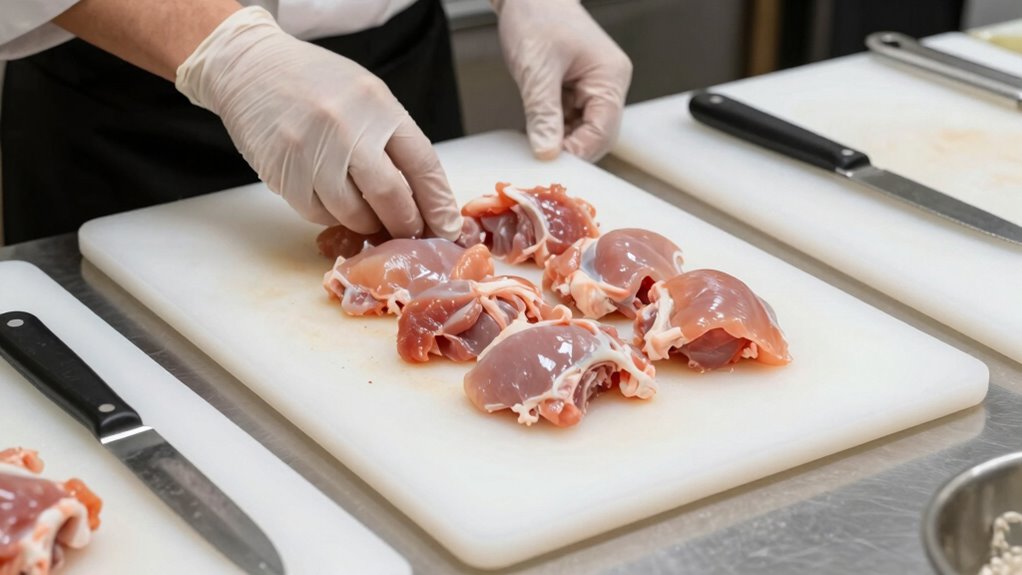
Proper handling of raw meat before cooking requires immediate attention to several critical safety measures. You must treat raw meat as a potential hazard from the moment you bring it home.
- Storage timing matters – Refrigerate or freeze meat within two hours of purchase. Bacteria multiply rapidly at room temperature, so don’t leave meat sitting out while you finish shopping or run other errands.
- Separate packaging is essential – Keep raw meat in sealed containers away from ready-to-eat foods. Use separate bags when grocery shopping and designate specific shelves in your refrigerator for raw meats.
- Temperature control prevents growth – Maintain your refrigerator at 40°F or below. Check that your freezer stays at 0°F or colder to keep meat safely preserved until you’re ready to cook.
5 Red Flags That Signal Unsafe Food Prep
Even when you follow proper storage and handling procedures, certain mistakes during food preparation can still compromise your safety.
You shouldn’t ignore these warning signs: using the same cutting board for raw meat and vegetables without cleaning between uses, or wiping meat juices on your apron instead of proper towels.
Watch out for tasting marinades that contained raw meat, or using utensils that touched raw meat on cooked food.
You’re risking illness when you don’t wash hands thoroughly after handling raw meat, or when you leave meat at room temperature too long.
These habits create dangerous cross-contamination pathways that can make your family sick.
Stay alert to these red flags during meal prep.
Daily Habits to Prevent Cross Contamination
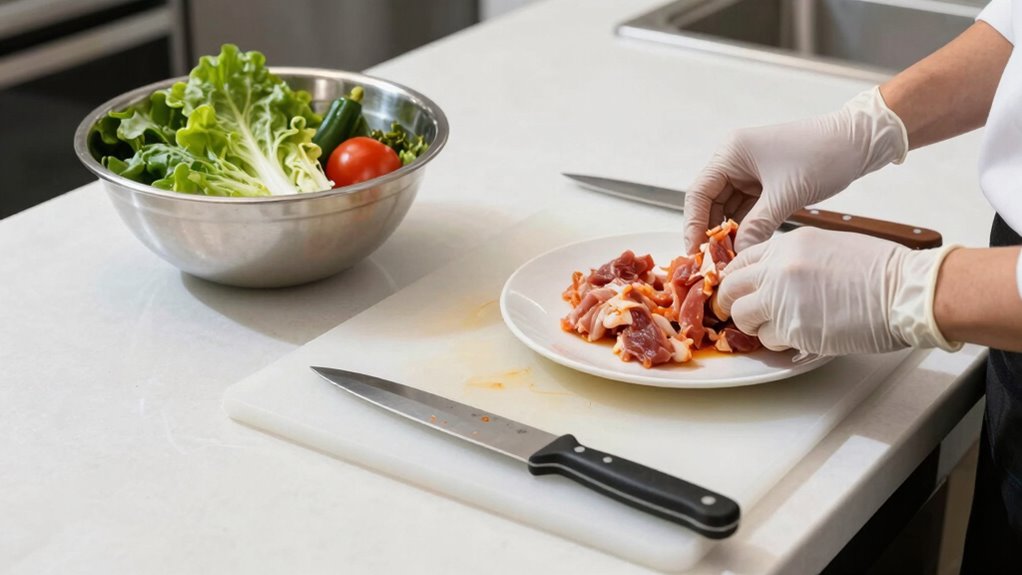
While you’re preparing meals, establishing consistent habits prevents cross contamination from becoming a serious health risk.
You protect your family and yourself by making these practices second nature.
- Clean everything immediately – Wash hands, utensils, and surfaces with hot soapy water after touching raw meat. Don’t wait until cleanup time.
- Use separate cutting boards – Designate one board for raw meat and another for vegetables and cooked foods. Color-coding helps you remember which is which.
- Store raw meat properly – Keep it on the bottom shelf of your refrigerator, wrapped securely to prevent juices from dripping onto other foods.
These simple daily habits become automatic quickly, keeping everyone safe.
Conclusion
Cross-contamination isn’t just a kitchen buzzword—it’s a serious health risk that can make you seriously sick. Raw meat carries dangerous bacteria like Salmonella and E. coli that spread faster than you think. One slip-up with cutting boards or surfaces can contaminate entire meals. Don’t risk it. Follow these prevention methods religiously: separate tools, proper storage, immediate cleaning. Your family’s health depends on treating raw meat handling as a contamination prevention zone, not a casual cooking step.