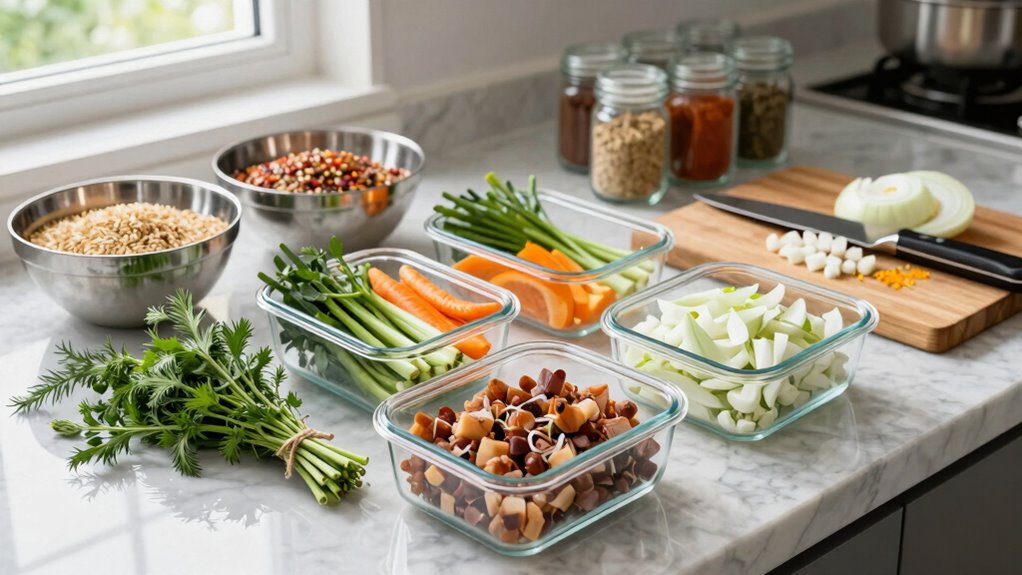
You should start by setting aside a few hours on the weekend to get ahead of your busy week. Wash and chop vegetables like carrots, bell peppers, and leafy greens first—they’re versatile and stay fresh longer. Cook grains and proteins in bulk, then portion everything into containers. This simple routine prevents last-minute stress and guarantees you’ve got the basics ready for quick, healthy meals all week long.
Why Weekly Ingredient Prep Prevents Dinner Stress
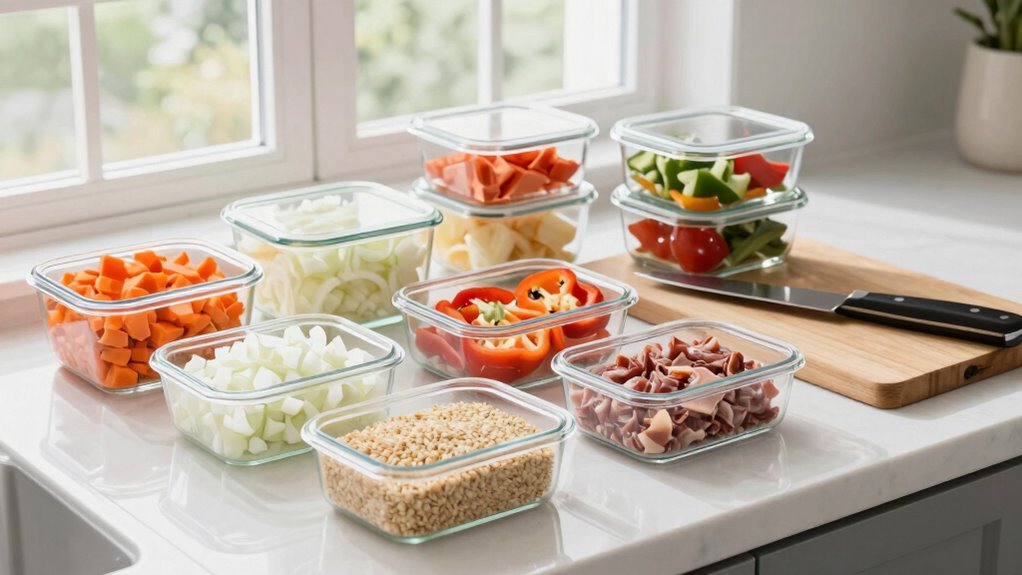
When you spend just a few hours each week preparing ingredients, you eliminate the daily scramble of figuring out what to cook.
You’re not rushing to chop vegetables or measure spices after a long day. Instead, you’ve got everything ready when you need it.
Weekly prep prevents that overwhelming feeling of starting from scratch.
You’re not alone in wanting dinner to come together smoothly. Everyone benefits from having ingredients prepped ahead. Your weeknights become manageable when you’ve already handled the prep work.
You’ll find yourself actually enjoying cooking instead of dreading it.
The stress melts away when you open your fridge and see organized, ready-to-use ingredients waiting for you.
Plan Meals Around a Core Set of Ingredients
You should focus on selecting versatile base items that work across multiple meals throughout your week.
Batch cooking common elements like grains, proteins, and vegetables saves you time and guarantees consistency in your meal preparation.
This approach simplifies your grocery list and reduces the daily decision-making process when you’re short on time.
Choose Versatile Base Items
Having a core set of versatile ingredients on hand transforms meal planning from a challenging task into a streamlined process.
You’ll find that building your meals around adaptable base items saves time and reduces decision fatigue during busy weekdays.
Choose ingredients that work across multiple dishes and cuisines.
These staples become your reliable foundation for quick, satisfying meals that feel familiar and comforting.
- Grains like rice, quinoa, or pasta – they’re filling and pair with countless proteins and vegetables
- Proteins such as eggs, chicken thighs, or tofu – they adapt to various cooking methods and flavor profiles
- Aromatics including onions, garlic, and ginger – they add depth to any dish while building layers of flavor
- Canned beans or lentils – they provide protein and fiber while working in soups, salads, or grain bowls
Batch Cook Common Elements
Prepare your meals efficiently by batch cooking common elements that serve as building blocks for multiple dishes throughout the week.
You’ll save time and reduce stress when you cook staples like rice, quinoa, or pasta in large quantities.
Roast vegetables such as broccoli, sweet potatoes, and bell peppers on the same sheet pan.
Prepare proteins like grilled chicken, tofu, or beans that work across different meals.
Cook grains and proteins on Sunday, then mix and match throughout the week.
Use these prepped ingredients to assemble bowls, salads, or wraps quickly.
Store everything in clear containers so you can see what’s available.
This approach makes healthy eating easier while keeping your kitchen organized and your schedule manageable.
Gather Essential Tools for Faster Prep Work
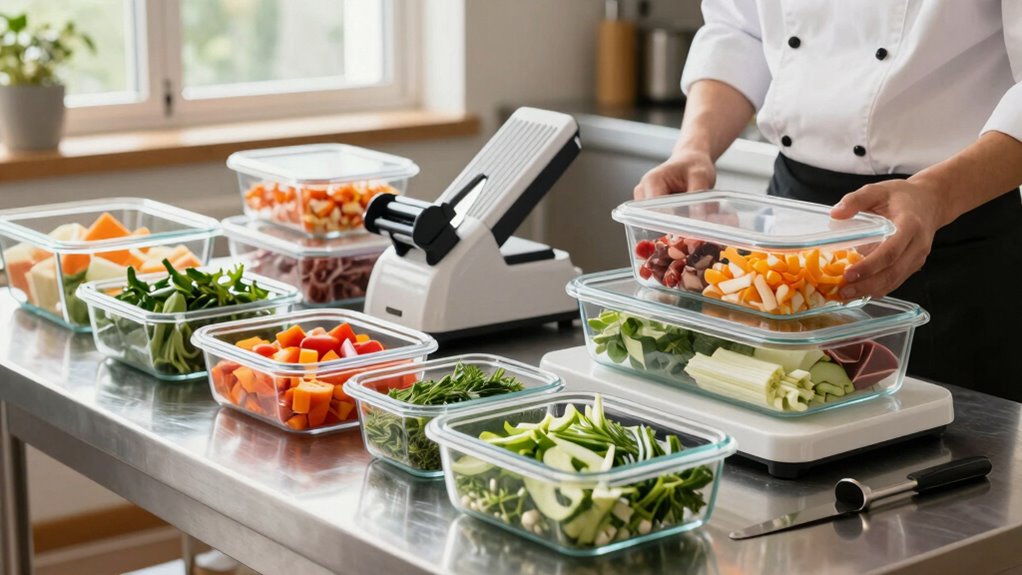
Every cook benefits from having the right tools within reach before starting meal prep.
You’ll work faster and feel more confident when everything you need is ready to grab.
Keep these essentials nearby:
- Sharp knives for clean cuts
- Cutting boards in multiple sizes
- Mixing bowls for combining ingredients
- Measuring cups and spoons for accuracy
Having your tools organized creates a sense of belonging in your kitchen.
You’ll move through prep work seamlessly, knowing exactly where each item belongs.
Sharp knives make chopping effortless instead of struggling with dull blades.
Multiple cutting boards prevent cross-contamination while saving time.
Mixing bowls handle everything from salad prep to marinating proteins.
Precise measurements guarantee consistent results you can trust.
Wash and Chop These Vegetables First
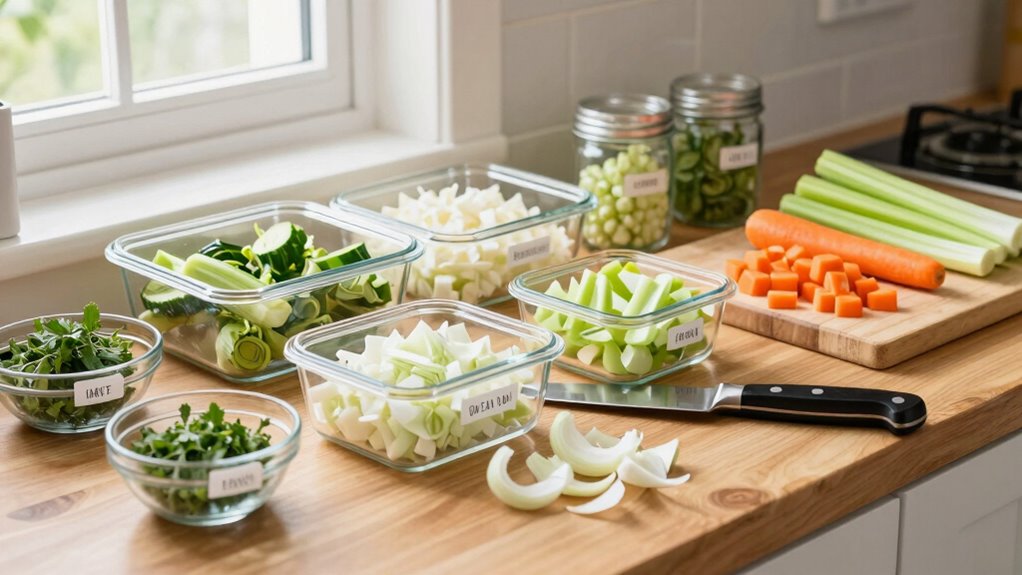
Most vegetables benefit from a quick rinse before you start chopping. You’ll want to tackle carrots, celery, and bell peppers first since they’re versatile and stay crisp longer.
Wash them under cool water, then pat dry with paper towels. Chop carrots into sticks or rounds, slice celery evenly, and cut bell peppers into strips or chunks.
Don’t forget onions and garlic—they’re essential for flavor building. Peel onions if needed, then dice them roughly. Mince garlic cloves finely.
Leafy greens like spinach and kale need extra attention; wash thoroughly and remove tough stems.
Cucumbers and cherry tomatoes also deserve early prep time. Slice cucumbers uniformly for salads or snacks. Halve cherry tomatoes for easier incorporation into meals.
Having these vegetables prepped and ready makes weekday cooking feel manageable and connects you with others sharing similar busy lifestyles.
Store Cut Veggies to Keep Them Crisp
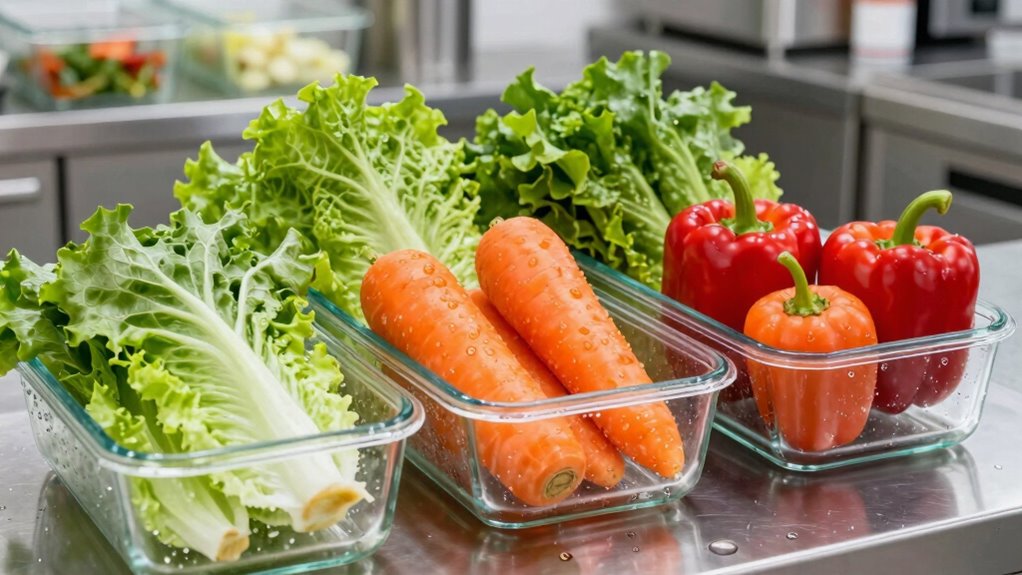
You’ll want to store your prepped vegetables in the right containers to maintain their crispness throughout the week.
Choose breathable storage bags or containers with ventilation holes for vegetables like carrots, celery, and bell peppers.
These storage methods help prevent moisture buildup that causes vegetables to become limp or soggy.
Proper Storage Containers
Investing in the right storage containers makes a significant difference in how long your cut vegetables stay fresh.
You’ll want containers that uphold crispness while preventing moisture buildup.
- Glass meal prep containers with tight-fitting lids create an airtight seal that keeps vegetables fresh longer than plastic alternatives.
- Ventilated plastic containers allow proper airflow while maintaining humidity levels vegetables need.
- Mason jars work perfectly for storing lettuce, herbs, and smaller vegetable pieces when lined with paper towels.
- BPA-free plastic containers with compartmentalized sections prevent vegetables from touching and deteriorating quickly.
Choose containers that fit your refrigerator space and meal prep quantities.
Proper container selection guarantees your prepped vegetables maintain texture and flavor throughout the week.
Best Vegetables For Prepping
Having the right storage containers sets the foundation for successful vegetable prep, but choosing which vegetables to cut and store makes an equally important impact on your weekly routine.
You should focus on vegetables that maintain crispness after cutting, like bell peppers, carrots, and celery. These hold up well in refrigerator storage for several days.
Broccoli and cauliflower also work great when stored properly in breathable containers. Leafy greens like spinach and lettuce stay fresh longer when washed, dried, and stored in perforated bags.
Cherry tomatoes keep their texture when stored stem-side down. Cucumber slices benefit from being wrapped tightly to prevent moisture loss.
Remember to cut vegetables uniformly for even cooking later.
Store each type in separate containers to prevent flavor transfer and guarantee maximal freshness throughout your busy week.
Marinate Top Proteins Ahead of Time
When you marinate proteins like chicken, beef, or fish before your busy week begins, you’ll save valuable time and guarantee flavorful meals without last-minute prep.
Marinating transforms ordinary proteins into restaurant-quality dishes that make you feel like you’ve got everything together.
Choose convenient marinades that work for multiple recipes:
- Italian herb blends with olive oil, garlic, and oregano
- Asian-inspired mixtures using soy sauce, ginger, and sesame oil
- Lemon-herb combinations with fresh thyme, rosemary, and citrus
- Spicy yogurt bases with curry powder, cumin, and paprika
Marinate proteins in resealable bags, removing air before sealing.
Store in refrigerator for up to three days.
You’ll breeze through meal assembly when weekday cooking feels effortless and delicious.
Batch-Cook Grains Once Per Week
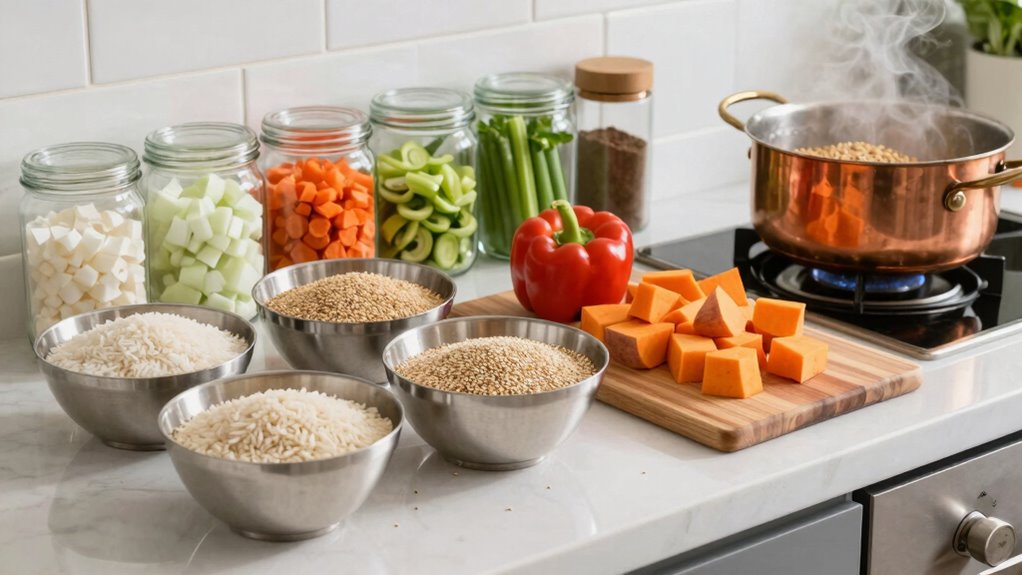
You should pick your favorite grain type and cook a large batch once per week to save time.
Store your cooked grains properly in airtight containers to maintain freshness and prevent spoilage.
This simple habit will streamline your meal prep and keep you eating healthy throughout busy weeks.
Choose Your Grain Type
Since you’re planning ahead for a busy week, choosing the right grain type becomes essential for efficient meal preparation. Your grain selection directly impacts your weekly cooking workload and meal variety.
Consider these four versatile options that work for most people:
- Brown rice – cooks in 25 minutes and pairs with everything
- Quinoa – ready in 15 minutes and naturally gluten-free
- Farro – chewy texture that holds up well in salads and bowls
- Steel-cut oats – perfect for both savory and sweet preparations
Each grain type offers different cooking times and textures, so pick based on your typical meals.
You’ll want grains that complement your usual proteins and vegetables while fitting your taste preferences. Making this choice once sets you up for consistent, stress-free meals all week long.
Store Cooked Grains Properly
While preparing your weekly meals, storing cooked grains properly guarantees they stay fresh and ready for use throughout the week.
You should cool grains completely before storing them in airtight containers. Label each container with the date and grain type so you can easily identify contents later. Refrigerate cooked grains within two hours of cooking to prevent bacterial growth.
Most cooked grains last three to five days when stored correctly. For longer storage, freeze grains in portion-sized containers for up to three months. When reheating, add a splash of water or broth to restore moisture.
Keep different grain varieties separate to maintain their distinct textures and flavors. This simple system makes certain you always have wholesome grains ready for quick meals.
Prep Breakfast Ingredients Sunday Morning
Sunday mornings are perfect for preparing breakfast ingredients that will fuel your busy week ahead. You’ll save time and reduce morning stress by having everything ready to go.
Start by washing and chopping fruits like berries, apples, or bananas. These stay fresh in containers for several days.
Next, prepare your favorite vegetables such as spinach, tomatoes, or bell peppers for egg scrambles.
Essential breakfast prep tasks include:
- Overnight oats: Mix rolled oats with milk, chia seeds, and sweetener
- Hard-boiled eggs: Cook dozen eggs for quick protein throughout the week
- Breakfast burrito assembly: Wrap scrambled eggs, cheese, and veggies in tortillas
- Smoothie packs: Portion frozen fruit, spinach, and protein powder into bags
Batch cooking these components means you’re set for nutritious breakfasts all week long.
Label and Date Everything Clearly
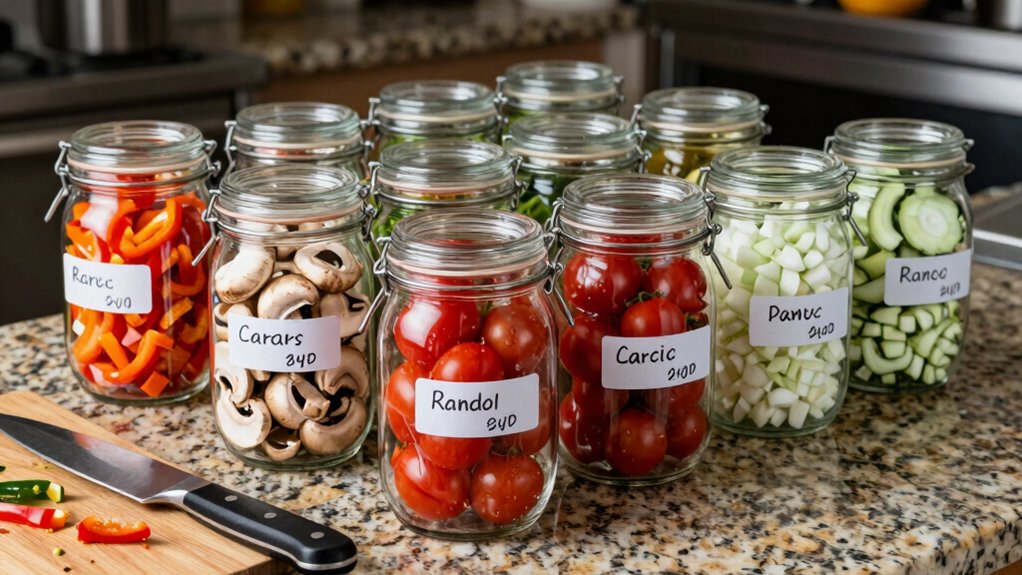
When you’re prepping ingredients for the week ahead, labeling and dating your containers prevents confusion and food waste. You’ll know exactly what’s inside each container and when you prepared it.
Use waterproof labels or masking tape to mark everything clearly. Write the contents and preparation date on each container. This simple step saves you from guessing games later. You’ll feel more organized and confident in your kitchen routine.
Clear labeling helps everyone in your household understand what’s ready to use. Date marking guarantees you consume items in the right order. You’ll reduce food waste while maintaining freshness.
This habit makes meal prep feel manageable and professional. Your future self will appreciate knowing exactly what’s in each container. You’re creating a system that works for your busy lifestyle.
Group Similar Ingredients by Storage Zone
Group similar ingredients together in designated storage zones to streamline your weekly meal prep routine.
This simple organization method helps you find what you need quickly while reducing food waste.
Create these essential storage zones:
- Produce section: Keep leafy greens, herbs, and vegetables together in crisper drawers
- Protein area: Store all meats, fish, and plant-based proteins in one refrigerator section
- Dry goods zone: Group grains, pasta, and canned goods in pantry shelves
- Dairy corner: Consolidate milk, cheese, yogurt, and other refrigerated items
You’ll save time during meal prep when everything has its designated home.
This system prevents forgotten ingredients from spoiling and makes inventory management effortless.
Use Smart Containers for Easy Access
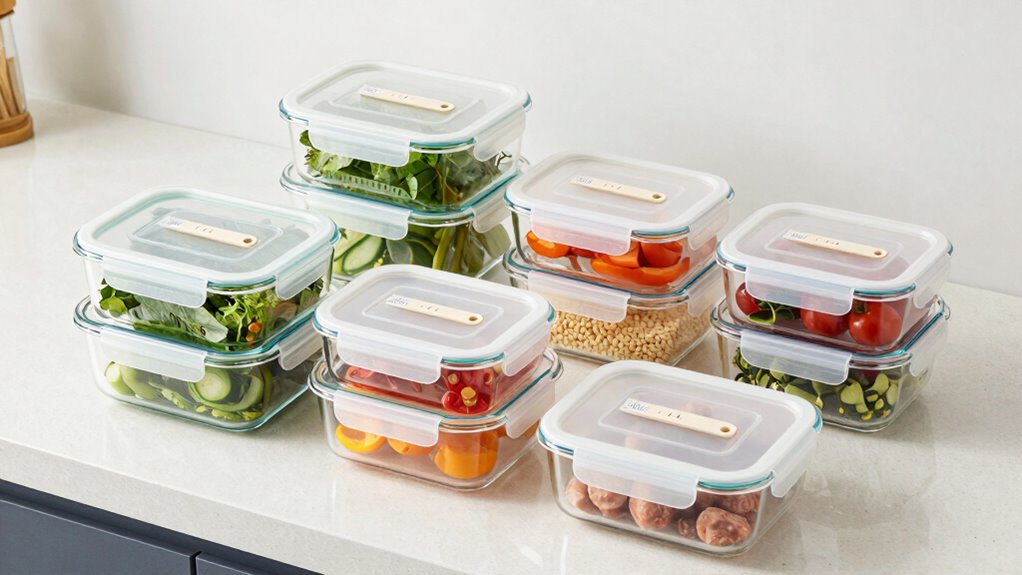
You should choose clear, stackable containers that let you quickly spot ingredients without opening every box.
Label everything clearly so you know exactly what’s inside, even when you’re rushing to grab items.
Organize your containers by meal type to streamline your prep process and save valuable time during busy weekdays.
Choose Clear, Stackable Containers
Clear, stackable containers make meal prep greatly easier because they let you quickly identify contents without opening each one. You can spot exactly what you need at a glance, saving precious minutes during busy weekdays.
Invest in containers that work for your lifestyle:
- Glass containers with tight-fitting lids prevent leaks and odors
- Uniform sizes create stable stacks that won’t topple over
- Containers with measurement markings help with portion control
- BPA-free plastic options are lightweight and dishwasher safe
Stacking containers vertically maximizes your refrigerator space while keeping everything visible.
You’ll feel more organized and in control when you can see your prepared ingredients waiting for you. This simple step creates a sense of preparedness that makes weekday cooking feel manageable.
Label Everything Clearly
While organizing your meal prep containers, label each one clearly so you can quickly identify contents without guessing. Use waterproof labels or permanent markers to write ingredient names and preparation dates directly on containers.
Don’t forget to include any special instructions like “keep refrigerated” or “use within three days.” Smart containers with built-in labeling areas or removable tags work best for this system.
You’ll appreciate this step when rushing to grab ingredients during busy mornings. Clear labeling prevents food waste by ensuring nothing gets forgotten in your fridge.
Make sure your handwriting is legible or invest in a simple label maker. Take time to update labels when ingredients change. This small effort saves significant time throughout your week.
Your future self will thank you for this organized approach when assembling meals becomes effortless and stress-free.
Organize By Meal Type
When you organize ingredients by meal type, accessing what you need becomes considerably faster and more efficient.
You’ll spend less time searching and more time cooking.
Smart containers make this process seamless:
- Use clear bins for breakfast items like oats, fruits, and pancake mix
- Designate specific containers for lunch proteins, grains, and dressings
- Group dinner components by cuisine type – Italian, Mexican, Asian
- Store snack portions in grab-and-go containers labeled by day
You’re creating a system that works for your lifestyle. Everything has its place, and you’ll feel more confident knowing exactly where items belong.
This method reduces stress during busy weekdays when you’re rushing to prepare meals. Your future self will appreciate having ingredients pre-sorted and ready.
You’re building consistency into your routine, making healthy eating sustainable. This organization strategy connects you with others who value preparedness and efficiency.
Keep Cut Fruits Fresh With These Tricks
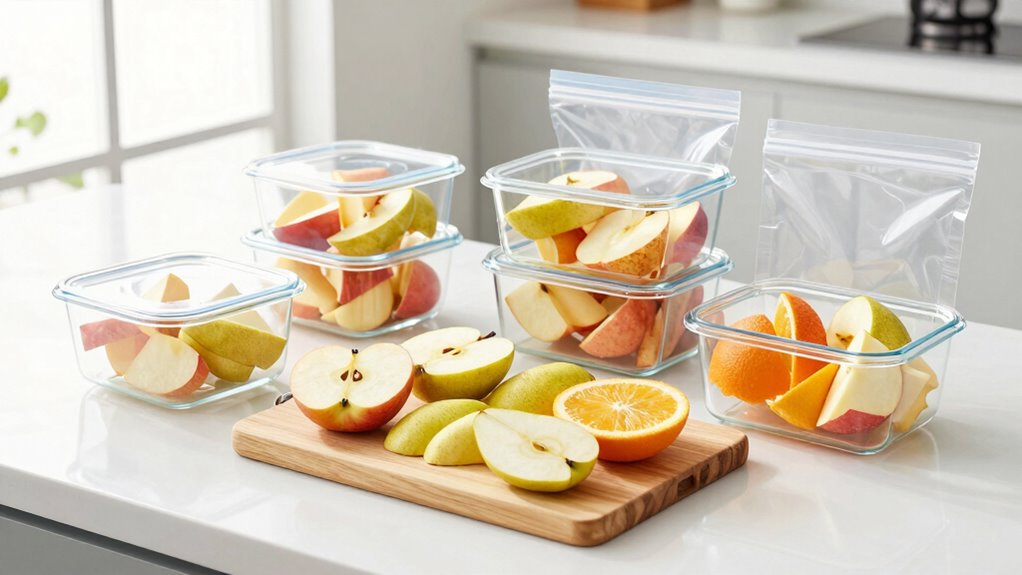
Cutting fruits in advance saves time during busy weekdays, but keeping them fresh requires specific techniques.
You’ll want to store cut fruits in airtight containers with parchment paper between layers to prevent browning and maintain texture. Citrus fruits like apples and pears benefit from a quick lemon juice spritz before storage.
Store berries in single layers to avoid crushing, and wash them only when ready to eat. Pineapple and melons stay crisp longer when kept in their original juice or wrapped tightly.
Label containers with dates so you use older cuts first. Most cut fruits last three to five days when stored properly in the refrigerator. Don’t forget to check for any signs of spoilage before consuming.
Don’t Prep These Foods Together
Some foods react badly when stored together, even if you’ve mastered keeping your cut fruits fresh. Your prepped ingredients can spoil faster or absorb unwanted flavors when paired incorrectly.
- Ethylene producers like apples and bananas release gases that cause other produce to ripen and decay rapidly.
- Strong-smelling items such as onions and garlic transfer odors to delicate foods like herbs and dairy.
- Moist vegetables including tomatoes and cucumbers create humidity that makes breads and crackers soggy.
- Raw meats contaminate nearby vegetables and grains through cross-contamination risks.
Separate these problem foods during meal prep. Use different containers and storage areas to maintain freshness and prevent flavor transfer.
Your future self will appreciate avoiding wasted food and unpleasant taste surprises. Smart storage choices keep your weekly prep organized and successful.
Avoid These Common Prep Mistakes
Everyone makes missteps during meal prep, but avoiding these common mistakes saves you time, money, and frustration.
Don’t wash lettuce too far in advance—it becomes soggy and bitter.
Avoid cutting onions and garlic too early; they lose flavor and become bitter.
Never store tomatoes in the refrigerator; they lose texture and taste.
Don’t overcrowd containers when storing prepped ingredients; items get bruised and spoil faster.
Skip the temptation to prep everything at once; some ingredients need fresh preparation.
Don’t forget to label containers with dates—you’ll forget what’s what.
Avoid using metal containers for acidic foods like citrus; they react poorly.
Finally, don’t ignore proper storage temperatures—keep cold items cold and room-temperature items properly stored.
Build No-Cook Meals From Prepped Bases
Now that you know which prep mistakes to avoid, you can focus on assembling no-cook meals that maximize your prepped ingredients.
These meals save time while keeping your weekly routine manageable.
- Mason jar salads: Layer dressing, hearty vegetables, and greens in jars for grab-and-go lunches
- Overnight oats: Combine oats, milk, and toppings in containers for morning breakfasts without cooking
- Charcuterie boards: Pre-slice meats, cheeses, and crackers for easy snack platters
- Pasta salads: Mix pre-cooked pasta with chopped vegetables and dressing for cold meals
These combinations transform your prepped bases into complete meals.
You’re creating solutions that fit seamlessly into busy schedules, helping you feel more organized and in control.
Adapt Ingredient Prep for Keto, Vegan, or Other Diets
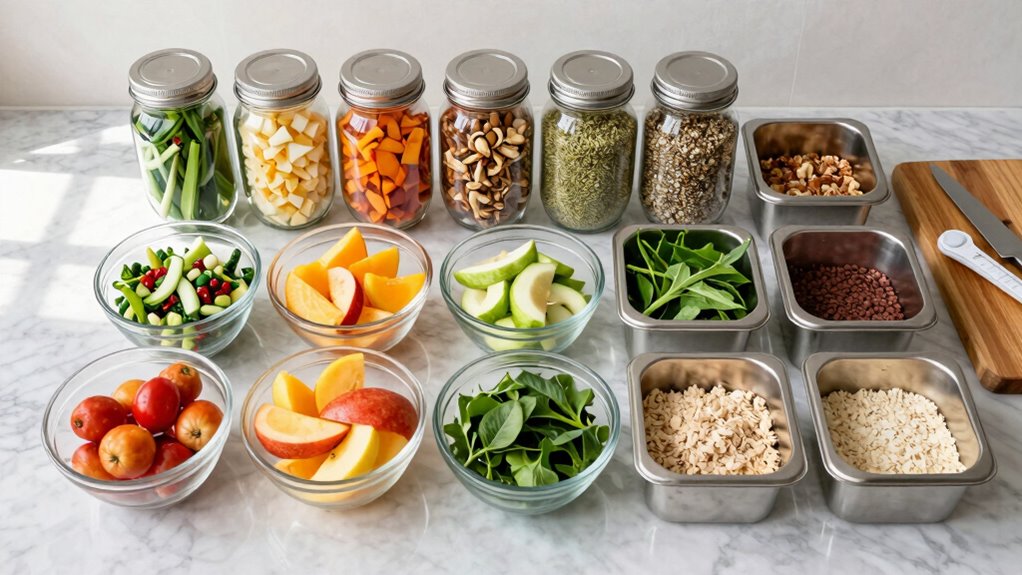
While you’ve mastered basic ingredient prep, adapting your approach for specific diets like keto or vegan guarantees your meals stay compliant without extra daily effort.
Focus on diet-specific staples: stock keto-friendly fats like avocado and nuts, or vegan proteins such as tofu and legumes. Pre-portion snacks matching your macros.
Wash and chop vegetables that fit your plan, avoiding cross-contamination with restricted foods. Label containers clearly to prevent mistakes.
Batch-cook grains for vegan meals or roast vegetables for keto options. Keep separate cutting boards and utensils for different dietary needs.
Plan simple swaps ahead: almond milk instead of dairy, or cauliflower rice instead of grains. This preparation eliminates guesswork during busy weekdays.
Conclusion
Weekly prep transforms chaotic mealtime into a well-oiled machine. You’ll slice through dinner stress like butter when ingredients are already washed, chopped, and waiting. Think of prepped vegetables as puzzle pieces—each one fits perfectly into whatever meal you’re building. With your kitchen arsenal organized and common mistakes avoided, you’re not just cooking, you’re conducting a symphony of flavors that dance together effortlessly all week long.