You probably don’t think about your refrigerator’s condenser coils until it stops cooling properly. Most homeowners overlook simple maintenance tasks that could extend their appliance’s lifespan by years. Regular cleaning, proper ventilation, and timely repairs prevent costly breakdowns. Without consistent upkeep, even high-end appliances fail prematurely. What basic checks are you missing that could save you hundreds in replacement costs?
Why Regular Appliance Upkeep Saves Big

Regular appliance maintenance prevents costly breakdowns and extends equipment lifespan considerably. You should clean condenser coils quarterly, check door seals monthly, and inspect electrical connections annually.
These preventive measures stop minor issues from becoming major repairs. You’ll save thousands by catching problems early. Dirty filters strain compressors, causing premature failure. Loose connections create fire hazards and energy waste.
You belong to a community of smart homeowners who understand that consistent upkeep protects investments. Your appliances reward you with reliable performance when you follow proper maintenance schedules.
Don’t wait for warning signs – you’ll pay more for emergency repairs than preventive care. You’ll feel confident knowing your kitchen equipment operates efficiently. Regular cleaning prevents bacterial growth and maintains food safety standards.
You’re taking responsibility for your home’s functionality.
Servicing Frequency by Appliance Type You Need Now
You should follow specific maintenance schedules for each appliance type to prevent costly breakdowns and extend their lifespan.
Refrigerators require quarterly cleaning of condenser coils and annual professional servicing, while ovens need monthly interior cleaning and annual calibration checks.
Dishwashers demand monthly filter replacement and quarterly spray arm inspection to maintain peak performance.
Refrigerator Servicing Schedule
While refrigerator maintenance often gets overlooked until problems arise, establishing a systematic servicing schedule prevents costly breakdowns and extends appliance lifespan.
You should clean condenser coils every three months to maintain peak cooling efficiency. Check door seals monthly by closing a piece of paper in the door; if it pulls out easily, replace the gasket. Defrost manual-defrost models when ice buildup reaches one-quarter inch thick.
Vacuum condenser coils twice yearly to remove dust accumulation that reduces performance. Monitor temperature settings regularly, keeping fresh food sections at 37-40°F and freezers at 0°F.
Inspect interior lighting and replace burnt bulbs immediately. Clean interior surfaces monthly with mild detergent to prevent odor buildup. Schedule professional refrigerant checks annually if you notice cooling inconsistencies or unusual noises during operation.
Oven Cleaning And Maintenance
Clean your oven regularly to prevent grease buildup that can cause uneven heating and potential fire hazards.
You should maintain your oven’s performance through proper cleaning schedules and techniques.
- Self-cleaning ovens: Run the pyrolytic cycle monthly and wipe down interior surfaces weekly
- Conventional ovens: Clean spills immediately and perform deep cleaning every two weeks using appropriate degreasers
- Gas ovens: Check burner ports monthly for blockages and clean with wire brushes as needed
- Electric ovens: Inspect heating elements quarterly for grease accumulation and clean with approved oven cleaners
You’ll extend your oven’s lifespan considerably by following these maintenance routines.
Don’t wait for visible grime buildup before acting. Regular attention prevents costly repairs and guarantees consistent cooking results.
Your kitchen deserves appliances that perform reliably.
Dishwasher Filter Replacement
Regular oven maintenance naturally leads to another critical component that requires consistent attention: your dishwasher filter system.
You should check your filter monthly and clean it thoroughly to prevent clogging. Most dishwasher filters need replacement every three to six months, depending on usage frequency. You’ll notice decreased cleaning performance and standing water when replacement becomes urgent.
Check your owner’s manual for specific intervals matching your model. You must remove food particles, grease, and debris that accumulate during wash cycles. Don’t ignore warning signs like unpleasant odors or cloudy dishes.
You’re responsible for maintaining ideal water flow and preventing pump damage. Professional technicians recommend replacing filters proactively rather than reactively.
You’ll extend your appliance’s lifespan considerably through this simple preventive measure.
Quick Weekly Cleaning Rituals for Every Major Kitchen Unit
You should establish consistent weekly cleaning protocols for your major kitchen appliances to prevent buildup and maintain peak performance.
Your refrigerator requires a systematic weekly cleaning approach that includes checking expiration dates, wiping down shelves, and sanitizing door seals.
Daily stove and oven maintenance prevents grease accumulation that becomes difficult to remove and can compromise appliance functionality over time.
Weekly Refrigerator Cleaning Checklist
A systematic approach to refrigerator maintenance guarantees peak performance and food safety throughout each week. You should follow these essential cleaning steps regularly.
- Clean door seals weekly by wiping gaskets with warm soapy water, confirming they’re free from food debris and maintaining proper closure for maximum temperature retention.
- Check and clean condenser coils located beneath or behind your unit using a vacuum attachment to remove dust buildup that reduces efficiency and increases energy consumption.
- Organize and wipe down interior shelves with mild detergent solution, removing expired items while preventing cross-contamination between food groups.
- Defrost manual-defrost models completely when ice buildup reaches quarter-inch thickness, allowing proper airflow and preventing excessive energy usage.
Following this checklist confirms your refrigerator operates efficiently while maintaining food safety standards everyone in your household deserves.
Daily Stove And Oven Wipe-Down
Daily wiping down of stove and oven surfaces prevents grease buildup and maintains ideal functionality.
You should clean burner grates, drip pans, and control panels after each use. Grease accumulation creates fire hazards and reduces heating efficiency.
Use mild dish soap and warm water for regular cleaning. Don’t let spills sit overnight – they harden and become difficult to remove.
Weekly deep cleaning involves removing oven racks and scrubbing with baking soda paste.
Check manufacturer’s instructions for specific cleaning recommendations.
You’ll extend appliance lifespan considerably by maintaining consistent cleaning schedules. Preventive maintenance reduces costly repairs and guarantees top performance.
Your kitchen deserves professional-grade care that keeps everything running smoothly.
Spot These Signs Before Your Appliance Dies on You

When did your kitchen appliances last show signs of distress before complete failure?
You shouldn’t wait for breakdowns to discover maintenance needs. Preventive attention keeps your appliances running efficiently while avoiding costly replacements.
Monitor these critical warning signs regularly:
- Unusual noises like grinding, clicking, or humming that weren’t present before
- Temperature fluctuations causing inconsistent cooking or storage results
- Extended operation times needed to complete normal cycles or tasks
- Visible wear including frayed cords, cracked components, or loose parts
These indicators often precede major failures by weeks or months.
You’re not alone in overlooking subtle changes, but recognizing these signs early separates experienced appliance owners from novices.
Don’t let minor issues escalate into expensive disasters.
Stop Fridge Failures Fast With These Easy Checks
Everyone should perform these simple fridge inspections monthly to prevent unexpected failures.
Check door seals by closing a piece of paper in the door edge; if it pulls out easily, replace the gasket.
Clean condenser coils beneath or behind your unit using a vacuum attachment to remove dust buildup that reduces efficiency.
Verify temperature settings remain at 37-40°F for the refrigerator compartment and 0-5°F for the freezer.
Inspect door hinges for loose screws and tighten immediately.
Examine the defrost drain hole for blockages and clear with warm water.
Monitor the evaporator fan operation; unusual noises indicate potential motor issues requiring professional attention.
Keep refrigerator levels properly adjusted using a bubble level and adjust feet as needed.
These preventive measures protect your investment while ensuring peak performance.
Maximize Oven Years With Smarter Usage Habits
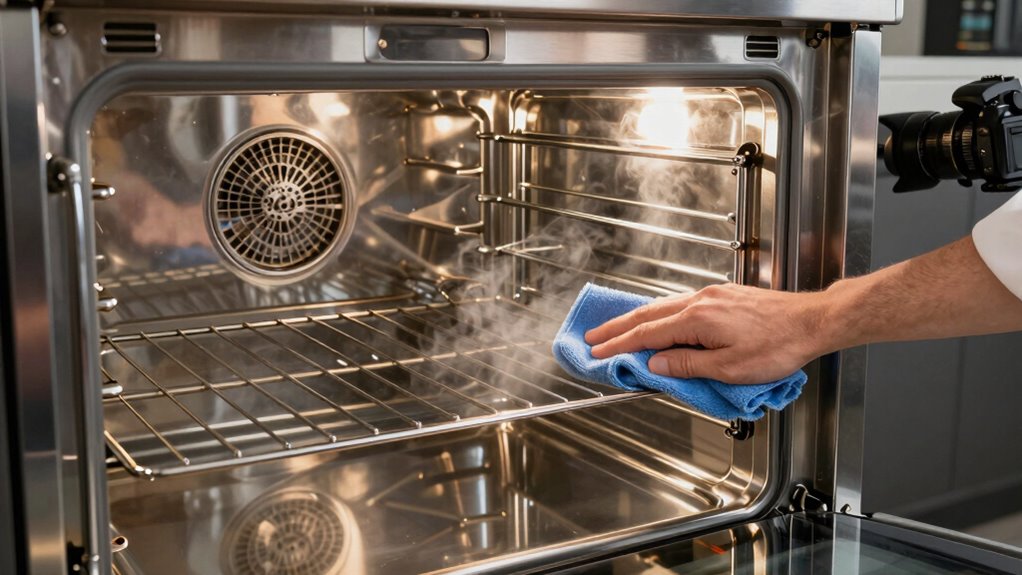
While proper oven maintenance extends beyond basic cleaning routines, implementing smarter usage habits greatly reduces wear and tear on critical components. You should embrace these preventive strategies to extend your oven’s lifespan.
- Avoid rapid temperature changes by preheating gradually and letting the oven cool naturally after cooking.
- Use appropriate cookware that fits properly without blocking air circulation around heating elements.
- Don’t overload the oven with too many items at once, which forces the heating system to work overtime.
- Check door seals regularly and confirm proper closure to maintain consistent internal temperatures.
These habits prevent premature component failure while maintaining excellent performance.
You’re not just protecting your investment; you’re guaranteeing reliable cooking results that bring your family together around delicious meals.
Keep Dishwashers Humming Without Costly Breakdowns
You should clean dishwasher filters monthly to prevent clogging and maintain ideal water flow.
Running hot water cycles regularly helps dissolve grease buildup and keeps internal components functioning efficiently.
Checking spray arms frequently guarantees proper water distribution and prevents costly mechanical failures.
Clean Filters Monthly
Because dishwasher filters trap food particles and debris during washing cycles, monthly cleaning prevents clogs that can lead to poor drainage, foul odors, and expensive repairs.
You should make filter maintenance part of your routine to avoid costly breakdowns.
- Locate your dishwasher’s filter assembly at the bottom of the tub
- Remove filters by lifting or twisting counterclockwise depending on your model
- Rinse filters under warm running water to remove trapped debris
- Inspect filters for damage and replace if torn or worn
Regular filter cleaning guarantees peak dishwasher performance while extending appliance lifespan.
Don’t skip this simple task that keeps your kitchen running efficiently.
Run Hot Water Cycles
Running hot water cycles through your dishwasher helps prevent grease buildup and mineral deposits that can clog internal components. You should run these cycles weekly, especially if you notice cloudy glassware or slow drainage.
Hot water dissolves food particles and soap residue more effectively than cold water, preventing them from accumulating in your machine’s filter and spray arms. Set your water heater to 120°F minimum for peak performance.
Run empty cycles with white vinegar monthly to remove hard water stains and odors. Don’t wait until you see visible problems; preventative hot water cycles maintain proper water flow and protect your dishwasher’s heating element from premature failure.
Check Spray Arms Regularly
While checking spray arms regularly may seem like a minor maintenance task, this simple step prevents costly breakdowns and maintains peak dishwasher performance.
You should inspect these essential components monthly to guarantee maximum cleaning results.
- Remove spray arms carefully and check for clogs in the water jets using a small brush or toothpick.
- Examine arm rotation freely without obstructions from food particles or debris.
- Verify spray arm seals remain intact and properly positioned to prevent water leakage.
- Replace worn spray arms immediately when you notice cracks or persistent clogging issues.
Regular spray arm maintenance keeps your dishwasher running efficiently while avoiding expensive repair costs.
You become part of the proactive appliance care community that prevents unnecessary breakdowns through simple, consistent attention to these critical components.
Safeguard Microwaves With These Forgotten Practices
Although microwaves seem simple to maintain, several overlooked practices can greatly extend their lifespan and prevent costly repairs.
You should clean the interior walls monthly using a mild detergent and water solution. Wipe up food splatters immediately after each use to prevent buildup.
Check the door seal regularly for cracks or debris that compromise safety. Rotate your food during heating to guarantee even cooking and reduce magnetron strain.
Avoid running the microwave empty, as this damages internal components. Clean the exterior vents and keep them unobstructed for proper airflow.
You must replace the turntable roller rings when they show wear signs. Monitor the cooking performance regularly. Keep the control panel dry and clean.
Store the microwave in a dry location away from steam sources. These practices ensure excellent performance while extending your appliance’s operational life considerably.
Be Alert To These Dangerous Appliance Warning Noises
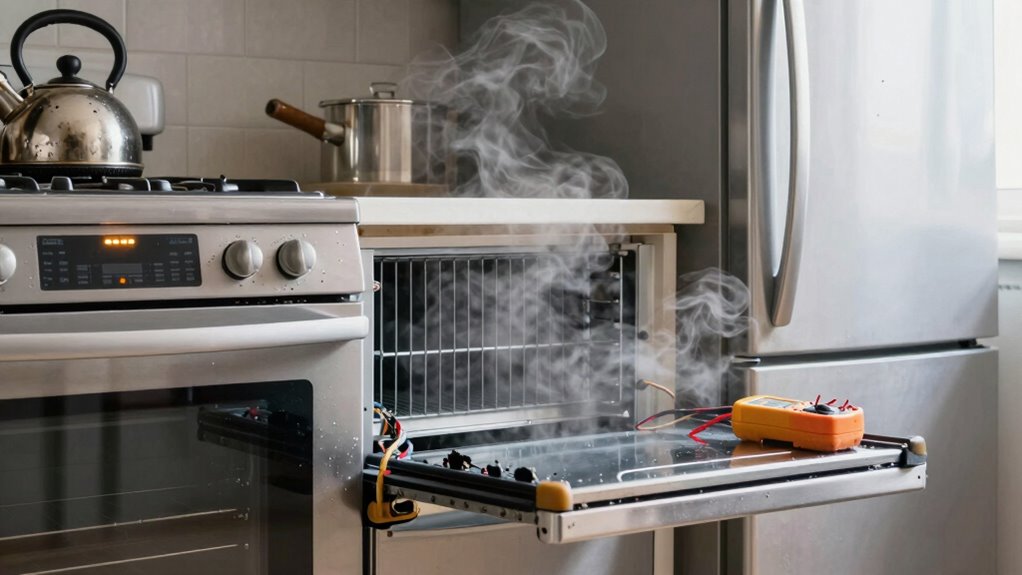
When kitchen appliances start emitting unusual sounds, you shouldn’t ignore these auditory warnings that often indicate serious mechanical issues requiring immediate attention.
These noises signal potential safety hazards and costly breakdowns that could disrupt your household routine.
- Squealing or screeching from belts and motors means worn components needing lubrication or replacement before complete failure occurs.
- Banging or knocking sounds inside refrigerators or dishwashers suggest loose parts or failing compressors that compromise cooling efficiency.
- Grinding noises from garbage disposals or blenders indicate foreign objects or damaged blades requiring immediate power shutdown.
- Hissing or buzzing from electrical appliances signals motor overloads or capacitor problems that create fire risks.
You must act quickly when hearing these sounds.
Don’t risk your family’s safety or expensive appliance damage.
Trust your instincts about unusual noises.
Repair vs Replace? Do the Math First
After addressing immediate safety concerns from unusual appliance noises, you’ll often face the decision of whether to repair or replace the affected unit.
Calculate the repair cost against fifty percent of your appliance’s current market value. If repairs exceed this threshold, replacement becomes more economical.
Consider your appliance’s age and expected lifespan—older units nearing end-of-life often warrant replacement even with minor repair costs.
Factor in energy efficiency improvements newer models offer, which can offset replacement expenses through reduced utility bills.
Don’t forget installation costs and potential warranty coverage when evaluating total replacement investment.
Your community of appliance owners shares similar experiences, so research common failure patterns for your specific model.
Preventive maintenance records help justify repair decisions, while neglected units typically require replacement.
Expert Secrets to Double Appliance Life at Home
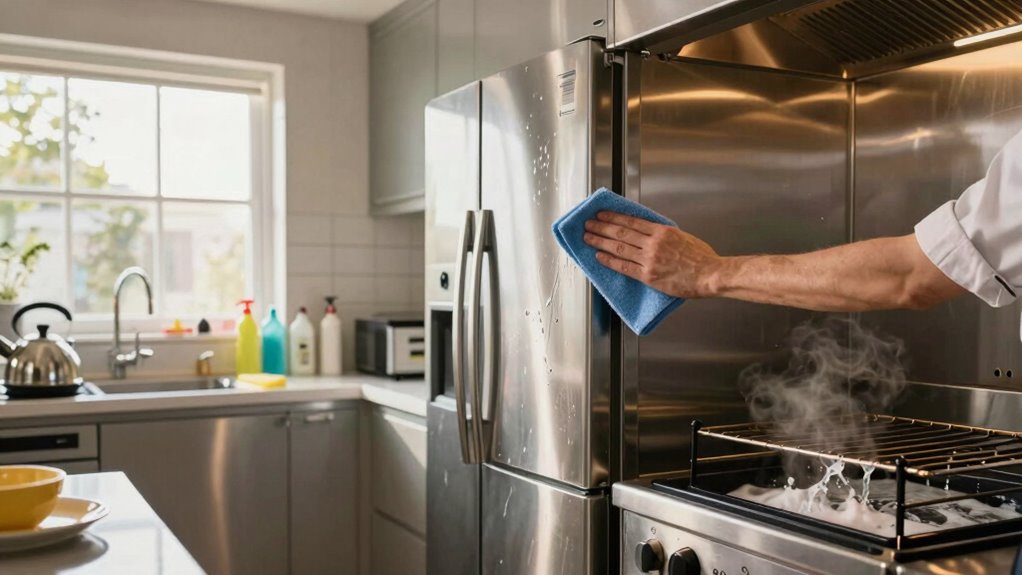
While regular maintenance seems time-consuming, implementing expert-recommended protocols can considerably extend your kitchen appliances’ operational lifespan.
You’ll maximize investment returns and minimize unexpected replacements through preventive care.
- Clean refrigerator coils quarterly using a vacuum attachment to prevent overheating and compressor failure
- Run dishwasher cleaning cycles monthly with specialized detergent to eliminate mineral buildup and odor retention
- Replace oven door seals annually to maintain proper temperature regulation and energy efficiency standards
- Inspect and clean range hood filters every three months to guarantee ideal ventilation and fire prevention
You’re taking control of your home’s functionality.
These simple procedures prevent costly repairs while keeping appliances running efficiently.
Don’t wait for breakdowns – establish these habits today. Your future self will appreciate the reliability and savings you’re creating through consistent, professional-level maintenance practices.
Conclusion
Like Prometheus safeguarding fire, you must vigilantly protect your kitchen investments. Preventive maintenance isn’t just routine—it’s your shield against costly failures. Clean those condenser coils religiously, inspect door seals with hawk-like precision, and document everything. Don’t wait for warning signs; be the oracle who predicts problems before they manifest. Your appliances’ longevity depends on your commitment to these technical rituals.