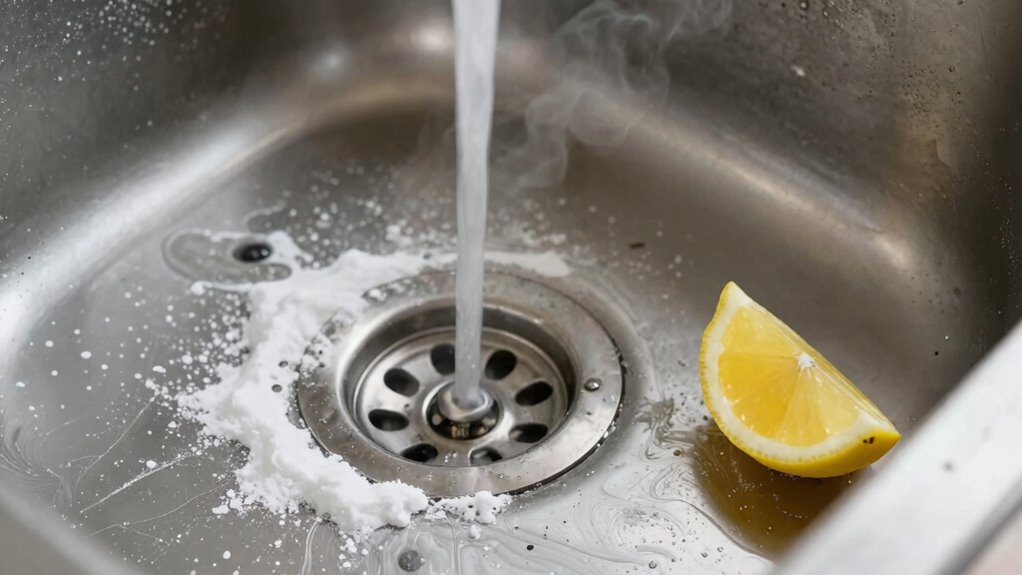
You might think natural cleaning won’t tackle tough grime, but baking soda and vinegar work better than harsh chemicals. Before you start, remove all sink components and soak them in hot, soapy water. Sprinkle baking soda across the sink surface and scrub thoroughly. How you clean your drain next could make or break your entire kitchen’s hygiene.
Why Natural Cleaning Is Safer for Sinks and Drains
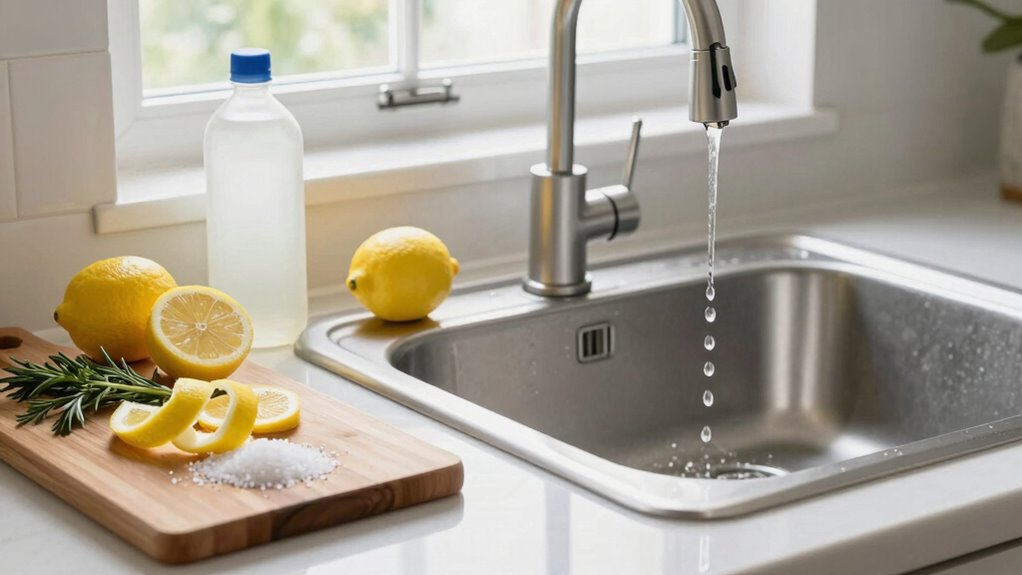
While many commercial cleaners promise powerful results, natural cleaning agents like baking soda, vinegar, and lemon juice provide effective sanitization without the harsh chemicals that can damage sink surfaces and drain pipes. You protect your family’s health while maintaining a spotless kitchen.
Abrasive cleaners strip away protective finishes from stainless steel and porcelain, leaving microscopic scratches where bacteria breed. Chlorine bleach corrodes rubber gaskets and metal fixtures over time.
Your drains deserve gentle care too – caustic drain cleaners eat through pipes prematurely. Natural alternatives work synergistically, breaking down grime safely.
Baking soda deodorizes while scrubbing away buildup. Vinegar dissolves mineral deposits and cuts through grease effectively. Citric acid eliminates bacteria without toxic residues.
You create a healthier cleaning routine that extends your sink’s lifespan while keeping it hygienically clean.
Gather What You Need for a Full Natural Clean
Most kitchen cleaners require just a few simple ingredients you probably already have. You’ll need white vinegar, baking soda, lemon juice, and coarse salt.
These items work together to break down grease, eliminate odors, and sanitize surfaces naturally. Grab a clean sponge or scrub brush, microfiber cloths, and rubber gloves for protection.
Don’t forget an old toothbrush for tackling tight spaces around faucets and drain edges. You’ll also want a bowl for mixing solutions and a spray bottle for easy application.
Having everything ready guarantees you can clean efficiently without interruption. This preparation helps you achieve that spotless, fresh-smelling sink you deserve while keeping your cleaning process organized and effective.
Prep Your Sink and Drain for Maximum Effectiveness
Before you begin cleaning, remove all debris and food particles from your sink and drain to guarantee maximum effectiveness of your cleaning solutions. Clear away dishes, utensils, and any standing water.
Use a paper towel or cloth to wipe out loose crumbs, rice grains, and visible gunk. Don’t forget to check the drain opening for hair or trapped particles. Lift the faucet aerator if it’s removable, as mineral buildup often collects there.
Empty your garbage disposal basket if you have one. Rinse the entire sink surface with warm water to wash away surface dirt.
This preliminary cleaning ascertains your natural solutions can work directly on stubborn stains and bacteria rather than wasting energy on easily removable debris. Your deep clean will be more effective and satisfying.
Scrub Surface Grime With Safe, Natural Ingredients
You’ll tackle stubborn grime using gentle yet powerful cleaners like baking soda and white vinegar that won’t damage your sink’s finish.
Apply these natural abrasives with a stiff-bristled brush, working in circular motions to lift stuck-on debris and sanitize surfaces.
Focus your scrubbing efforts on areas with visible buildup, letting the ingredients work for several minutes before rinsing thoroughly.
Safe Cleaning Solutions
Several natural ingredients can effectively tackle surface grime while keeping your kitchen safe from harsh chemicals.
You’ll discover these common household items transform your cleaning routine into something both effective and gentle.
- Baking soda acts as a mild abrasive that lifts stubborn grime without scratching surfaces.
- White vinegar dissolves mineral deposits and cuts through grease while sanitizing naturally.
- Lemon juice provides natural acidity that breaks down stains and leaves a fresh, clean scent.
- Coarse salt works as an effective scouring agent for tough, stuck-on food particles.
These ingredients work together to create powerful cleaning solutions.
Mix baking soda with lemon juice for a paste that tackles grime while freshening your sink.
Combine vinegar and water in equal parts for a spray solution that disinfects without toxic residues.
Your family deserves clean surfaces without harsh chemical exposure.
Effective Scrubbing Techniques
Effective scrubbing requires the right technique to remove stubborn grime without damaging your sink’s surface.
You should sprinkle baking soda generously across all surfaces, then scrub systematically with a stiff brush or sponge. Focus extra attention on areas with visible buildup around faucets and drain edges.
Create a paste using baking soda and hydrogen peroxide for tougher stains, letting it sit briefly before scrubbing.
Work in circular motions to lift embedded grime effectively. Rinse thoroughly with warm water between scrubbing sessions to check progress.
Don’t forget to clean the faucet and handles too. For stainless steel sinks, scrub parallel to the grain to prevent scratches. Porous surfaces like ceramic require gentler pressure to avoid etching.
Finally, sanitize everything with white vinegar to eliminate lingering bacteria and odors completely.
Remove Stubborn Sink Stains With Baking Soda Paste
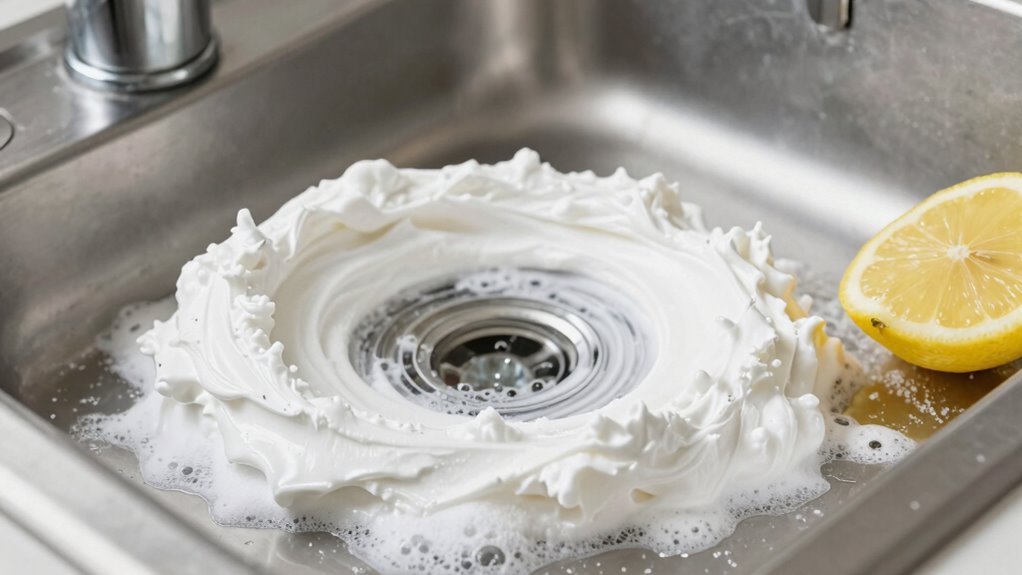
When stubborn stains persist after regular cleaning, create a thick paste using baking soda and water to tackle these problem areas directly. This simple mixture transforms your cleaning routine into an effective stain-fighting solution.
- Mix three parts baking soda with one part water until you achieve a spreadable consistency.
- Apply the paste directly onto stained areas using a sponge or cloth.
- Let it sit for fifteen minutes to allow the baking soda to penetrate tough stains.
- Scrub vigorously with a non-abrasive pad, then rinse thoroughly with hot water.
This method works because baking soda’s gentle abrasiveness removes surface stains without damaging your sink’s finish.
You’ll notice immediate improvement after the first application. Regular use prevents stains from setting in, keeping your sink looking fresh.
This approach gives you confidence in maintaining a spotless kitchen environment that reflects your commitment to cleanliness and belonging in your home space.
Eliminate Odors and Scrub With Lemon and Salt
After removing stubborn stains with baking soda paste, you’ll want to eliminate lingering odors while giving your sink a final scrub.
Grab a fresh lemon and cut it in half. Sprinkle coarse salt over your sink surfaces, then use the lemon halves to scrub vigorously. The lemon’s natural acidity cuts through grease and kills bacteria, while salt acts as an abrasive to remove remaining grime.
Pay special attention to corners, around faucets, and the drain area where food particles accumulate. Don’t forget to scrub underneath the rim where debris often hides.
The citrus scent eliminates unpleasant odors naturally. Rinse thoroughly with warm water, ensuring all salt and lemon residue disappears. This method leaves your sink sparkling clean and smelling fresh.
Dry with a clean towel to prevent water spots and maintain that pristine appearance you deserve.
Flush Grease Safely With Boiling Water
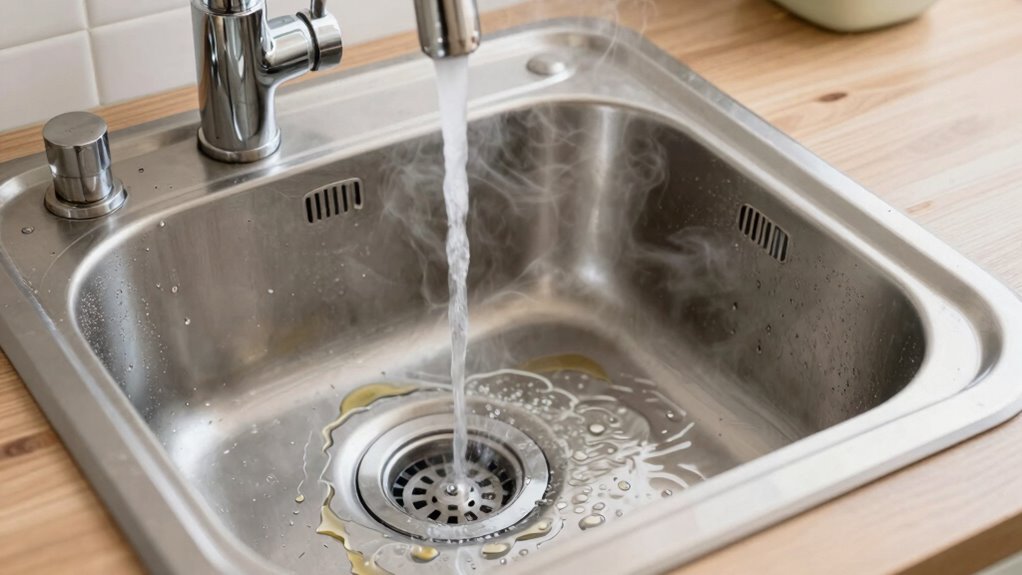
One essential step in deep cleaning your kitchen sink involves safely flushing away grease buildup that accumulates over time. This simple technique helps maintain proper drainage and prevents clogs.
- Boil a large pot of water and carefully pour it down your drain in two to three stages.
- Wait thirty seconds between each pour to allow the hot water to break down grease effectively.
- Run cold water for one minute afterward to solidify any remaining grease for easier removal.
- Repeat this process monthly to prevent stubborn grease accumulation.
This method keeps your plumbing system flowing smoothly while maintaining kitchen hygiene standards everyone appreciates.
Deep Clean Your Drain With Vinegar and Baking Soda
A simple yet powerful method for eliminating drain odors and bacteria involves using vinegar and baking soda to create a chemical reaction that breaks down organic matter.
You’ll need white vinegar, baking soda, and hot water. Start by pouring half a cup of baking soda directly into your drain.
Follow this with one cup of white vinegar. The mixture will fizz and bubble, working to dissolve buildup and kill bacteria. Let this reaction sit for fifteen minutes.
Afterward, flush everything down with boiling water to clear away loosened debris. This natural cleaning process eliminates harmful bacteria while removing stubborn odors.
Repeat this treatment monthly to maintain a fresh, clean drain that supports your family’s health and hygiene needs effectively.
Clear Hair and Debris Without Chemical Tools
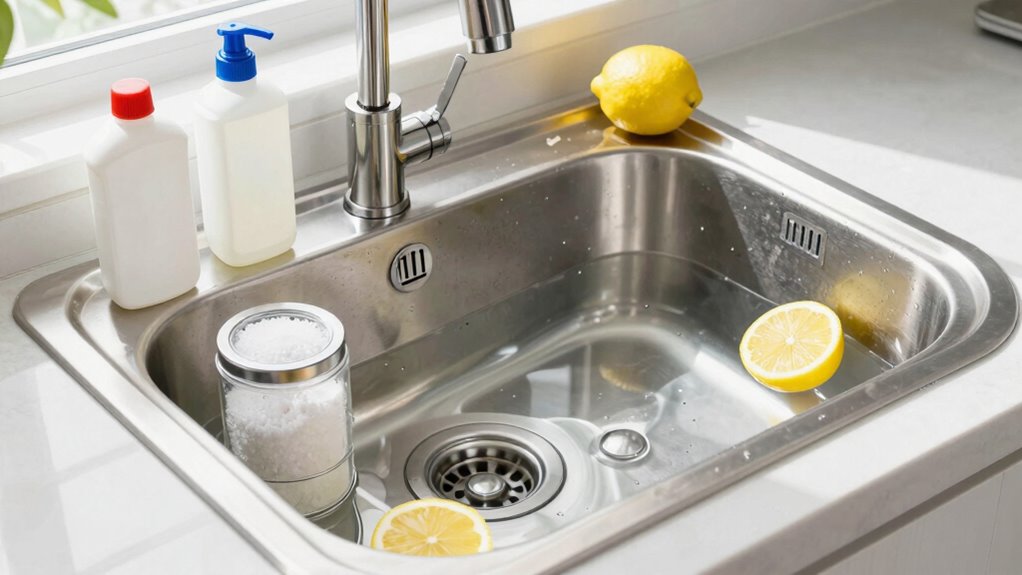
You can remove hair and debris from your kitchen sink drain using simple household items.
Start by pouring boiling water down the drain to dislodge food particles and grease buildup.
Follow this with a baking soda scrub to lift away hair and stubborn residue, then clean the drain grate thoroughly with an old toothbrush for complete removal of debris.
Remove Hair With Baking Soda Scrub
Combine baking soda with a small amount of water to create a paste that effectively lifts hair and debris from your sink’s surface. This natural abrasive safely scrubs away buildup without harsh chemicals.
- Sprinkle baking soda directly onto wet hair and debris clinging to your sink.
- Add few drops of water to form a thick paste that won’t run off surfaces.
- Scrub vigorously with a sponge or brush in circular motions.
- Rinse thoroughly with warm water to flush away loosened particles.
The baking soda’s gentle abrasiveness breaks down oily residue that traps hair, making removal simple.
You’ll notice immediate results as stubborn strands lift away.
This method works on all sink materials while maintaining hygiene standards you can trust.
Dislodge Food Particles Using Boiling Water
While boiling water alone won’t remove hair and debris, it effectively loosens food particles that cling to your sink’s surface.
You should pour boiling water directly onto stuck-on food remnants, letting the heat break down grease and grime. The scalding temperature causes organic matter to expand and release its grip on stainless steel or porcelain.
Work systematically from one section to another, ensuring complete coverage. Pay special attention to corners and edges where food accumulates. You’ll notice particles lifting immediately as hot water makes contact.
This method sanitizes while cleaning, killing bacteria that thrive in leftover food. Boiling water penetrates crevices chemical cleaners might miss. You’re creating a hygienic foundation before tackling tougher buildup.
The steam helps eliminate odors too. Keep pouring until runoff water appears clear, indicating most particles have dislodged successfully.
Clean Drain Grate With Old Toothbrush
After loosening food particles with boiling water, turn your attention to the drain grate where hair and debris accumulate. Grab an old toothbrush for this detailed cleaning task.
- Remove the drain grate carefully and place it in your sink
- Sprinkle baking soda directly onto the grate surface
- Scrub vigorously with your old toothbrush, working in small circular motions
- Pay special attention to corners and crevices where gunk hides
You’ll notice immediate results as trapped hair and soap scum lift away. The toothbrush bristles reach places your fingers cannot.
This method eliminates bacteria buildup without harsh chemicals. Clean grates prevent clogs and maintain proper drainage. You’re creating a healthier kitchen environment for yourself and your family.
Regular maintenance keeps your sink hygienic and functioning efficiently.
Disinfect Naturally With Citrus-Based Methods
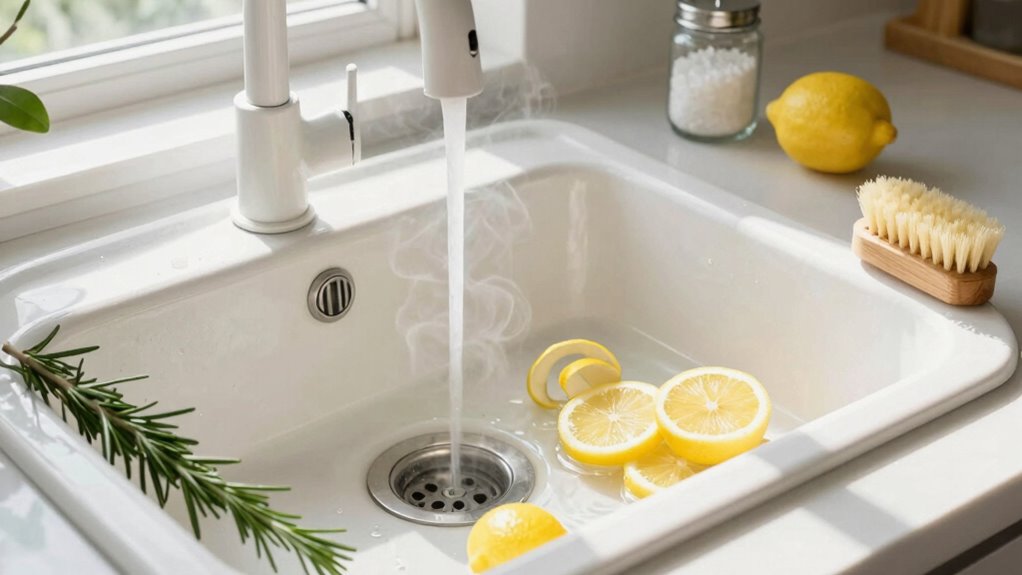
Citrus-based disinfectants offer a powerful, natural alternative to harsh chemical cleaners for sanitizing your kitchen sink. You can create an effective disinfectant spray by combining fresh lemon juice with white vinegar in equal parts. The citric acid naturally breaks down bacteria and grime while leaving a fresh scent.
For stubborn buildup, rub half a lemon directly on surfaces, let it sit for ten minutes, then scrub with baking soda. Orange peels work similarly when boiled in water to create a disinfecting rinse.
These methods eliminate harmful pathogens without toxic residues that threaten your family’s health. You’ll achieve professional-level cleanliness while protecting your loved ones from chemical exposure. Citrus disinfection keeps your kitchen hygienic and safe for food preparation.
Polish Stainless Steel Sinks the Eco-Friendly Way
You can restore your stainless steel sink’s shine using simple household ingredients like baking soda and white vinegar.
These natural cleaners cut through grime and water spots without leaving harmful chemical residues behind.
Apply the paste in gentle circular motions, then rinse thoroughly with warm water for a spotless finish.
Natural Stainless Steel Cleaning Methods
While stainless steel sinks are durable and resistant to stains, they still require regular cleaning to maintain their shine and prevent bacterial buildup.
You’ll want to tackle this task efficiently using natural methods that won’t harm your family or the environment.
- Sprinkle baking soda across your sink’s surface and scrub gently with a damp cloth in circular motions.
- Rinse thoroughly with warm water and dry immediately with a microfiber towel.
- Wipe down surfaces weekly using white vinegar in a spray bottle for sanitizing.
- Address water spots and fingerprints promptly to prevent mineral deposits.
These simple steps keep your sink looking pristine while maintaining proper hygiene standards.
Regular maintenance prevents stubborn stains and keeps your kitchen’s focal point sparkling clean naturally.
Eco-Friendly Sink Polishing Techniques
Although stainless steel sinks naturally resist corrosion and staining, they still benefit from regular polishing to maintain their lustrous appearance and hygienic properties.
You’ll want to polish your sink weekly using eco-friendly ingredients that won’t harm your family or environment. Mix baking soda with a few drops of olive oil to create a gentle abrasive paste.
Apply this mixture with a soft cloth, following your sink’s grain direction. Rinse thoroughly with warm water and dry immediately to prevent water spots. For extra shine, wipe with a microfiber cloth.
White vinegar removes hard water stains naturally. Avoid harsh chemicals that strip protective layers and compromise hygiene.
This simple routine keeps your sink looking pristine while supporting sustainable living practices that align with your values.
Maintain Cleanliness With Weekly Preventative Tips
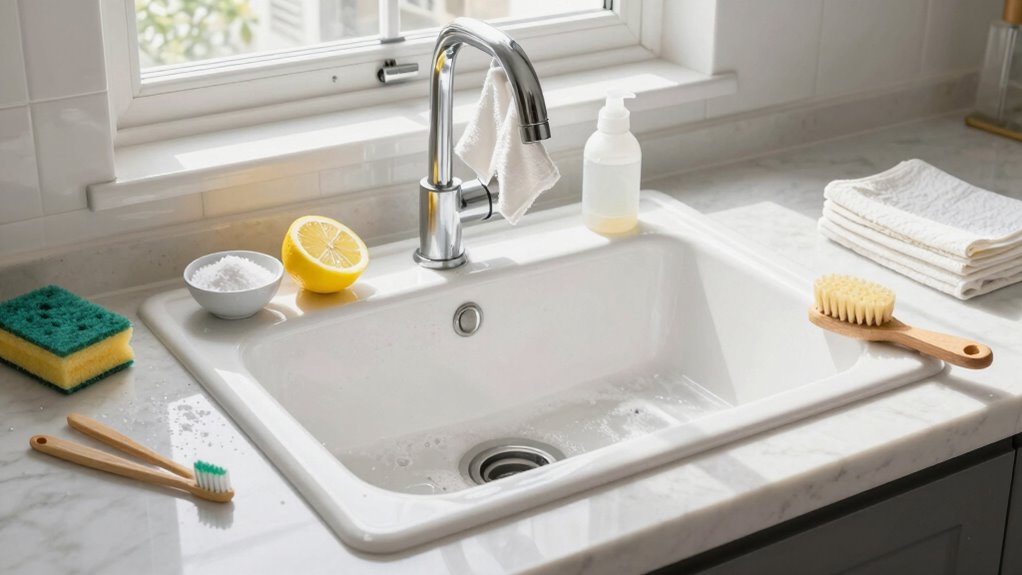
One weekly routine keeps your kitchen sink sparkling and prevents buildup that’s harder to remove later. You should make these simple habits part of your regular cleaning schedule.
- Scrub your sink with baking soda and vinegar every Sunday morning before meal prep begins.
- Run hot water through the drain for thirty seconds after each use to prevent debris accumulation.
- Wipe down faucet handles and basin surfaces with lemon juice to eliminate bacteria naturally.
- Sprinkle coarse salt on stubborn stains before scrubbing to lift grime effectively.
These preventative measures keep your sink hygienic and shining.
You’ll avoid deep cleaning sessions while maintaining a fresh, clean kitchen environment everyone wants to use.
Mistakes to Avoid When Cleaning Naturally
Natural cleaning methods work well for your kitchen sink, but incorrect techniques can damage surfaces or leave behind residue. You shouldn’t mix vinegar with hydrogen peroxide directly in your sink, as this creates peracetic acid that’s harsh on skin and surfaces.
Don’t use abrasive scrubbers with baking soda paste, which can scratch stainless steel or porcelain. Avoid letting acidic solutions sit too long on natural stone sinks, causing etching. You shouldn’t ignore proper dilution ratios when using essential oils, as concentrated amounts can be harmful.
Don’t forget to rinse thoroughly after cleaning, preventing soap scum buildup. You shouldn’t use lemon juice on aluminum fixtures, causing discoloration.
Always test new natural cleaners on hidden areas first, ensuring compatibility with your specific sink material.
How Often to Deep Clean Your Sink and Drain?
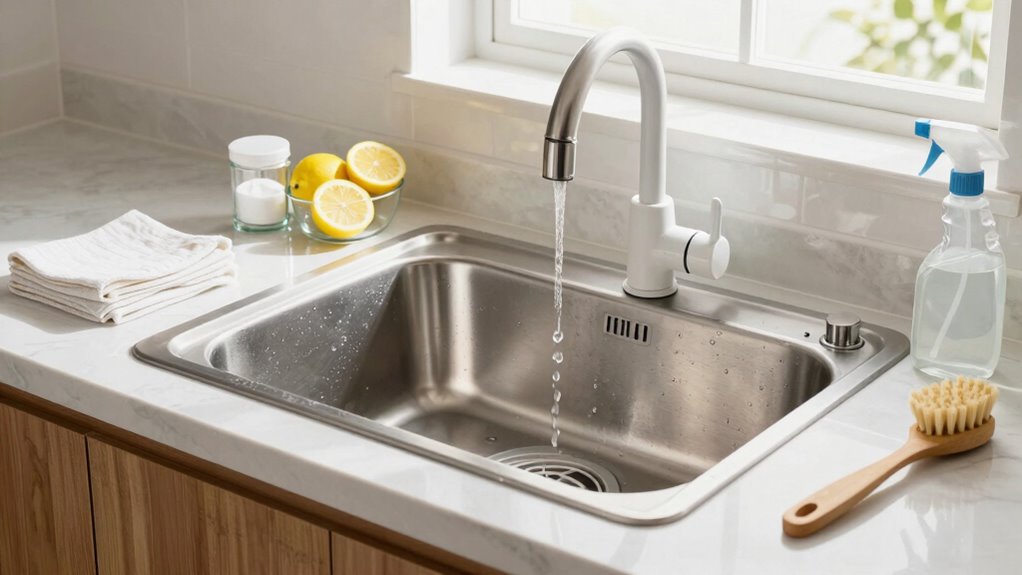
How frequently should you deep clean your kitchen sink and drain to maintain ideal hygiene?
You need to establish a consistent cleaning routine that keeps your kitchen fresh and bacteria-free. Here’s what you should do:
- Weekly deep cleaning – Scrub your sink basin and drain with baking soda and vinegar solution to eliminate buildup and odors.
- Monthly intensive treatment – Disassemble removable parts and soak them in hot, soapy water to remove stubborn grime.
- Quarterly sanitization – Use hydrogen peroxide or boiling water to kill bacteria colonies that accumulate over time.
- Seasonal maintenance – Check plumbing connections and replace old drain components to prevent future problems.
Stick to this schedule and you’ll maintain a spotless, hygienic kitchen that smells clean and functions properly.
Don’t skip these essential steps.
Conclusion
Keep your kitchen sink sparkling clean without harsh chemicals. Regular deep cleaning prevents buildup and maintains hygiene. Don’t let grime get out of hand – tackle it naturally with baking soda, vinegar, and lemon. Your sink and drain will thank you for this eco-friendly approach. Stay consistent with weekly maintenance to keep everything fresh and bacteria-free. Clean green, live clean.