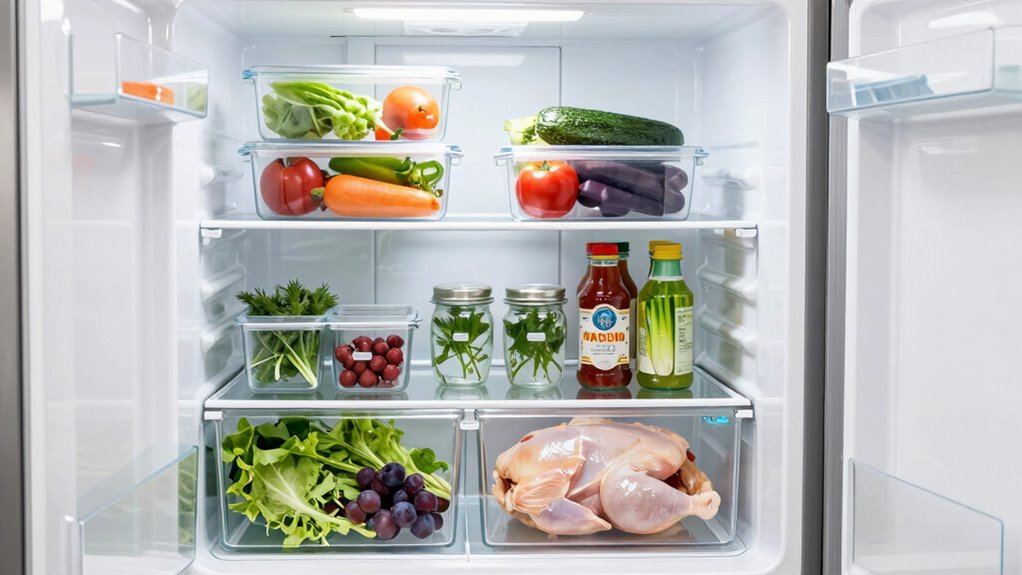
You probably know someone who buys groceries every week but still can’t find anything in their fridge. This common problem costs the average household hundreds of dollars annually. Your fridge’s chaos isn’t just annoying—it’s expensive. What if you could cut your grocery spending by 20% simply by organizing smarter? The key lies in completely rethinking how you store and track your food. Ready to discover the simple changes that prevent waste and save money?
Why Fridges Overflow and Food Still Goes Bad
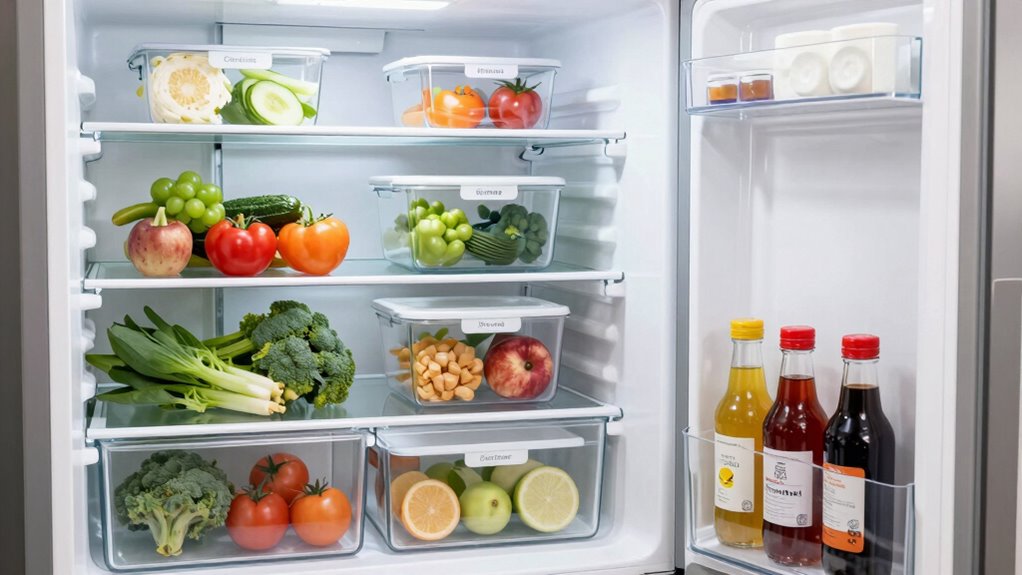
When you stuff your fridge to capacity, you might think you’re maximizing efficiency, but this actually works against you.
Overcrowding blocks airflow, creating warm spots where bacteria thrive. You can’t see expiration dates when items disappear into cramped corners, so food spoils unnoticed. Your fridge’s cooling system struggles to maintain consistent temperatures when airflow is restricted, causing some areas to become too warm while others freeze improperly.
You end up buying duplicates because you can’t remember what’s already inside. That expensive lettuce wilts behind forgotten containers, and milk sours unseen on back shelves.
Effective organization prevents these common problems. You’ll save money and reduce waste when you give each item proper visibility and space. Smart storage habits create order from chaos.
Group Foods by Shelf Life – Avoid Cross-Contamination
While organizing your fridge, you should group foods by shelf life to prevent cross-contamination and extend freshness.
Place items expiring soonest at the front where you’ll see them first. Keep fresh produce separate from raw meats and dairy products. Store items with similar expiration dates together – this creates natural rotation systems.
You’ll notice when foods are approaching their limits and can plan meals accordingly. Grouping prevents older items from hiding behind newer ones, reducing waste considerably.
Create designated areas for different shelf-life categories: immediate consumption, weekly use, and longer-term storage. This systematic approach helps you actually use what you buy instead of forgetting about it.
Your family will appreciate fresher meals while you save money through reduced food waste.
Organize Zones Based on Temperature – Keep It Fresh Longer
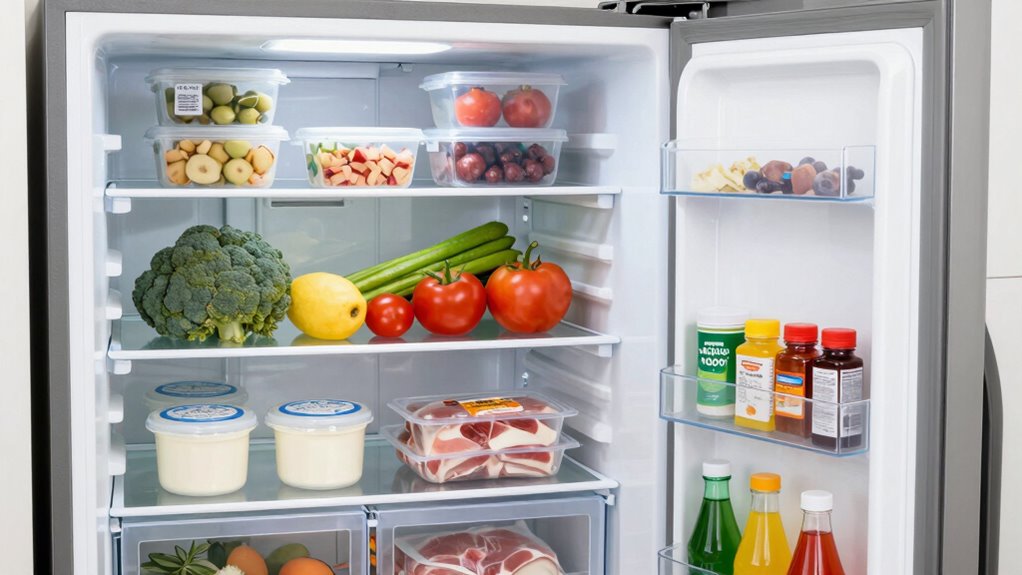
Your refrigerator contains several temperature zones that you should leverage to maximize food freshness and safety.
Store raw meats on the bottom shelf where temperatures stay coldest, preventing bacterial growth. Keep dairy products and eggs in the main compartment, avoiding the door where temperatures fluctuate.
Place fruits and vegetables in the crisper drawers, which maintain ideal humidity levels. Store condiments and leftovers on upper shelves where temperatures remain consistent.
Position items needing quick cooling near the back where cold air circulates most effectively.
Swap Opaque Bins for Clear Containers – See What You Have
Because you can’t see what’s inside opaque bins, swapping them for clear containers immediately improves your ability to locate items and reduce food waste.
You’ll eliminate the guesswork that leads to expired food hiding in the back. Clear containers let you quickly scan contents, making meal planning more efficient.
You’re not alone in struggling with mysterious bins—you’re part of a community that values practical solutions. Transparent storage transforms your fridge into an organized system where everything has visibility.
You’ll discover forgotten items before they spoil, saving money while reducing waste. Smart storage choices help you feel more connected to your kitchen routine.
Clear containers create belonging through shared organizational wisdom that works for everyone.
First In, First Out – Never Lose Food Again
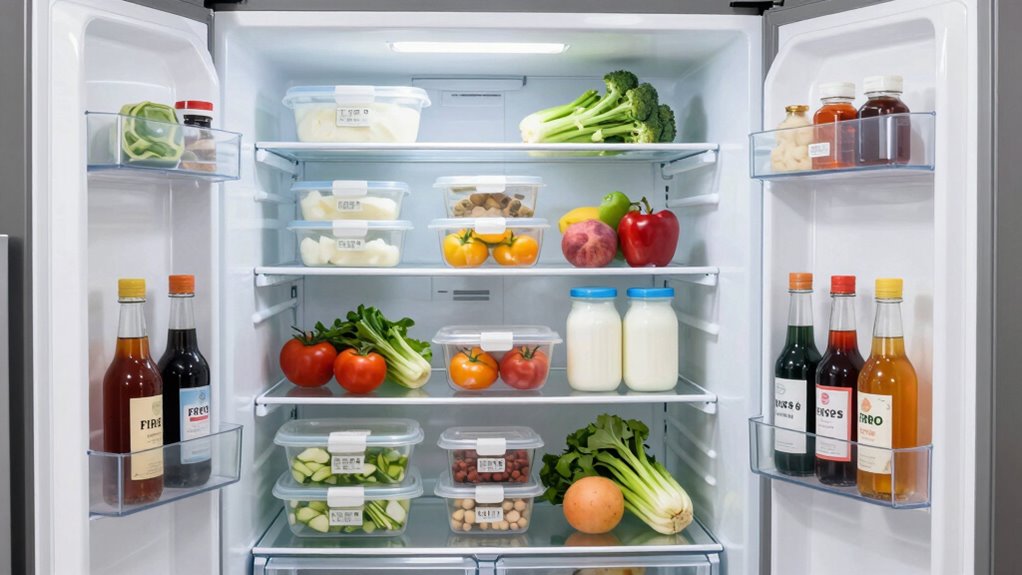
Clear containers make it easy to see what you have, but organizing those items properly guarantees you actually use them before they expire.
You’ll master this simple system and feel confident knowing your food stays fresh longer.
- Label everything with dates when storing items. Write directly on containers or use removable labels to track freshness.
- Rotate stock regularly by moving older items to the front when adding new groceries. Keep newest items in back where they won’t block access to older ones.
- Check expiration dates weekly during meal planning. This habit prevents surprises and helps you prioritize using items before they’re forgotten.
You’re not just organizing; you’re creating a system that works for your lifestyle while saving money and reducing waste.
Make Tiny Fridges Work Better Than Big Ones
While small refrigerators may seem limiting, strategic organization transforms cramped spaces into highly functional storage solutions.
You maximize every inch by using vertical space efficiently with stackable containers and adjustable shelves. Clear bins group similar items together, making everything easy to find. Keep frequently used items at eye level, while storing less accessed foods higher or lower.
You’ll discover that tight spaces force smarter decisions about what deserves refrigerator real estate. Label containers clearly so nothing gets forgotten in back corners. Use door storage wisely for condiments and items you grab daily.
With thoughtful arrangement, your compact fridge works harder than oversized models ever could.
Keep Fruits and Veggies in Separate Crispers
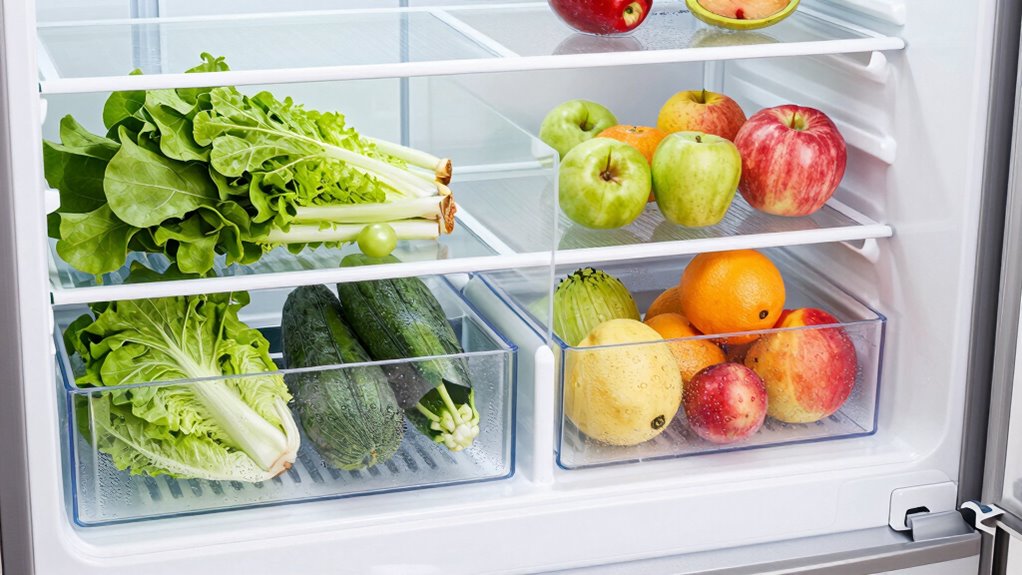
You should store fruits and vegetables in separate crisper drawers because they require different temperature and humidity conditions to stay fresh longer.
Fruits typically need warmer temperatures and lower humidity, while vegetables thrive in cooler, more humid environments.
This separation prevents ethylene gas from fruits spoiling nearby vegetables and helps you maximize the lifespan of both.
Optimal Temperature Settings
One crucial aspect of maintaining ideal refrigerator performance involves setting the correct temperature zones for different food types.
You need distinct settings to keep everything fresh longer.
- Set your main refrigerator compartment between 34-38°F to properly store dairy, meats, and prepared foods without freezing them.
- Keep your freezer at 0°F or below to maintain frozen foods’ quality and prevent bacterial growth effectively.
- Adjust crisper drawers to 32-35°F for best fruit and vegetable storage, ensuring they stay crisp without freezing.
These precise settings help you maximize freshness while minimizing waste.
Your family deserves the best-tasting, most nutritious foods, and proper temperature control delivers exactly that.
Don’t guess—use these proven settings consistently.
Proper Humidity Levels
Maintaining proper humidity levels in your refrigerator builds on the foundation of correct temperature settings. You should adjust crisper drawers to match your produce needs.
High humidity settings work best for leafy greens, broccoli, and carrots. Low humidity works better for fruits like apples and pears. Keeping fruits and vegetables in separate crispers prevents ethylene gas issues.
You’ll notice better results when storing items properly. Place moisture-sensitive vegetables in high-humidity drawers. Store fruits that release ethylene gas separately from vegetables.
Check your refrigerator manual for specific humidity controls. You can regulate moisture levels by adjusting vents or dials. Proper humidity prevents wilting, browning, and premature spoilage.
You’ll save money by reducing food waste. Organize your crispers thoughtfully. You’ll extend produce lifespan markedly.
Extended Freshness Duration
Keeping fruits and vegetables in separate crispers greatly extends their freshness duration by preventing ethylene gas cross-contamination.
You’ll notice produce lasts considerably longer when stored properly apart.
- Store ethylene-producing fruits like apples, bananas, and tomatoes in one crisper away from sensitive vegetables.
- Keep leafy greens and herbs in the vegetable crisper with higher humidity settings to maintain crispness.
- Check crisper drawers weekly and adjust humidity levels based on what you’re storing to maximize freshness.
You’re creating an organized system that works with your lifestyle.
These simple separation techniques help everything stay fresh longer, reducing waste while saving money.
Your family benefits from better-tasting, nutrient-rich produce that looks and feels fresh.
Don’t Store Everything in the Door – Some Items Don’t Belong There
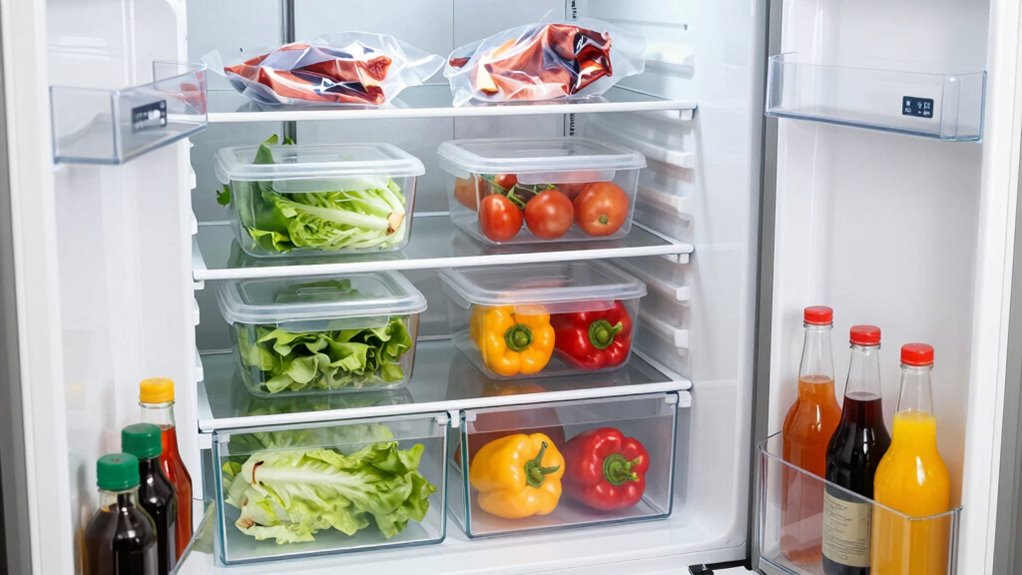
While you might think the refrigerator door is the perfect spot for all your condiments and beverages, storing certain items there can actually compromise their quality and safety.
The door experiences temperature fluctuations every time you open it, making it unsuitable for perishables like milk, eggs, and yogurt. These items belong in the main refrigerator compartments where temperatures remain consistently cool.
Store condiments like ketchup and mustard in the door, but keep medications, oils, and vinegars in stable temperature zones.
Your vegetables and fruits should never call the door their home.
Simple Weekly Habits to Keep Your Fridge Sorted
Although you’ve organized your fridge perfectly, it won’t stay that way without consistent upkeep.
Weekly habits keep your space functioning smoothly and prevent chaos from creeping back in.
- Check expiration dates every Sunday – Spend ten minutes reviewing what needs to be used soon. Move older items to the front so they catch your attention first.
- Wipe down shelves and drawers – Quick cleaning prevents sticky buildup and keeps your fridge smelling fresh. Use a damp cloth to remove spills and crumbs.
- Reorganize by category – Group similar items together and return everything to its designated spot. This maintains the system you’ve created and makes finding ingredients effortless.
Spot These Habits That Waste Food Fast
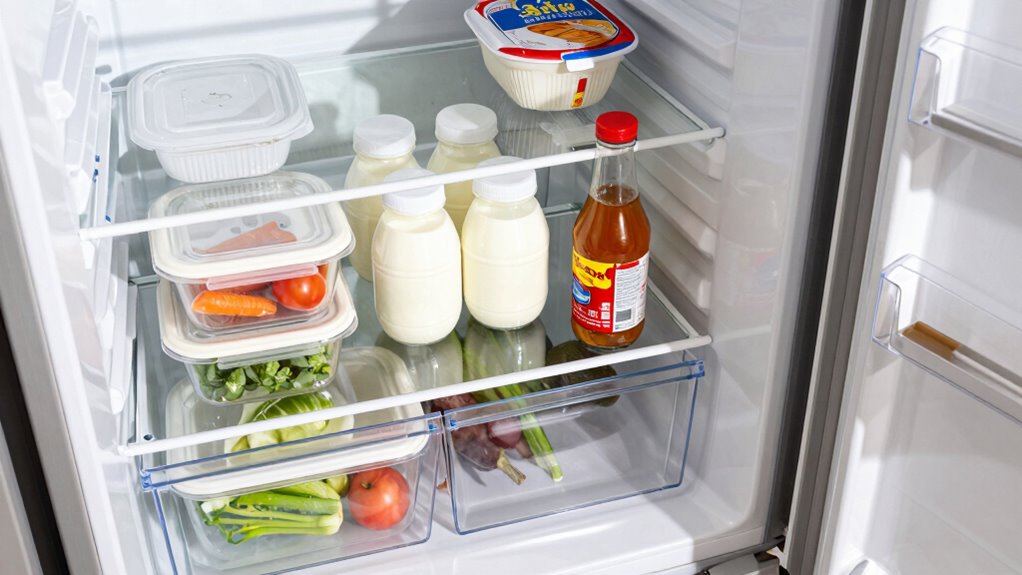
Even with consistent weekly maintenance, certain everyday behaviors can quickly undo your organized fridge system and lead to food waste.
You might unknowingly block air vents when cramming items, causing temperature inconsistencies that spoil food faster. Storing hot dishes directly inside creates condensation, promoting mold growth. Leaving produce in original packaging restricts airflow—transfer items to proper storage containers.
You probably forget about leafy greens tucked in crisper drawers, letting them wilt unnoticed. Overbuying trendy ingredients you rarely use again clutters space and expires quickly.
Mixing strong-smelling foods without sealing them properly causes flavor transfer, making items inedible. Storing ethylene-producing fruits like apples near sensitive vegetables accelerates their deterioration.
Ignoring proper food rotation means older items get buried behind newer purchases, guaranteeing they’ll expire first.
These small habits compound, wasting both food and money while defeating your organization efforts.
Track Freshness With Labels – Not Just Dates
You can maximize food freshness by creating clear expiration labels that go beyond simple dates.
Implement color-coded systems to quickly identify which items need attention first.
Rotate your stock using first-in, first-out principles to prevent waste.
Create Clear Expiration Labels
When you organize your fridge with clear expiration labels, you’ll immediately see which items need attention before they spoil. This simple system prevents food waste and saves you money by ensuring nothing gets forgotten in the back.
- Write dates boldly – Use large, dark markers on bright tape so expiration dates are visible from across the fridge.
- Label everything – Don’t skip items that seem obvious; fresh herbs, opened sauces, and prepared meals need dates too.
- Update regularly – Replace labels when you move items or notice date changes to maintain accuracy.
Clear labels create a sense of control and belonging in your kitchen routine. You’ll feel confident knowing exactly what needs to be used first.
Use Color-Coded Freshness Systems
While clear expiration labels help track dates, color-coded freshness systems give you a more intuitive way to monitor food quality at a glance.
You should assign specific colors to different freshness stages: green for fresh, yellow for consume soon, and red for expired or nearly expired items. This visual system lets you quickly identify what needs attention without reading every label.
You can use colored stickers, tape, or reusable clips to mark containers and packages. Green means you’ve got time, yellow signals upcoming use, and red tells you to use immediately or discard.
This method works especially well for leftovers, prepared foods, and ingredients with similar expiration dates.
Your family will appreciate this organized approach because it eliminates guesswork. Everyone can participate in maintaining freshness standards, creating shared responsibility for reducing food waste and saving money together.
Implement First-In, First-Out Rotation
Although managing food rotation seems straightforward, implementing a true first-in, first-out system requires more than just relying on expiration dates. You need a systematic approach that works for your household’s rhythm.
- Label everything with purchase dates – Use tape and marker to note when you bought items, not just manufacturer dates that don’t reflect your actual storage conditions.
- Organize by placement – Put newer items behind older ones so you naturally grab the oldest items first. Keep frequently used items at eye level.
- Weekly check and rearrange – Spend five minutes each week moving older items forward and checking labels. This habit prevents forgotten items from spoiling in the back.
You belong to a community that values smart food management. This system works because it’s simple, visual, and becomes second nature quickly.
Cut Grocery Trips When You Know What You’ve Got
Knowing what you already have in your fridge can dramatically reduce the time you spend shopping.
Take inventory before each trip, checking expiration dates and quantities. You’ll avoid buying duplicates and wasting money on items you already own.
Create a running list on your phone or keep a clipboard on your fridge to track what’s inside. When you know exactly what vegetables, dairy, and proteins you have available, meal planning becomes effortless.
You’ll discover new recipe combinations using existing ingredients rather than purchasing unnecessary items. This approach saves you money while reducing food waste.
Organize your fridge logically so everything has a designated spot. Group similar items together and use clear containers when possible.
Being organized means you’ll always know what’s available, making grocery trips more intentional and efficient.
Conclusion
You’re wasting money every time you throw away spoiled food. Don’t let that happen anymore. Organize your fridge strategically: group items by shelf life, use clear containers, and label everything with bold dates. Store raw meats properly and keep dairy in consistent temperatures. Check inventory before shopping trips. These simple habits prevent food waste while saving you cash. Isn’t it time you stopped overspending on groceries you don’t actually need?