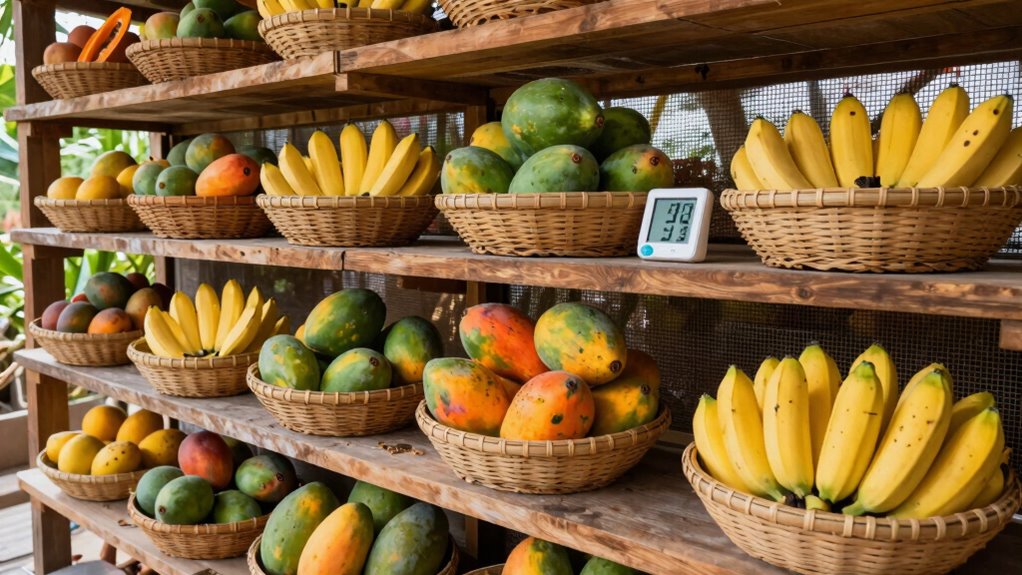
You’ve probably noticed how quickly bananas turn black in tropical heat. Storing fresh fruits in high humidity and temperatures accelerates spoilage through ethylene gas buildup and microbial growth. Your refrigerator’s temperature zone matters greatly – too warm and fruits ripen faster, too cold and they suffer chilling injury. What’s the ideal balance between temperature control and air circulation that keeps your produce fresh longer?
Why Fruit Goes Bad So Fast in Heat
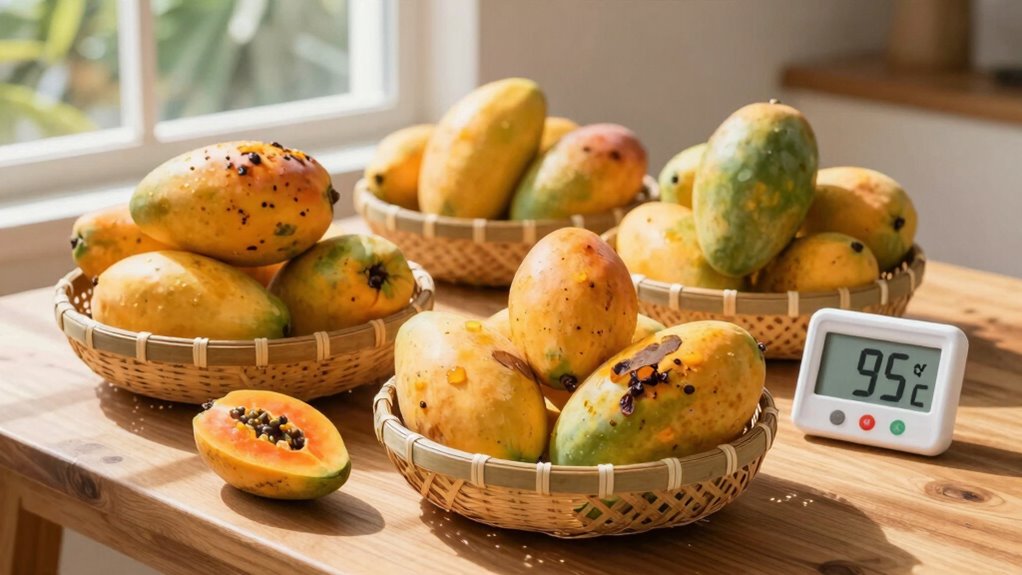
When you leave fruit in hot environments, heat accelerates the natural ripening process through enzymatic reactions that break down cell walls and convert starches to sugars.
You witness this transformation daily – bananas turning black, apples softening rapidly, and mangoes becoming overly sweet.
High temperatures activate polyphenol oxidase and pectinase enzymes, which degrade fruit structure and accelerate spoilage.
You’re not imagining it; heat genuinely speeds up these chemical reactions.
Tropical climates intensify this process, making proper storage essential for extending fruit freshness.
Understanding this science helps you make informed decisions about purchasing, storing, and consuming fruits before they overripen.
You belong to a community that values fresh, nutritious produce, so recognizing heat’s impact on fruit quality empowers you to minimize waste and maximize enjoyment of your favorite tropical fruits.
Cool Down: How Low Should It Be?
How low should your refrigerator temperature go to properly preserve fresh fruits? You should set your fridge between 35-40°F (2-4°C) for ideal fruit storage. This temperature range slows down enzymatic activity and bacterial growth without freezing delicate fruits.
Tropical fruits like mangoes and bananas require slightly higher temperatures around 45-50°F to prevent chilling injury. You must avoid temperature fluctuations because they accelerate spoilage.
Store fruits in the refrigerator’s crisper drawer where humidity control helps maintain freshness. Remember that different fruits have varying temperature sensitivities. Stone fruits and berries thrive at lower temperatures, while tropical varieties need warmer settings.
You should monitor your refrigerator’s temperature regularly using a thermometer. Proper temperature management extends shelf life considerably, reducing waste and saving money. Keep your fruits fresh longer by maintaining consistent, appropriate cooling levels.
Beat Humidity Before It Beats You
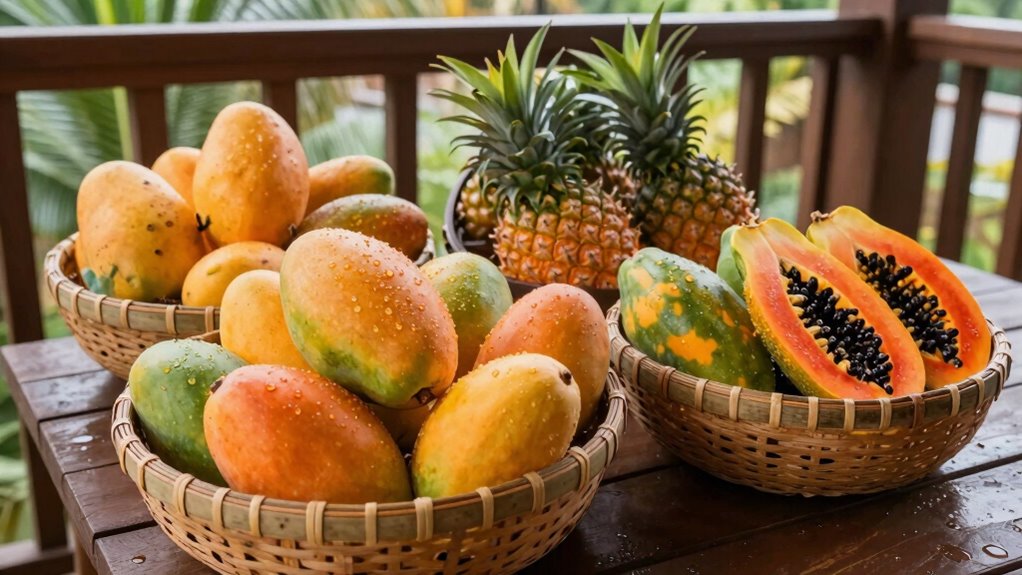
Why does humidity matter so much for fruit storage? High humidity creates perfect conditions for bacteria and fungi that destroy your fruits. You need to control moisture levels before they control your produce quality.
Store fruits in breathable containers, not sealed plastic bags. Use paper towels or cloth liners to absorb excess moisture. Keep storage areas well-ventilated with fans or cross-ventilation.
Don’t overcrowd fruits; they need air circulation around each piece. Check humidity levels regularly with a hygrometer. Ideal storage humidity ranges between 85-90% for most tropical fruits.
Remove any wet or damp fruits immediately. Create airflow by elevating storage containers. These simple steps prevent moisture buildup that leads to premature spoilage.
You’ll extend your fruits’ lifespan greatly when you manage humidity properly.
Stop Fruit Mold With This One Trick
Most people don’t realize that ethylene gas is the silent killer behind fruit spoilage.
You produce this gas naturally, and it accelerates ripening while promoting mold growth. Store ethylene-producing fruits separately from ethylene-sensitive ones. Keep apples, tomatoes, and avocados away from leafy greens, carrots, and berries.
Use perforated plastic bags instead of sealed containers. You’ll notice less mold development within days. Create airflow by spacing fruits apart rather than crowding them together.
Check your storage area daily and remove any soft or damaged pieces immediately. Your fruits will last longer when you control ethylene exposure. This simple separation technique prevents premature decay.
You’re taking charge of your fruit’s shelf life. Maintain proper ventilation and temperature consistency.
These practices become second nature quickly. You’ll wonder why you didn’t start sooner. Your fruits respond positively to this attention.
Ripens Quick: Bananas, Papayas vs Durian
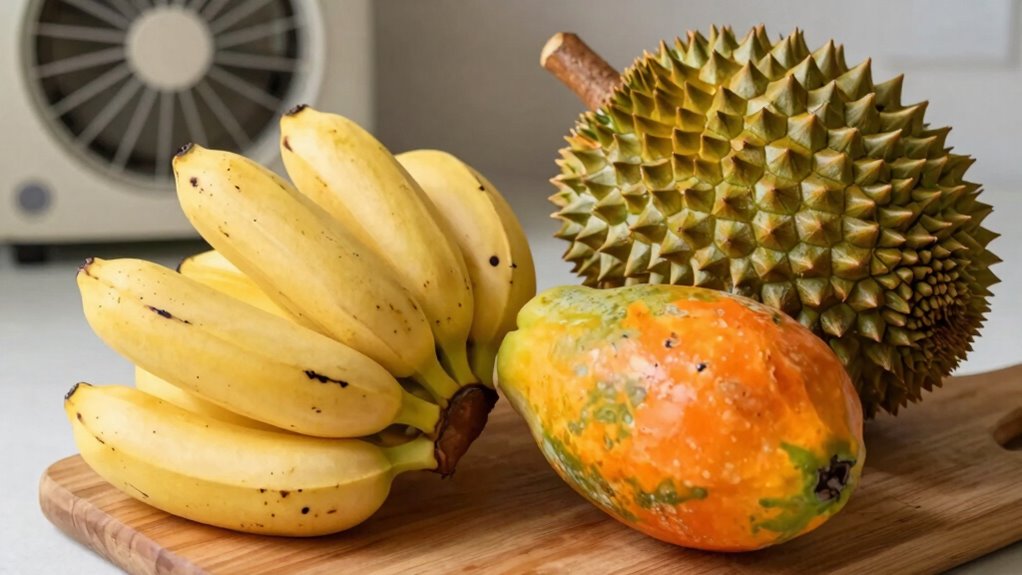
While bananas and papayas ripen quickly under normal conditions, durian takes longer to reach ideal ripeness despite its intense flavor.
You should store bananas at room temperature away from direct sunlight, checking them daily.
Papayas need similar treatment but ripen faster, usually within three days.
Durian requires patience, often taking one to two weeks to develop its full creamy texture and complex taste.
You’ll know durian’s ready when you detect its distinctive aroma and the shell gives slightly when pressed.
Unlike bananas that turn black when overripe, durian becomes too soft and loses its signature bitterness.
Store all three fruits separately from other produce since they’re ethylene producers.
Keep them in well-ventilated areas where you can monitor their progression toward perfect ripeness.
One Smelly Gas Kills Them All
Ethylene gas doesn’t just accelerate ripening—it can quickly turn your fresh fruits into overripe, mushy disappointments if you don’t manage exposure properly.
You produce this invisible, odorless hormone naturally, but some fruits release it in concentrated amounts. Bananas, apples, and tomatoes are major culprits that’ll hijack your perfectly good produce.
You must separate high-ethylene producers from sensitive fruits like mangoes, citrus, and berries.
Store them in different areas or use ethylene-absorbing packets. Your grandmother knew this instinctively—she kept certain fruits apart without knowing why.
Ventilation matters too. You can’t just seal everything in plastic bags.
Ethylene builds up in enclosed spaces, creating a ripening party you didn’t invite. Good airflow disperses the gas before it damages your fruit collection.
Keep Melons Away From Avocados, Please
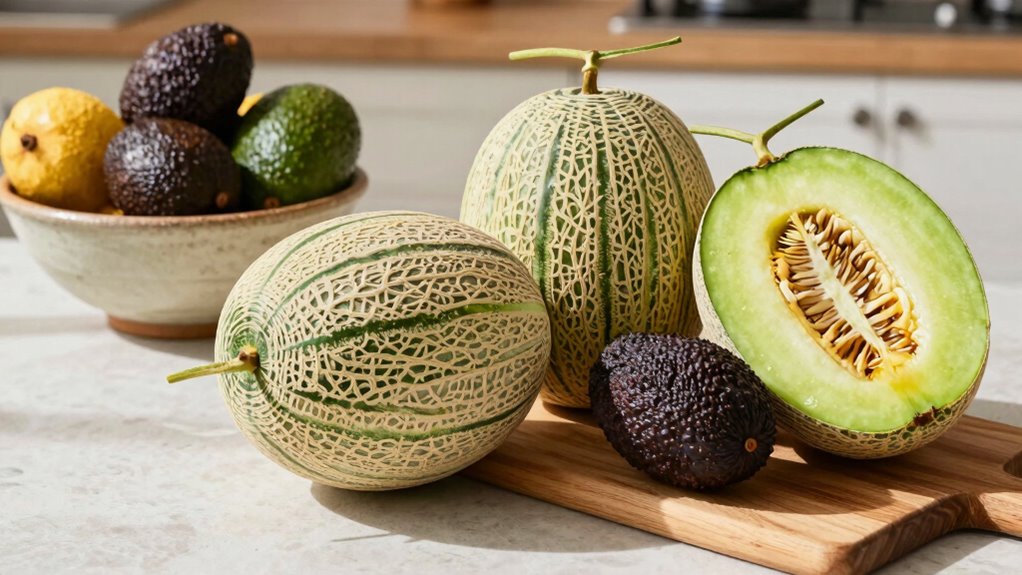
You shouldn’t store melons near avocados because they’re both ethylene producers that’ll accelerate each other’s ripening process.
Keep them separated in different temperature zones—melons prefer cooler storage while avocados need room temperature until ripe.
Make sure your storage area has adequate ventilation to prevent ethylene buildup that spoils fruit faster.
Separate Ethylene Producers
Since ethylene gas accelerates ripening in climacteric fruits, keeping high producers like melons separate from sensitive items such as avocados prevents premature spoilage.
You should store bananas, tomatoes, and apples away from lettuce, berries, and citrus fruits. Ethylene-sensitive produce deteriorates faster when exposed to this natural plant hormone.
Create designated storage areas in your refrigerator or pantry. Use separate crisper drawers for different fruit categories. You’ll notice better texture retention and extended shelf life when following this separation method.
Cross-contamination occurs quickly in confined tropical storage spaces. Your mangoes, papayas, and kiwis produce moderate amounts of ethylene, so position them strategically.
Don’t mix ripe and unripe climacteric fruits together. This simple separation technique maximizes freshness while minimizing waste in your kitchen.
Maintain Optimal Temperature Zones
While separating ethylene-producing fruits from sensitive produce helps maintain freshness, storing items at their ideal temperature zones proves equally essential for extending shelf life.
You should keep melons away from avocados because they require different storage temperatures. Store melons between 45-50°F while avocados need 50-55°F.
Tropical fruits like mangoes and papayas prefer 55-60°F. Bananas require warmer conditions around 60-65°F. Refrigerate citrus fruits at 32-40°F.
Keep tropical fruits in the warmest part of your refrigerator or at room temperature. Temperature fluctuations cause premature ripening and spoilage.
Monitor your storage areas regularly. Use separate containers for different temperature requirements. Don’t mix cold-sensitive fruits with those needing refrigeration.
Proper temperature control prevents metabolic disorders and maintains quality longer.
Ensure Proper Ventilation
Proper ventilation prevents moisture buildup and ethylene gas accumulation that accelerates spoilage in stored fruits.
You should separate ethylene-producing fruits like melons from ethylene-sensitive ones like avocados. Store fruits in breathable containers or mesh bags that allow air circulation.
Don’t overcrowd storage areas; leave space between items for airflow. Ventilate storage rooms daily by opening windows or using fans.
Check fruits regularly for moisture spots or mold growth. Remove damaged fruits immediately to prevent contamination spread.
Use perforated plastic bags instead of sealed containers. Keep storage areas dry and well-ventilated. Monitor humidity levels closely.
You’ll extend fruit shelf life greatly by maintaining proper air circulation throughout your tropical storage environment.
Tropical Veggies Need Different Care
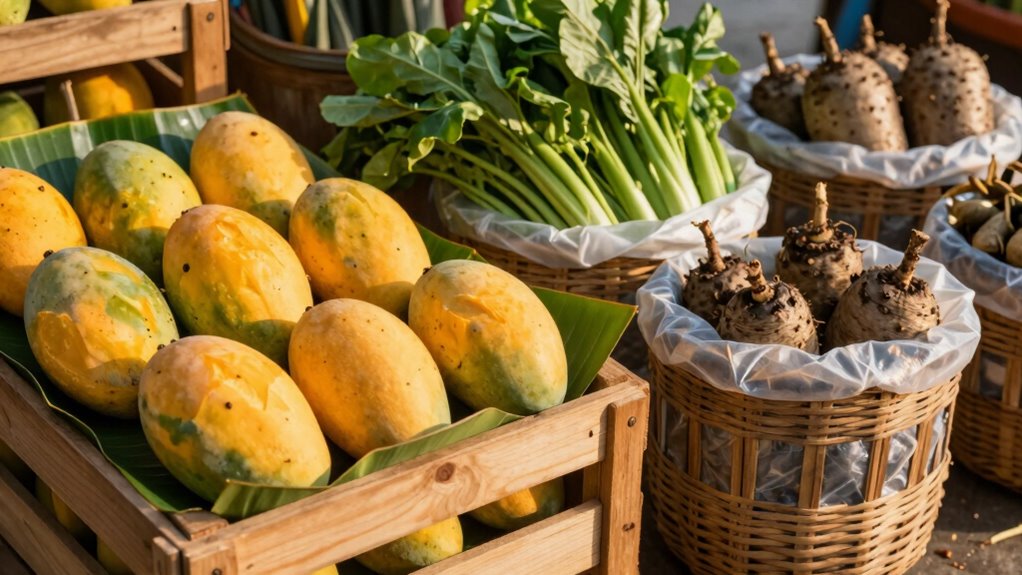
Although tropical vegetables thrive in warm, humid conditions, you’ll need to adjust your storage approach when bringing them home. These veggies don’t handle cold storage well, unlike temperate varieties.
You should keep them at room temperature, away from direct sunlight. Store leafy greens in breathable bags with holes, while root vegetables need dry, ventilated spaces.
Don’t wash vegetables before storing – moisture accelerates spoilage. Separate ethylene-producing veggies like tomatoes from ethylene-sensitive ones like leafy greens. Use mesh baskets or paper bags instead of plastic containers.
Check your vegetables daily and remove any that show signs of wilting or decay. Proper handling prevents premature spoilage and maintains nutritional value. Your tropical vegetables will last longer when you follow these specific storage requirements.
Put ‘Em in Fridge – Or Else
You should store most fresh fruits in your refrigerator because they require precise temperature control between 32-40°F to maintain freshness and prevent spoilage.
Your fridge’s humidity levels must stay between 85-95% to keep fruits from dehydrating while avoiding excess moisture that promotes mold growth.
You’ll also reduce ethylene gas exposure by storing fruits properly, since this naturally occurring compound accelerates ripening and can cause premature decay.
Optimal Temperature Control
The ideal storage temperature for most fresh fruits ranges between 32°F and 40°F, making your refrigerator the best defense against premature spoilage.
You need to understand that tropical climates accelerate fruit deterioration, so proper temperature control isn’t optional—it’s essential for preserving your investment in fresh produce.
- Set your refrigerator’s crisper drawer to 36°F for maximum fruit longevity
- Store ethylene-producing fruits like bananas and apples separately from ethylene-sensitive ones
- Keep your fridge’s temperature consistent—avoid frequent door opening during hot tropical days
- Use a thermometer to verify your refrigerator maintains the correct temperature range
You belong to the group of smart consumers who refuse to waste money on spoiled fruit.
Temperature control separates amateurs from experts in tropical fruit storage.
Don’t guess—measure and maintain proper refrigeration temperatures consistently.
Humidity Level Management
While proper temperature control prevents rapid spoilage, managing humidity levels in your refrigerator’s crisper drawers determines whether your fruits maintain their texture and nutritional value.
You should adjust settings based on fruit type: high humidity (85-95%) works best for leafy vegetables and thin-skinned fruits like grapes, while low humidity (70-80%) suits thick-skinned varieties like pineapples and melons.
Most modern refrigerators feature adjustable vents—experiment until you find ideal positions.
Store tropical fruits immediately upon purchase; don’t wait. High moisture environments accelerate enzymatic breakdown, causing soft spots and flavor loss.
Check your crisper’s humidity control dial regularly, especially during humid seasons when tropical climates experience peak moisture levels that challenge preservation efforts.
Ethylene Gas Reduction
Although ethylene gas naturally accelerates fruit ripening and decay, proper storage greatly reduces its harmful effects. You need to understand how this invisible killer works in your tropical kitchen.
- Separate ethylene producers like bananas, apples, and tomatoes from sensitive fruits like berries and leafy vegetables.
- Use perforated plastic bags to allow gas escape while maintaining humidity balance.
- Store climacteric fruits in the refrigerator’s crisper drawer where cold temperatures slow ethylene production considerably.
- Check fruits daily and remove overripe specimens immediately before they spoil neighbors.
You belong to the group that wastes less food. These simple steps prevent premature spoilage and save money while keeping your tropical fruits fresh longer.
Never Leave These Exposed Overnight
Several fruits release ethylene gas as they ripen, creating a chain reaction that accelerates spoilage when left exposed overnight.
You should always store bananas, apples, tomatoes, and avocados in sealed containers or plastic bags before darkness falls. These fruits become overripe quickly in tropical humidity when air exposure occurs.
Your refrigerator’s crisper drawer works best for overnight storage. Don’t leave cut fruits like papaya or pineapple exposed either. You’ll notice faster browning and texture changes. Cover exposed flesh with plastic wrap or store in airtight containers.
Remember that tropical temperatures intensify ethylene’s effects. Keeping fruits covered maintains freshness longer. You’ll extend shelf life considerably by simply covering them.
Store ripe fruits separately from unripe ones overnight. This prevents premature ripening. Your effort prevents waste and saves money.
Save Leftovers: How to Handle Sliced Mango
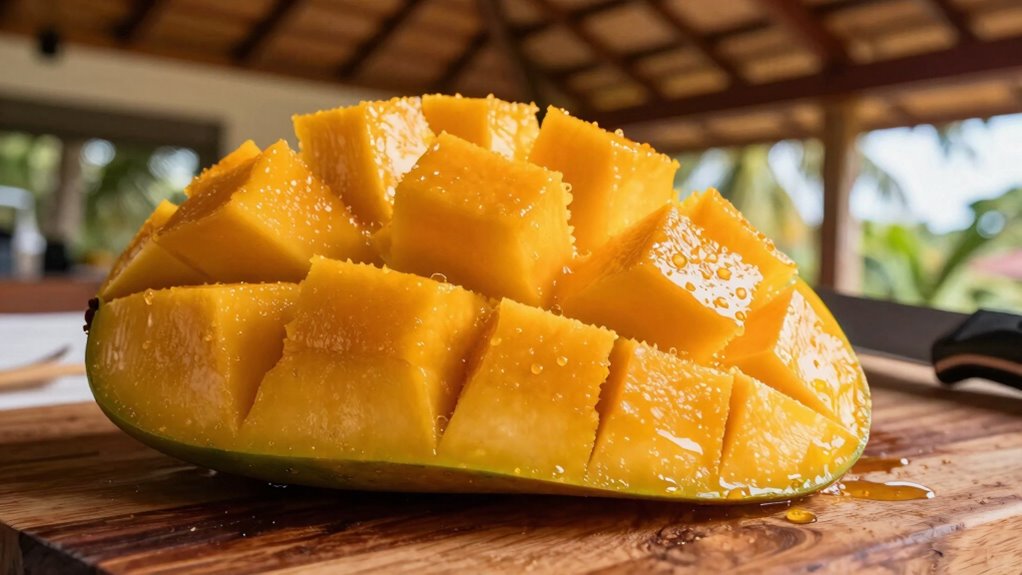
One often overlooked aspect of fruit storage involves proper handling of sliced mango, which requires immediate attention to prevent rapid deterioration. You must act quickly because exposed flesh oxidizes fast in tropical humidity.
- Seal immediately – Wrap slices in plastic wrap or store in airtight containers within five minutes of cutting.
- Refrigerate promptly – Place sealed mango at 4°C to slow enzymatic breakdown and bacterial growth.
- Add citrus protection – Sprinkle lemon or lime juice on exposed surfaces to prevent browning.
- Consume within 24 hours – Even properly stored sliced mango loses quality quickly due to tropical climate acceleration.
Your family deserves fresh, safe fruit. These steps guarantee maximum retention of flavor, texture, and nutritional value while preventing waste.
Say No to Ants and Flies
A clean storage environment prevents ants and flies from contaminating your fresh fruits. You must eliminate food sources that attract these pests by wiping down surfaces daily and removing any fruit debris immediately.
Store fruits in sealed containers rather than leaving them exposed. You should check for cracks or openings where insects might enter and seal them promptly. Regular cleaning with vinegar solution kills lingering odors that attract pests.
You must empty and clean storage areas weekly, paying special attention to corners and crevices. Keep storage spaces dry since moisture attracts insects. You should inspect fruits regularly for signs of infestation and remove damaged pieces immediately.
Create barriers using cinnamon or coffee grounds around storage areas. You must maintain consistent temperatures since extreme heat drives pests indoors seeking cooler spaces.
Bags, Boxes, or Baskets : Which Wins?
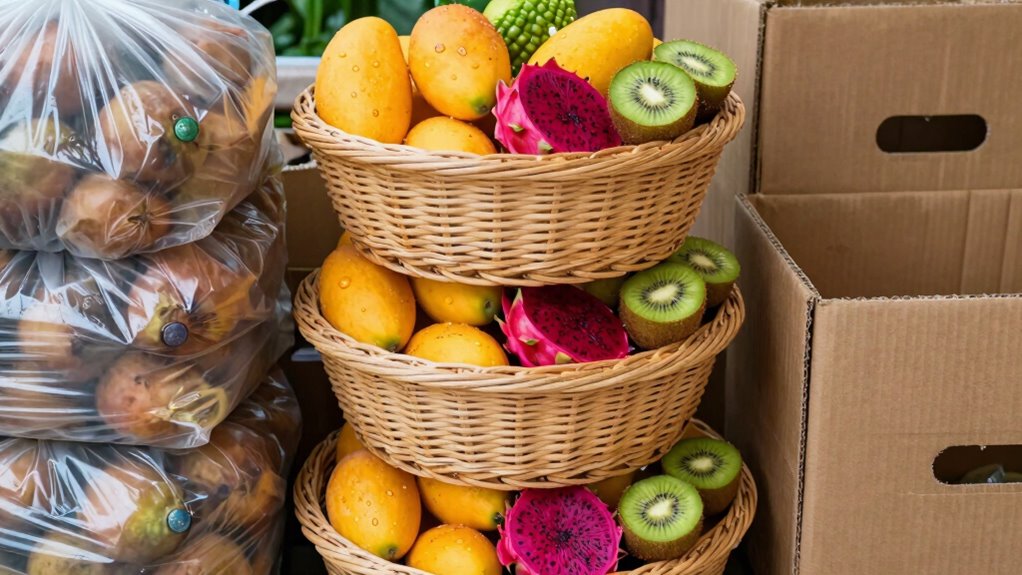
How do you choose between bags, boxes, and baskets when storing fresh fruits? Each option offers distinct advantages for tropical climate storage.
- Breathable bags like mesh or paper allow air circulation while preventing moisture buildup that causes premature spoilage.
- Ventilated boxes provide structural support and stackability, perfect for bulk storage in limited kitchen spaces.
- Woven baskets offer excellent airflow and drainage, ideal for fruits that need maximum ventilation like mangoes and papayas.
- Perforated plastic bags combine humidity control with pest protection, working well for mixed fruit storage.
Your community’s traditional markets use these methods successfully. Choose based on your storage space, fruit types, and climate conditions.
Consider what your neighbors recommend – local wisdom often provides the best solutions for your specific tropical environment.
See These Signs Before They Mold
You should watch for soft spots appearing on your fruits, color changes occurring, and sweet smells emerging.
These signs indicate that your fruits are beginning to mold and need immediate attention. Acting quickly when you notice these warning signals can help you salvage your produce before it spoils completely.
Soft Spots Appear
When soft spots appear on fresh fruits, they signal the beginning of decay that can quickly spread to nearby produce. You need to identify these trouble spots immediately to prevent mold growth.
- Press gently – Soft spots feel noticeably squishy compared to firm fruit surfaces.
- Look for texture changes – Skin appears wrinkled, dimpled, or lacks original tautness.
- Check for moisture – Areas feel damp or sticky where decay processes release fluids.
- Smell carefully – Affected regions emit slightly sweet or fermented odors.
You should remove fruits showing these signs immediately. Don’t wait for visible mold growth. Soft spots create ideal conditions for rapid bacterial multiplication.
Your storage practices must prioritize early detection. Remove affected produce before decay spreads to untouched fruits. This prevents entire batches from spoiling quickly.
Color Changes Occur
Color changes serve as another early warning system for fruit deterioration, often appearing before soft spots become noticeable.
You should monitor your fruits daily for these visual cues that signal impending spoilage.
Bananas turn from yellow to brown, indicating they’re past their peak.
Green mangoes shouldn’t develop black patches.
Papaya flesh starts darkening at the base when overripe.
Citrus fruits show dull, wrinkled skin instead of their bright, smooth appearance.
These chromatic shifts happen because enzymatic processes break down chlorophyll and other pigments as fruits age.
Don’t ignore these signs even if the fruit feels firm.
Color changes mean cellular breakdown has already begun internally.
Trust your eyes – they’re telling you when fruits are approaching their expiration window.
Act quickly when you notice these transformations.
Sweet Smells Emerge
As fruit ripens beyond its ideal stage, enzymatic activity intensifies and breaks down sugars and acids, releasing volatile compounds that create distinctly sweet, fermented aromas.
You’ll notice these fragrances become stronger and more complex as deterioration progresses toward spoilage.
- Bananas emit caramel-like notes – ethyl acetate and isoamyl acetate compounds create that familiar overripe banana smell
- Mangoes release floral-sweet scents – terpene breakdown produces intense tropical aromatics
- Papayas develop honey-like fragrances – enzyme action on carotenoids releases distinctive sweet esters
- Pineapples emit fermented tropical notes – bromelain activity creates complex alcohol and ester combinations
These aromatic changes signal you must consume fruits quickly or preserve them through refrigeration.
Trust your nose – sweet smells emerging from stored fruits indicate immediate action is needed to prevent mold growth and nutrient loss.
Make Everything Stay Fresh Longer
To maximize freshness across all your fruits, you’ll want to understand how ethylene gas affects ripening and storage conditions.
This natural hormone accelerates ripening, so separate ethylene-producing fruits like bananas, apples, and tomatoes from ethylene-sensitive ones like berries and leafy vegetables.
Store fruits in perforated plastic bags to maintain humidity while allowing airflow. Keep your refrigerator’s crisper drawer at 85-90% humidity for ideal results.
Remove any bruised or damaged fruits immediately—they release excess ethylene and accelerate spoilage of nearby produce.
Don’t wash fruits until ready to eat, as moisture promotes bacterial growth.
Check your stored fruits daily and consume them within their peak freshness windows for best quality and nutritional value.
Summer Showers Mean Spoiled Strawberries
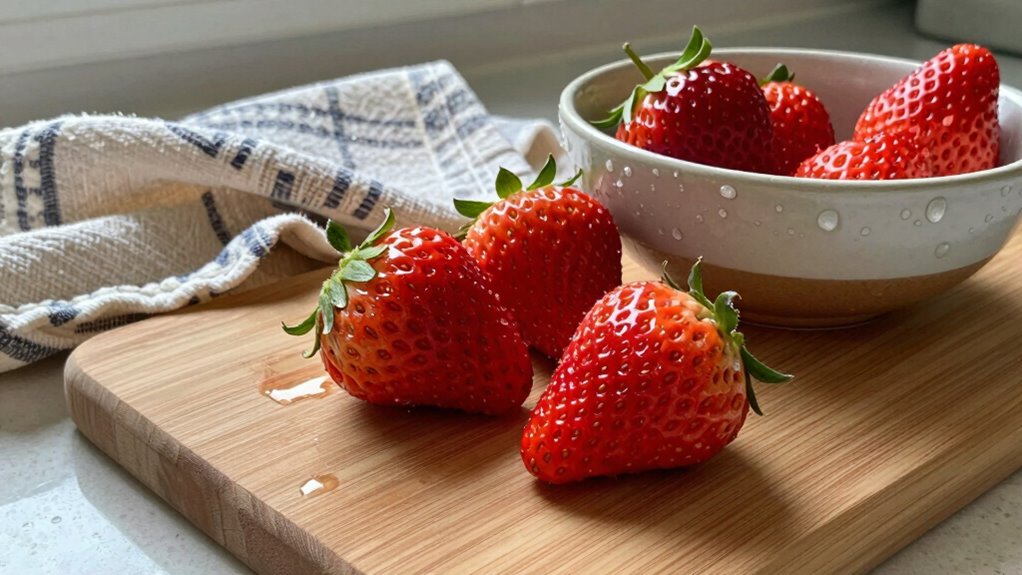
You must control moisture levels and regulate temperature to prevent strawberries from spoiling during summer’s humid conditions.
Excess moisture creates ideal environments for mold growth, while fluctuating temperatures accelerate decay processes.
These factors combine to make summer storage particularly challenging for maintaining fresh strawberry quality.
Moisture Control Methods
Humidity doesn’t just make your skin feel sticky—it’s the silent killer of fresh strawberries and other delicate fruits during summer months.
You need effective moisture control to prevent spoilage and maintain freshness in tropical climates.
- Ventilated storage containers allow air circulation while protecting fruits from direct humidity exposure.
- Desiccant packets absorb excess moisture in enclosed storage spaces, preventing condensation buildup.
- Perforated plastic bags let ethylene gas escape while maintaining ideal humidity levels around your produce.
- Elevated storage platforms keep fruits off damp surfaces, reducing direct contact with moisture-laden floors.
These methods create controlled microenvironments that extend fruit shelf life considerably.
You’ll notice dramatic improvements in freshness retention when implementing these practical moisture management techniques consistently.
Temperature Regulation Strategies
While summer showers bring relief from scorching heat, they also create temperature fluctuations that accelerate fruit spoilage through condensation and thermal shock.
You must maintain consistent storage temperatures between 50-55°F for most tropical fruits. Refrigerate berries immediately after purchase, but avoid freezing temperatures that damage cellular structure.
Use insulated storage containers with temperature monitoring devices to prevent thermal shock during power outages. Place fruits away from direct sunlight and heat sources.
Create buffer zones using thermal mass like water containers that stabilize temperature swings. Don’t store fruits near appliances generating heat.
Implement evaporative cooling techniques during power failures. Rotate stock regularly, consuming older fruits first.
Monitor storage areas daily with thermometers. Keep backup cooling methods ready.
These strategies protect your investment while ensuring peak freshness and nutritional value throughout extended tropical growing seasons.
These Habits Waste More Produce Than Bugs Do
Although insects and pests certainly damage their share of fruit, your own storage habits likely waste far more produce through improper handling and storage techniques.
You’re probably losing more fruit to these common mistakes than you realize.
- Storing all fruits together – You mix ethylene-producing fruits with sensitive ones, causing premature ripening and spoilage.
- Ignoring temperature zones – You keep tropical fruits in refrigerators below 50°F, damaging their cellular structure and accelerating decay.
- Using airtight containers – You trap moisture and ethylene gas, creating perfect conditions for mold and bacterial growth.
- Washing before storage – You remove natural protective barriers and introduce excess moisture that promotes spoilage.
These simple changes will dramatically reduce your fruit waste.
Conclusion
Store fruits like you’re managing a delicate ecosystem—keep temperatures cool, humidity controlled, and ethylene producers separated. Think of your refrigerator as a orchestra conductor: each fruit needs its own section to prevent spoilage. Bananas ripen fast? Store them alone. Berries mold quickly? Check them daily. Proper storage isn’t just about temperature; it’s about creating harmony between fruits’ natural rhythms and your tropical climate’s challenges.