Picture yourself standing in the grocery store aisle, basket overflowing with items you didn’t plan to buy. This scenario costs you about 25% more annually on food expenses. You can avoid this trap by developing a systematic approach to grocery planning. Creating an organized shopping list based on inventory checks and meal plans will transform your spending habits. Let’s explore how to build a strategy that keeps your cart focused and your budget intact.
Why Grocery Lists Stop Impulse Buys and Save Money
When you shop with a predetermined list, you’re considerably less likely to make impulse purchases that derail your budget.
Research shows that unplanned buying accounts for nearly 23% of grocery spending. You stay focused on essentials when you stick to written plans. Your brain craves the dopamine hit from spontaneous purchases, but lists act as your financial guardrail.
Studies confirm that shoppers using lists spend 15-25% less than those who don’t. You’re not alone in struggling with impulse control – it’s human nature. However, you can master this challenge through preparation.
Lists eliminate decision fatigue that leads to poor spending choices. You’ll discover that planned shopping creates confidence and control over your money.
Smart shoppers know lists transform chaotic spending into purposeful purchases that align with your financial goals.
Check Pantry Before Making Any Grocery Decisions
Start your grocery planning by taking inventory of what you already have at home. This simple step prevents duplicate purchases and reduces food waste.
When you know exactly what’s in your pantry, refrigerator, and freezer, you make smarter shopping decisions.
- Check expiration dates – You’ll avoid buying items you already have and prevent food from spoiling unused.
- Organize by category – Group similar items together (canned goods, spices, baking supplies) to quickly identify what needs replenishing.
- Create a running list – Keep a master list of staples you use regularly, updating it as you consume items.
Research shows that households waste nearly 30% of purchased food, often because they forget what they own.
Taking inventory helps you shop with confidence and purpose.
Decide How Much to Spend on Food Weekly
You should set realistic budget limits based on your income and household size to avoid overspending on food each week.
Tracking your weekly spending habits helps you identify patterns and areas where you can cut costs without sacrificing nutrition.
Adjust your spending amounts according to your changing needs, such as seasonal produce availability or family size fluctuations.
Set Realistic Budget Limits
Setting realistic budget limits for your weekly food spending requires careful consideration of your overall financial situation and grocery needs.
You’ll want to evaluate what you can comfortably afford without sacrificing other essential expenses.
- Calculate your monthly food allocation – Most financial experts recommend spending 10-15% of your income on food, then divide by four weeks to determine your weekly limit.
- Factor in your household size and dietary requirements – A family of four obviously needs a larger budget than a single person, while special diets or food allergies may increase costs.
- Account for occasional dining out – If you eat at restaurants twice monthly, reduce your grocery budget accordingly to maintain your overall food spending target.
Stick to these limits to avoid financial stress.
Track Weekly Spending Habits
Tracking your weekly spending habits reveals exactly where your food dollars go and helps you make informed decisions about future purchases. You should monitor every grocery receipt, noting total amounts spent on different food categories.
Use smartphone apps or simple notebooks to record expenses immediately after shopping. Review these records weekly to identify spending patterns and spot areas where you consistently overspend. This practice helps you understand whether you’re staying within your predetermined budget limits.
When you actively track expenses, you become more mindful of impulse purchases and their impact on your overall food budget. Regular tracking creates awareness that prevents unconscious spending habits.
You’ll discover which items consume most of your grocery budget and gain clarity about your actual food spending behavior versus your assumptions.
Adjust Amounts Based on Needs
Having tracked your weekly spending habits and gained insight into your actual food expenses, you can now make informed adjustments to align your grocery budget with your household’s specific needs. Your grocery spending should reflect your family size, dietary requirements, and income constraints.
- Calculate your baseline needs – Multiply your household members by $50-75 weekly for basic nutritious meals, adjusting for special dietary needs or preferences that might increase costs.
- Factor in meal planning consistency – If you cook at home 5+ days weekly, allocate 60-70% of your food budget to staples and ingredients rather than convenience foods.
- Account for lifestyle variations – Adjust amounts based on work schedules, activity levels, and upcoming events that might require additional grocery purchases throughout the month.
Build a Permanent Grocery Staple Checklist
A well-organized grocery staple checklist serves as the foundation for efficient meal planning and shopping. You should categorize essentials into proteins, grains, dairy, fruits, vegetables, and pantry items you consistently use.
Research shows that shoppers with predetermined lists spend 23% less time in stores and reduce impulse purchases by 70%. Start by inventorying your kitchen monthly, noting what runs out quickly. Include versatile basics like eggs, rice, canned beans, seasonal produce, and your preferred protein sources.
Cross-reference sales flyers with your staple list to maximize savings. Update your checklist quarterly based on dietary changes or family needs. Keep this list accessible on your phone or printed near your kitchen.
You’ll gain confidence knowing you’re prepared for spontaneous meals while sticking to budget-friendly, nutritionally balanced choices everyone can enjoy.
Plan Meals Using Only What’s Already at Home
One effective strategy for reducing food waste and saving money involves planning meals exclusively with ingredients you already have on hand. This approach helps you avoid impulse purchases while maximizing your existing food investment.
1. Take inventory first – Check your pantry, fridge, and freezer before planning meals.
You’ll discover forgotten items and prevent duplicate purchases.
2. Search online for recipes – Use recipe websites and apps that let you input existing ingredients.
These tools generate meal ideas based on what you already own.
3. Embrace creative substitutions – Replace missing ingredients with similar items you have.
This flexibility expands your meal options while reducing waste.
Planning with existing ingredients works because it forces mindful consumption and eliminates the temptation to buy unnecessary items.
Structure Grocery Lists With Proven Templates
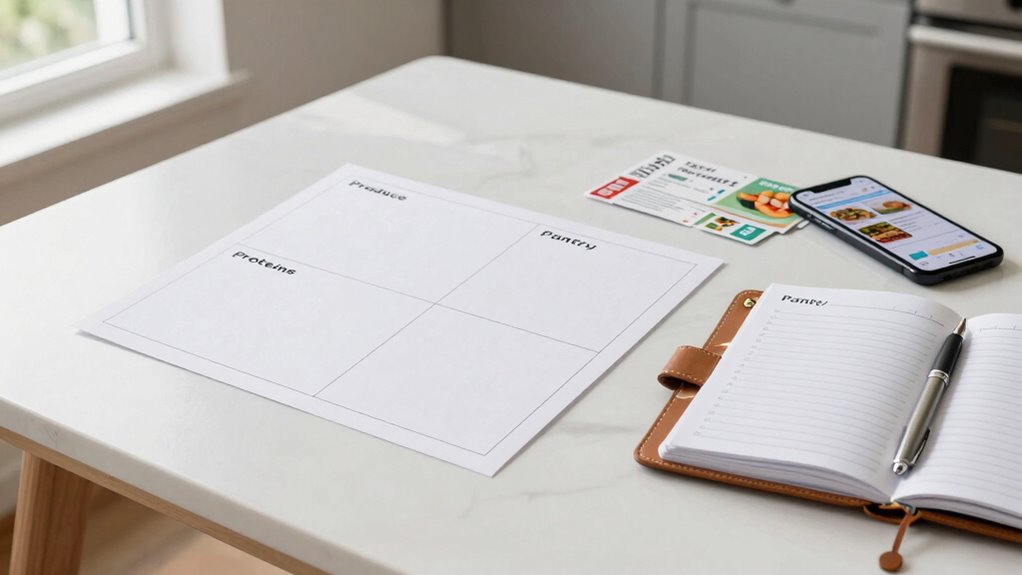
Creating structured grocery lists builds naturally from the mindful approach of using what you already have at home.
You’ll find that proven templates streamline your shopping experience while reducing impulse purchases. Try categorizing items by store sections: produce, dairy, meats, pantry staples, and frozen foods. This organizational method mirrors how stores layout their aisles, making your shopping trip more efficient.
Research shows that structured lists reduce overspending by up to thirty percent. You’re not alone in struggling with impulse buys – most shoppers face this challenge. Templates provide psychological boundaries that help you stick to planned purchases.
Popular formats include alphabetical lists, store-layout lists, or meal-focused categories. Choose what resonates with your shopping style and family needs.
Start Shopping in Produce Sections First
When you prioritize produce sections during your shopping trip, you’re more likely to secure the freshest items while avoiding the temptation of processed foods that line other aisles.
Starting with fruits and vegetables helps you build a healthy foundation for your meals while steering clear of impulse purchases near checkout areas.
- Choose seasonal produce – You’ll find better prices and maximum nutritional value when you buy what’s naturally available.
- Shop the perimeter first – Most stores place fresh produce around outer walls, keeping you away from central processed food displays.
- Plan meals around what looks best – Let vibrant, fresh produce inspire your weekly menu rather than sticking rigidly to pre-planned meals.
This strategy works because you’re physically positioning yourself away from tempting processed items while building healthy eating habits into your routine.
Prep Once, Shop Less by Batch Cooking
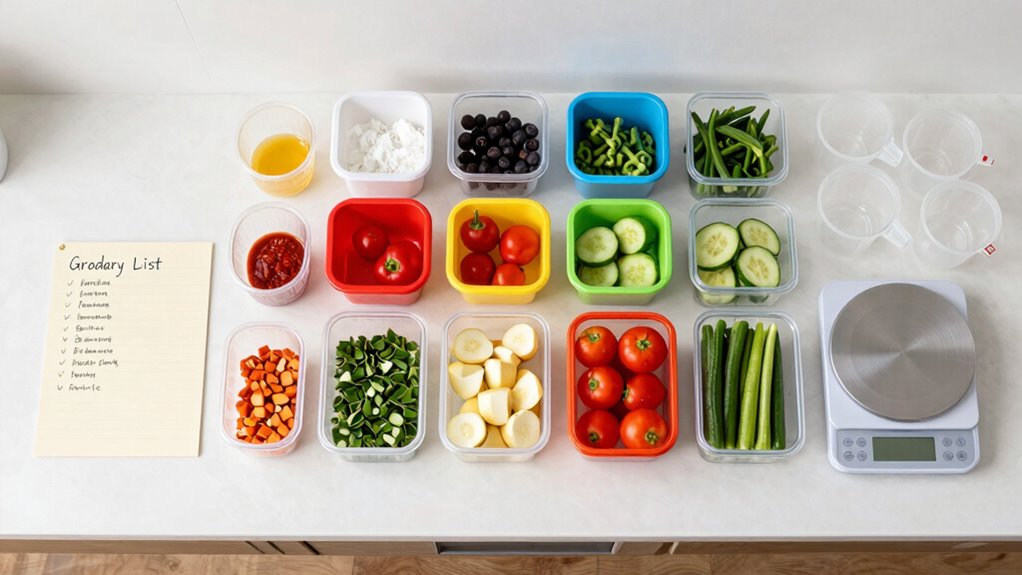
Batch cooking lets you prepare large quantities of meals in advance, which means you’ll spend less time shopping and more time focusing on other priorities.
You’ll buy ingredients in bulk, reducing the frequency of store visits. This strategy helps you avoid impulse purchases because you’re not wandering aisles weekly. Research shows that frequent shoppers buy 23% more items than planned.
When you prep meals ahead, you create a structured eating pattern that eliminates decision fatigue. You’ll stick to your list because you know exactly what ingredients you need.
Batch cooking also saves money since buying in bulk typically costs less per unit. Your kitchen becomes more organized, and you’ll feel accomplished knowing dinners are ready.
This approach builds consistency in your routine while giving you control over your food choices and spending habits.
Pick 5 Go-To Healthy Foods You Always Buy
You should focus on stocking staple healthy proteins like eggs, beans, and lean meats that provide essential amino acids your body needs for muscle repair and immune function.
Always-buy fresh vegetables such as leafy greens, bell peppers, and cruciferous vegetables deliver crucial vitamins, minerals, and antioxidants that support cellular health and disease prevention.
Essential healthy grains including quinoa, brown rice, and oats supply complex carbohydrates and fiber that maintain steady blood sugar levels and promote digestive health.
Staple Healthy Proteins
Because protein forms the foundation of balanced nutrition, selecting five reliable healthy proteins guarantees you’ll always have nutritious options on hand.
You’ll build muscle, maintain energy, and feel satisfied longer when you prioritize these essential nutrients.
Focus on versatile proteins that work in multiple recipes:
- Eggs – packed with complete amino acids and budget-friendly
- Greek yogurt – delivers probiotics plus high-quality protein
- Canned tuna or salmon – omega-3 fatty acids with convenient storage
These staples prevent last-minute processed food choices.
You’re not just buying food; you’re investing in your health and creating sustainable eating habits that fit your lifestyle.
Always-Buy Fresh Vegetables
Fresh vegetables provide the vitamins, minerals, and fiber your body needs to function at its best, complementing the protein foundation you’ve established.
You should always buy leafy greens like spinach and kale, which contain iron and folate essential for energy production. Add colorful bell peppers for vitamin C and antioxidants that support immune function.
Broccoli provides sulforaphane, a compound shown to reduce inflammation. Carrots deliver beta-carotene for eye health. Finally, include tomatoes rich in lycopene, linked to heart health.
These five vegetables create a nutrient-dense base for meals while keeping costs manageable. Planning these purchases prevents last-minute processed food choices.
Store them properly to maintain freshness longer. Your body will thank you for consistently choosing these whole foods that support long-term health goals.
Essential Healthy Grains
While planning your grocery list, incorporating vital healthy grains guarantees you’re getting sustained energy and important nutrients your body needs for ideal function.
These pantry staples keep you feeling full longer while providing fiber, protein, and essential vitamins.
- Quinoa – This complete protein contains all nine essential amino acids your body can’t produce alone.
- Brown rice – Unlike white rice, it retains fiber and nutrients that support digestive health and blood sugar control.
- Oats – Rich in beta-glucan fiber, they help lower cholesterol and stabilize glucose levels throughout the day.
These grains form your nutritional foundation, supporting energy, satiety, and overall wellness.
When you stock these reliable options, you’re choosing foods that genuinely fuel your body’s needs.
Set One-Treat Rule for Every Grocery Run
When you’re planning your grocery list, limiting yourself to one treat per shopping trip helps prevent overindulgence and supports healthier eating habits.
This strategy works because it satisfies your desire for something special without completely derailing your nutrition goals. Research shows that people who allow themselves small indulgences are more likely to stick to their overall healthy eating plan long-term.
You’re not depriving yourself entirely, which actually makes you less likely to binge later. Choose your one treat thoughtfully – maybe that fancy chocolate bar you’ve been craving or those artisanal cookies.
Never Shop Hungry or Late in the Day
Shopping for groceries demands clear thinking and self-control, which become considerably harder when you’re hungry or exhausted. Research shows that low blood sugar impairs decision-making abilities, making you more susceptible to impulse purchases.
Your brain craves quick energy sources when tired, leading to poor food choices.
- Eat a balanced meal or snack before heading to the store to maintain stable blood sugar levels.
- Shop during your peak energy hours, typically mid-morning or early afternoon.
- Take breaks during longer shopping trips to prevent mental fatigue.
Timing your grocery trips strategically helps you stick to your list and budget. Your future self will thank you for making thoughtful decisions while your mind is sharp.
Pay With Cash to Enforce Spending Limits
You should consider paying with cash instead of cards to prevent overspending during grocery shopping.
Physical money makes you more aware of your actual spending because you can see and feel the money leaving your wallet.
Research shows that people spend less when they use cash compared to credit or debit cards.
Cash Payments Limit Overspending
Paying with cash instead of cards helps you stick to your budget because you can only spend what you physically have.
Research shows cash payments activate pain centers in your brain, making you more conscious of each purchase.
1. Set weekly cash limits – Withdraw your grocery budget in bills and coins. When it’s gone, you’re done shopping.
This creates natural spending boundaries you can feel.
2. Count change mindfully – Each transaction becomes deliberate when you handle physical money.
You’ll notice prices more acutely and avoid unnecessary purchases.
3. Leave cards at home – Studies reveal people spend 12-18% more when using credit cards versus cash.
Remove temptation by carrying exact amounts needed.
Cash creates automatic accountability you can’t ignore.
Physical Money Creates Budget Awareness
Budget awareness increases naturally when you use physical money for grocery shopping. You feel the actual weight and quantity of bills leaving your wallet, creating tangible spending feedback.
Research shows cash payments activate pain centers in your brain, making you more conscious of each purchase decision. Unlike swiping cards or digital payments, physical money forces you to mentally calculate remaining funds while shopping. You avoid overspending because you can’t spend what you don’t physically possess.
Studies reveal shoppers spend 12-18% less when paying with cash versus credit cards. This psychological barrier helps you stick to your predetermined grocery budget. Your brain processes cash transactions differently, triggering immediate cost-benefit analysis.
You become more intentional about purchases, reducing impulse buys that derail your financial goals and grocery planning efforts.
Schedule 20 Minutes Weekly for Grocery Planning
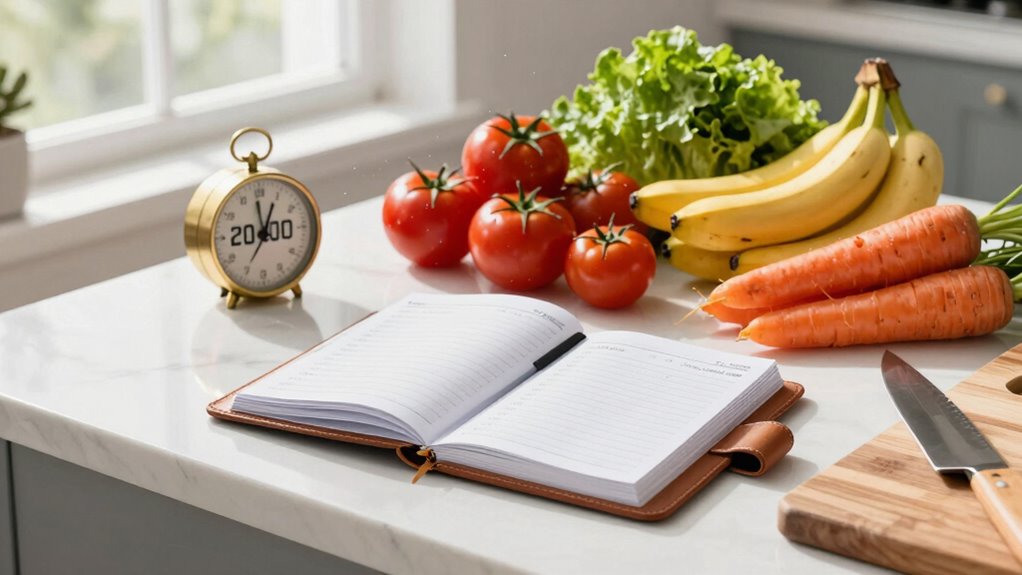
Twenty minutes each week dedicated to grocery planning can greatly reduce your shopping time and prevent impulse purchases. This small investment pays dividends by helping you stick to your budget and avoid costly spontaneous decisions.
- Review your weekly meal plan – Look at your scheduled meals and identify ingredients you already have versus what you need to purchase.
- Check your pantry inventory – Take stock of staples like spices, canned goods, and frozen items to avoid buying duplicates.
- Create your categorized shopping list – Organize items by category rather than store layout, making it easier to track what you’ve purchased and what remains.
Research shows that shoppers who plan spend 23% less than those who shop without preparation. Your future self will thank you for this small weekly habit.
Arrange Items by Store Sections to Save Time
You should organize your grocery list by store sections like produce, dairy, and canned goods to avoid backtracking through the store.
Group similar items together under each category, such as listing all vegetables in one section and all breakfast items in another.
This methodical approach reduces shopping time by up to 25% compared to randomly organized lists.
Organize By Aisle Categories
When you organize your grocery list by store sections, you’ll spend less time wandering aisles and more time completing your shopping efficiently. This method reduces impulse purchases by keeping you focused on planned items.
- Produce section: List fresh fruits and vegetables first since they’re often located at the store’s entrance. Shop these items early to avoid forgetting them.
- Dairy and refrigerated items: Group milk, eggs, cheese, and yogurt together. These products require temperature control, so purchasing them consecutively maintains freshness.
- Pantry staples: Organize canned goods, cereals, and baking supplies by aisle location. This prevents backtracking through the store.
Studies show shoppers who plan by store sections complete purchases 25% faster while spending 15% less on unplanned items.
Group Similar Items Together
Organizing your grocery list by grouping similar items together saves significant shopping time.
You’ll move through stores more efficiently when items are arranged by sections like produce, dairy, and pantry staples. This method reduces backtracking between aisles, which studies show can increase shopping time by up to thirty minutes.
Grouping creates natural shopping zones that match how stores are typically organized. You’re less likely to forget items when similar products are listed together. This approach also helps you spot patterns in your purchasing habits.
Many successful shoppers use this technique because it eliminates confusion and streamlines decision-making. You’ll feel more confident and in control while shopping.
Try organizing your next list by store sections and notice how much smoother your grocery trips become.
Steer Clear of In-Store Impulse Triggers Like Bulk Discounts
Bulk discounts and promotional displays account for nearly 70% of unplanned purchases during grocery shopping trips.
You’ll save money and stick to your list by avoiding these tempting setups.
1. Shop the perimeter first – Navigate around bulk bins and end-cap displays before grabbing anything else.
You’ll avoid impulse additions when you’re focused on your planned items.
2. Calculate true value – That “save $5” bulk deal actually costs you $20 extra when you don’t use everything.
Compare unit prices and consider your actual consumption needs.
3. Use the “wait 24 hours” rule – When you spot a tempting bulk deal, add it to your online shopping list for next week.
Often, you’ll realize you don’t actually need it.
Create a Shared Grocery List Everyone Can Live With
Creating a shared grocery list that works for everyone requires clear communication and strategic planning. You should establish a centralized system where all household members can add items throughout the week. Digital apps like AnyList or Google Keep let multiple people contribute in real-time, reducing forgotten essentials.
Set specific categories for each person’s responsibilities – perhaps one person handles produce while another manages household supplies. Schedule weekly planning sessions where everyone discusses upcoming meals and needed ingredients.
This collaborative approach prevents duplicate purchases and guarantees all dietary preferences are respected. Research shows that households using shared grocery systems reduce food waste by up to thirty percent while saving money.
You’ll feel more connected to your family’s needs and avoid those frustrating last-minute store runs when someone realizes they forgot something important.
Log Grocery Costs Right After Each Trip
You should track your grocery spending immediately after each shopping trip to maintain accurate records of your food expenses.
This practice helps you monitor whether you’re staying within your allocated budget and identifies spending patterns you mightn’t notice otherwise.
Recording costs right away prevents forgotten purchases from skewing your financial data and guarantees you have reliable information for future budget planning.
Track Spending Habits
One effective way to monitor your grocery expenses is by logging costs immediately after each shopping trip. This habit helps you understand where your money goes and identifies spending patterns you mightn’t notice otherwise.
- Record everything – Don’t skip small purchases like coffee or magazines. These extras often reveal hidden spending triggers that derail your budget.
- Use a simple notebook or app – Choose whatever method feels natural to you. The key is consistency, not perfection. Your tracking tool should fit seamlessly into your routine.
- Review weekly totals – Set aside five minutes each week to add up your spending. This regular check-in helps you spot trends and make adjustments before costs spiral out of control.
Monitor Budget Compliance
After each grocery trip, logging your expenses immediately helps you stay aware of spending patterns and catch budget overruns before they become habitual. You should record every purchase while receipts are still fresh, preventing forgotten items from skewing your tracking.
Studies show that immediate expense logging reduces overspending by 23% compared to delayed recording methods.
Use a simple notebook or smartphone app to document totals right after shopping. This practice helps you identify when you’re consistently exceeding planned amounts, allowing quick adjustments. You’ll notice patterns like mid-week impulse purchases or overspending on convenience items.
Regular monitoring creates accountability and helps you stay within predetermined limits. This habit strengthens your financial discipline while ensuring grocery spending aligns with overall budget goals.
Tracking becomes effortless when done immediately, making it easier to maintain long-term financial health and avoid those annoying overdraft fees.
Set Up First-In, First-Out Pantry Rotation
Setting up a first-in, first-out pantry rotation system helps prevent food waste and guarantees older items get used before they expire.
You’ll save money while reducing trips to the grocery store.
1. Organize by expiration dates – Place newer items behind older ones when restocking.
Check dates regularly and move items with earliest expiration to the front.
2. Label storage containers – Use clear labels with purchase or expiration dates.
This visual reminder helps you make quick decisions about what to use first.
3. Create designated spaces – Assign specific shelves or areas for different food categories.
Keep similar items together so you remember what you already have.
This system works because it removes guesswork from meal planning.
You’ll automatically use older ingredients, reducing waste while sticking to your grocery budget naturally.
Stick to Store Brands to Stay on Budget
Store brands offer significant savings compared to name brands, typically costing 20-30% less while maintaining comparable quality.
You should prioritize store brands for staple items like canned goods, pasta, rice, and cleaning supplies where quality differences are minimal.
Many store brands actually come from the same manufacturers as name brands, just without the marketing costs.
You’re not sacrificing nutrition or safety by choosing store brands – independent testing consistently shows they meet the same standards.
Start by replacing one name brand item per shopping trip with its store brand equivalent.
You’ll gradually build confidence in store brands while reducing your grocery bill.
Focus on categories where brand loyalty isn’t essential for your family’s preferences.
Track and Improve Your Grocery Plan Monthly
While you’re implementing your grocery shopping strategies, tracking your monthly spending and meal outcomes helps you identify what’s working and what needs adjustment.
Regular monitoring reveals patterns in your purchasing behavior and helps you make data-driven decisions.
- Review your receipts – Examine what you actually bought versus your planned list to spot impulse purchases and budget overruns.
- Rate your meals – Track which recipes were hits or misses to refine future meal planning and reduce food waste.
- Adjust your budget categories – Move money between categories based on actual spending patterns rather than guesswork.
This systematic approach helps you stay accountable and continuously improve your grocery planning skills.
Conclusion
Planning groceries strategically puts you in the driver’s seat of your spending. By checking pantry staples first, setting budgets, and sticking to store brands, you’ll save roughly 25% while avoiding impulse purchases. Track expenses monthly to refine your approach—think of it as tuning a musical instrument for perfect harmony between nutrition and savings.