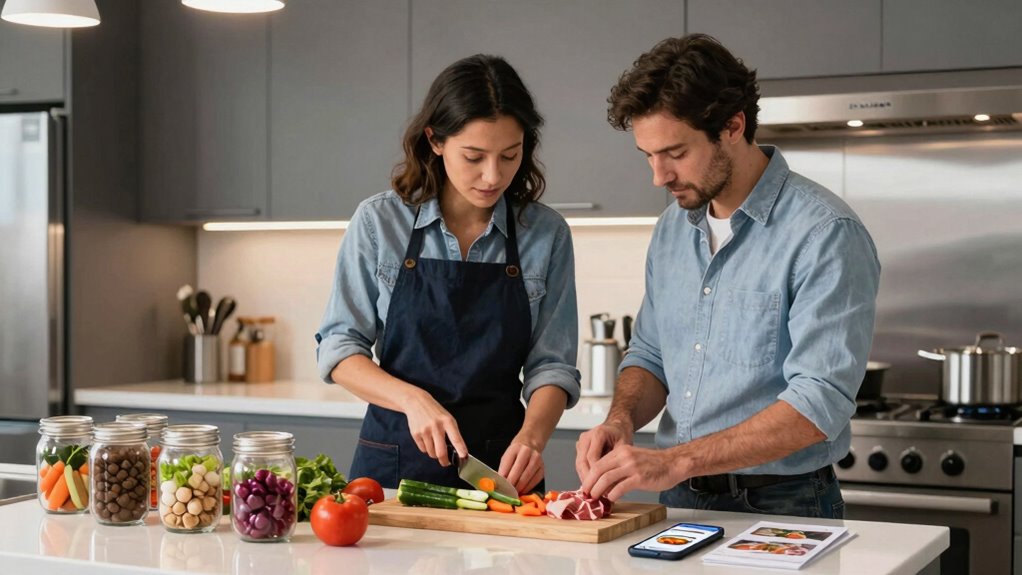
You both work full-time, and by the time you get home, cooking feels impossible. Takeout sounds easier, but it’s expensive and often less satisfying. What if you could prep smart meals without spending hours in the kitchen? You can start by planning three recipes that share ingredients and batch-cooking proteins on Sunday. Imagine having dinner ready in 20 minutes instead of ordering takeout. How would that change your weeknights?
Why Dinner Prep Is So Hard for Working Couples
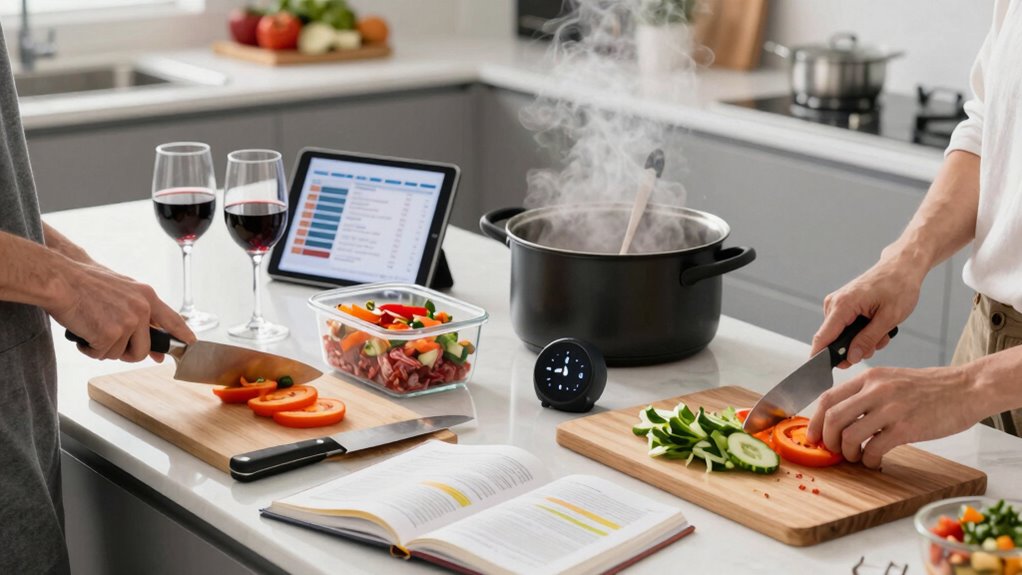
While you and your partner both work full-time, finding energy to cook dinner after long days often feels impossible. Your prefrontal cortex, responsible for decision-making, becomes depleted after hours of workplace demands.
Research shows that mental fatigue markedly reduces your motivation to plan and execute complex tasks like meal preparation. You’re not lazy or incapable—your brain simply prioritizes immediate comfort over future benefits when exhausted. This creates a cycle where ordering takeout seems easier than cooking, even when you intellectually know homemade meals are better.
Both partners likely experience similar exhaustion, making coordination difficult. You might feel disconnected from your shared goal of eating well together.
Recognizing this shared struggle helps normalize your experience and builds understanding between you both.
How to Plan Weekly Meals That Actually Happen
You can streamline your weekly meal planning by starting with just three recipes that use overlapping ingredients, which reduces both shopping time and food waste.
Batch cooking proteins and grains on Sunday afternoon gives you versatile components for multiple meals throughout the week.
Smart grocery shopping means hitting the store with a prioritized list and shopping the perimeter first, where fresh ingredients typically reside.
Weekly Menu Planning Tips
When you plan your weekly meals around your actual schedule rather than idealized scenarios, you’re more likely to stick to your menu and avoid last-minute takeout decisions.
Start by identifying your busiest days and plan simplest meals then. Choose recipes requiring similar ingredients to minimize shopping trips and reduce waste. Map out your meals before grocery shopping to guarantee you buy only what you need.
Consider your energy levels throughout the week – plan more complex dishes for days you’re less tired. Build in buffer nights for unexpected events.
Rotate favorite meals to prevent boredom while maintaining variety. Keep emergency backup options like frozen meals or pantry staples for truly hectic days when cooking isn’t feasible.
Batch Cooking Strategies
Although batch cooking seems like an obvious time-saver, many people struggle to implement it successfully because they don’t account for the reality of their weekly schedules.
You need to match your batch cooking frequency to your actual energy levels and available time. Plan to cook once or twice weekly, focusing on versatile proteins and grains that work across multiple meals. Prepare three to four portions maximum—any more often leads to waste or boredom.
Choose recipes with similar cooking methods to maximize efficiency. Cook proteins and vegetables together on the same sheet pan. Store components separately in clear containers so you can see what’s available.
Keep your batch cooking sessions under two hours to maintain quality and prevent burnout. This approach guarantees you actually stick with the system long-term.
Smart Grocery Shopping Hacks
How do you actually stick to a weekly meal plan when your schedule keeps changing? You start by shopping smart.
Plan meals around versatile proteins like chicken thighs or ground turkey that work in multiple dishes. Buy pre-washed greens and chopped vegetables to save prep time.
Stock frozen vegetables and fruits for backup when fresh isn’t practical. Create a master list of pantry staples like rice, beans, and pasta that stretch into various meals.
Shop mid-week sales and use store apps to find deals on proteins. Buy larger packages and freeze portions.
Keep backup ingredients like eggs and canned tomatoes for impromptu meals. Focus on ingredients that serve double duty across different recipes, reducing waste while maintaining variety.
Shop Smart: Grocery Strategies for Two People
You’ll save time and money by creating a focused shopping list based on your weekly meal plan, sticking to it strictly to avoid impulse purchases.
Smart shoppers for two people should focus on buying versatile ingredients that work across multiple meals, such as chicken thighs, quinoa, and frozen vegetables, rather than single-purpose items.
Planning your grocery trips around sales and seasonal produce while buying proteins in bulk can reduce your food costs by up to 20% without sacrificing variety.
Smart Shopping Tips
When you’re shopping for two people, planning ahead prevents impulse purchases and food waste while keeping costs manageable. You should make a detailed grocery list based on planned meals, checking your pantry first to avoid duplicates.
Stick to the perimeter of the store where fresh produce, meats, and dairy are located. Buy versatile ingredients that work in multiple dishes, like eggs, rice, and seasonal vegetables.
Consider frozen options for fruits and vegetables when fresh isn’t available or more expensive. Shop during sales and use store apps to find weekly specials.
You’ll save money buying staples like beans, pasta, and spices in bulk. Avoid shopping when you’re hungry to prevent unnecessary snack purchases.
Compare unit prices to find the best deals on items you use regularly.
Meal Planning Strategies
While smart shopping helps you save money and reduce waste, effective meal planning guarantees you actually use what you buy. You should plan meals around seasonal produce and sales while considering your work schedule.
Batch cooking proteins and grains saves time during busy weeks. Prepare versatile base ingredients like roasted vegetables or quinoa that work in multiple meals. You’re more likely to stick to your plan when you involve your partner in choosing recipes.
Keep healthy snacks visible and prepped in clear containers. Plan for leftovers by intentionally cooking extra portions.
Create a weekly meal calendar that accounts for nights you’ll order takeout or eat out. This prevents impulse food purchases and ascertains you’re both excited about dinner options.
Cooking Together: Share the Load Without Stress

Sharing dinner preparation responsibilities with your partner or family members eliminates the burden from any single person and creates opportunities for connection.
You’ll find that dividing tasks based on each person’s strengths works best – one handles chopping while the other manages cooking temperatures. Communicate openly about preferences and time constraints to avoid resentment.
Set realistic expectations about meal complexity given your energy levels after work. Consider alternating who leads dinner preparation each week, ensuring fairness and preventing burnout.
Research shows couples who cook together report higher relationship satisfaction and stronger bonds. Keep your approach flexible rather than rigid – some nights you’ll need quick solutions, others allow for more elaborate meals.
Focus on making the process enjoyable rather than perfect.
Batch Cooking Basics for Easy Weeknight Dinners
Batch cooking transforms your weekly meal planning by preparing multiple portions of key ingredients during weekend sessions, which saves you significant time and mental energy throughout busy weekdays.
You should focus on cooking versatile base ingredients like rice, roasted vegetables, or grilled chicken that mix and match easily. Prepare three to four dinner components during one weekend session, then combine them differently throughout the week.
This approach reduces daily cooking time by 60% while maintaining variety. You’ll avoid the daily dinner dilemma and enjoy consistent home-cooked meals.
Start small by doubling your favorite recipes, then gradually expand your batch cooking routine as you discover what works best for your schedule and taste preferences.
Freezer-Friendly Meals for Busy Couples

When you prepare freezer-friendly meals with your partner, you’re fundamentally buying yourselves multiple evenings off from cooking. This strategy works because you’re investing time upfront to eliminate daily decision fatigue and kitchen stress.
- Lasagna layers: Picture yourself assembling three lasagnas on Sunday afternoon, wrapping them tightly, and knowing you’ve secured three complete dinners for busy weeks ahead.
- Soup containers: Imagine opening your freezer to find four labeled containers of hearty vegetable soup, each ready to warm up in twenty minutes after long work days.
- Marinated proteins: Visualize portioned chicken breasts or beef strips sitting in marinade, ready to cook straight from frozen, cutting your usual prep time in half.
These meals create reliability in your routine while strengthening your partnership through shared preparation.
Top 10 Pantry Staples for Faster Dinners
Building on the foundation of prepared freezer meals, stocking your pantry with versatile staples amplifies your ability to whip up satisfying dinners quickly.
You need canned beans for protein-rich meals that require zero prep time. Keep whole grains like quinoa and rice for filling side dishes.
Store-bought broth forms the base for countless quick soups and sauces. Dried herbs and spices transform bland ingredients into flavorful meals without extra effort.
Olive oil handles most cooking needs while adding healthy fats. Canned tomatoes provide acidity and depth for pasta sauces or stews.
Nuts and seeds offer crunch and protein for salads or grain bowls. Vinegar brightens flavors without extra calories.
Mustard adds tang to marinades and dressings. Finally, keep quality salt and pepper for seasoning everything properly.
These staples work together seamlessly.
Simple One-Pan Dinners for Minimal Cleanup
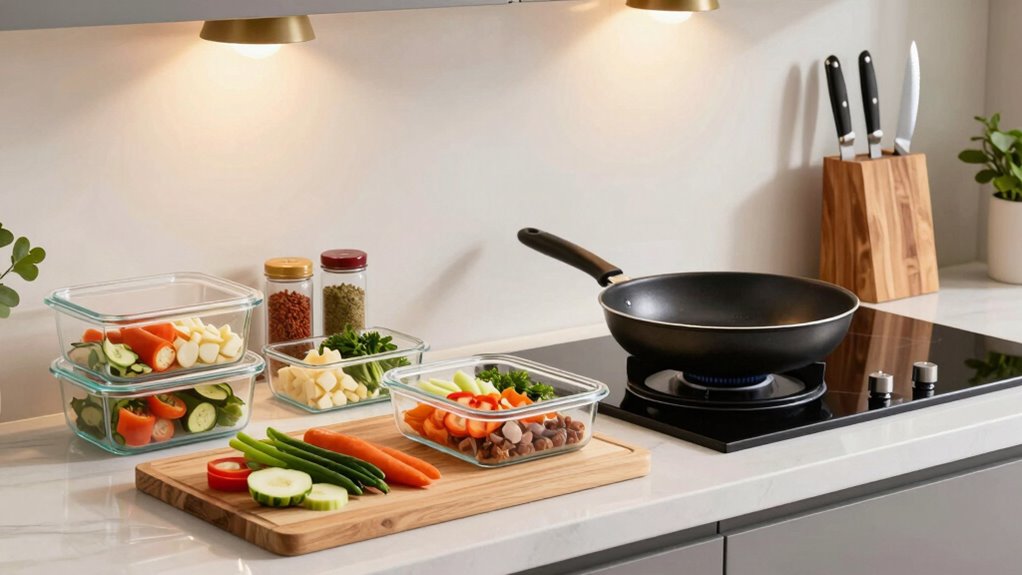
While you’re juggling work deadlines and family responsibilities, one-pan dinners eliminate the stress of elaborate meal preparation and excessive cleanup.
You’ll save time and energy while still creating satisfying meals that bring comfort to your table.
- Sheet pan chicken with roasted vegetables – Tender chicken breasts surrounded by colorful bell peppers, broccoli, and sweet potatoes, all seasoned with herbs and olive oil.
- One-pot pasta with spinach and tomatoes – Creamy pasta cooked directly with fresh spinach, cherry tomatoes, and garlic in a single skillet.
- Skillet salmon with quinoa pilaf – Flaky salmon fillets cooked alongside nutty quinoa, steamed green beans, and lemon zest.
These meals transform dinner time into quality time with minimal effort.
How to Rotate Recipes Strategically for Weekly Variety
Rotating your one-pan dinner recipes strategically prevents meal fatigue and keeps your weekly menu exciting without adding complexity to your routine. You should categorize recipes into three groups: quick thirty-minute meals, freezer-friendly options, and slow-cooker dishes.
Plan your rotation by alternating proteins and cuisines throughout the week. For example, follow Monday’s Italian pasta with Tuesday’s Asian stir-fry. Batch cook versatile base ingredients like roasted vegetables or grilled chicken that work across multiple recipes.
Keep a running list of your family’s favorites and introduce one new recipe monthly. This approach guarantees you’re not reinventing the wheel while maintaining variety.
You’ll discover that strategic rotation reduces decision fatigue and creates anticipation for upcoming meals, making dinner time something you look forward to rather than dread.
Eating Out vs. Eating In: When to Make Exceptions

You should consider takeout when your energy levels are critically low after work, but balance this with budget constraints by choosing restaurants that offer better value than grocery shopping.
Quick meal exceptions work best when planned around your pay cycle, allowing you to enjoy dining out without derailing your financial goals.
Making these choices mindfully helps you maintain both your health and wallet while avoiding the burnout that comes from rigid meal planning every single day.
When To Order Takeout
Although ordering takeout might seem like giving up on healthy eating goals, there are specific situations when it makes perfect sense as part of your overall dinner strategy.
You should consider takeout when:
- Emergency situations strike – your oven breaks down an hour before dinner time.
- Exhaustion hits after back-to-back late meetings and standing cooking feels impossible.
- Special occasions call for celebration meals you can’t replicate at home.
These moments justify exceptions to your homemade dinner routine.
Takeout becomes a practical solution rather than a failure. You aren’t abandoning your goals; you’re making smart choices based on real-life circumstances.
Smart takeout decisions support your overall wellness plan while maintaining flexibility for unpredictable days.
Budget-Friendly Dining Out
Everyone faces moments when dining out makes financial sense, especially when comparing the true costs of eating in versus eating out.
You should calculate hidden expenses like gas, groceries, and your time’s value.
Sometimes restaurant prices beat the cost of ingredients plus preparation time.
Look for happy hour specials, early bird discounts, and lunch portions that stretch into dinner.
You’re not failing at budgeting when you choose affordable restaurants over expensive home ingredients.
Smart dining means knowing when restaurant meals save money and reduce stress.
Focus on places with reasonable prices, avoiding premium locations during peak hours.
You belong among savvy diners who make strategic choices.
Quick Meal Exceptions
Restaurants serve a strategic purpose in your weekly routine when time constraints eliminate cooking as a realistic option.
You shouldn’t feel guilty about dining out when work deadlines crush your energy or unexpected meetings extend your day. Smart exceptions keep your relationship with food healthy while maintaining your sanity.
- Emergency Takeout Nights – You stumble through the door at 8 PM, realizing you touched groceries three days ago but never cooked. That Thai restaurant’s familiar warmth and your favorite pad thai become salvation, not failure.
- Celebration Dinners – Your partner lands a promotion, so you’re clinking wine glasses at that cozy Italian place instead of chopping onions at home.
- Back-to-Back Travel Days – Both of you grab dinner at the airport terminal, sharing exhausted smiles over overpriced but convenient sandwiches.
These exceptions aren’t weaknesses; they’re practical solutions that keep you nourished and connected.
Essential Kitchen Tools to Cut Down Cook Time
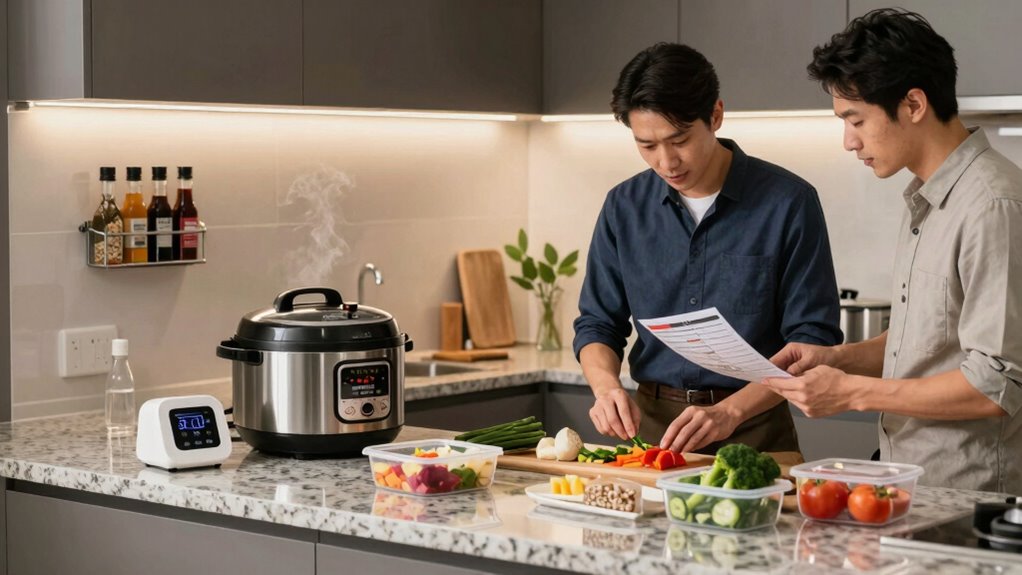
A sharp chef’s knife and cutting board form the foundation of any efficient kitchen setup. You’ll slice through prep work faster when your blade stays honed and sharp.
Add a large skillet and sheet pan to your arsenal – they handle most weeknight meals. A good food processor shreds cheese, chops vegetables, and mixes dough in seconds. Don’t overlook mise en place containers for prepping ingredients ahead. You’ll save precious minutes during busy weeknights.
Consider investing in quality tongs, wooden spoons, and measuring tools that won’t slow you down. Non-stick pans prevent food from sticking, reducing cleanup time considerably.
Quality tools might cost more upfront, but they pay dividends in saved time and better results consistently night after night when you’re疲惫 but still want delicious home-cooked meals.
Conclusion
You’ve got the strategies—now comes the test. Will you actually implement them? Don’t let another week slip by wondering what went wrong. The difference between burnout and balanced meals isn’t luck; it’s preparation. Your future self is counting on you to start this weekend. The question isn’t whether you can afford to prep meals—it’s whether you can afford not to.