You might think keeping kitchen towels clean is time-consuming, but a few simple habits make it effortless. Towels absorb grease, food particles, and moisture that create odors quickly. Without proper care, they become a breeding ground for bacteria. You’ll want to establish a consistent routine that prevents buildup before it starts. Let’s explore practical strategies that keep your towels fresh and hygienic without extra effort.
Why Kitchen Towels Develop Odors Fast
Kitchen towels develop odors quickly because they absorb moisture and food particles that create an ideal breeding ground for bacteria and mold.
You might notice unpleasant smells developing within just a day or two of use. This happens because damp towels provide perfect conditions for microorganisms to multiply rapidly. Food residue left on towels attracts bacteria, while wet fibers trap odors effectively.
You should understand that cotton and bamboo fiber towels are particularly susceptible to retaining moisture.
These materials create cozy environments where bacteria thrive. When you use towels repeatedly without washing, you’re essentially constructing a microbial community that produces increasingly stronger odors.
Understanding this process helps you take preventive action.
Recognizing why odors develop means you can implement effective cleaning strategies and maintain fresh-smelling kitchen textiles.
How Often Should You Change Towels
You should replace kitchen towels daily to prevent bacteria buildup and maintain hygiene standards.
Your weekly washing routine should include hot water and bleach to eliminate odors and germs effectively.
Monthly deep cleaning with vinegar helps remove stubborn stains and restores towels to prime condition.
Daily Replacement Schedule
Most households benefit from changing kitchen towels daily to maintain hygiene and prevent bacterial growth. You should replace towels immediately after heavy use, especially when they become damp or soiled.
Establish a routine where you swap out towels each morning, ensuring you always start your day with fresh, clean fabric. Don’t wait for towels to develop odors or visible stains before changing them.
If you’re cooking frequently or hosting guests, you might need to change towels multiple times daily. Keep a designated bin for used towels near your kitchen sink for convenience.
Having enough towels on hand makes daily replacement manageable. You’ll feel more confident in your kitchen’s cleanliness when you maintain this simple but effective schedule.
Weekly Washing Routine
While daily replacement keeps your kitchen fresh, establishing a consistent weekly washing routine assures thorough sanitization of all your kitchen towels. You should wash towels every seven days, regardless of visible soiling. This schedule prevents bacterial buildup that daily changes might miss.
Sort towels by fabric type and soil level before washing. Use hot water and appropriate detergent amounts for effective cleaning. Don’t overload your machine; towels need space to move freely. Add white vinegar to eliminate lingering odors naturally.
Always dry towels completely in direct sunlight when possible. Store clean towels in well-ventilated areas. Replace old towels showing wear or persistent odors. This routine assures your kitchen maintains professional cleanliness standards others expect.
Monthly Deep Cleaning
Although weekly washing maintains basic cleanliness, monthly deep cleaning guarantees your kitchen towels remain hygienic and functional over time.
You should soak towels in hot water with baking soda for thirty minutes before washing. Add white vinegar to your regular detergent cycle to eliminate lingering bacteria and odors.
Don’t forget to check care labels first. Replace towels showing fraying edges, thinning fabric, or persistent stains that won’t come clean. High-use towels might need replacement every three to six months.
Store clean towels in well-ventilated areas to prevent moisture buildup. Rotate your towel collection regularly, using fresh ones daily.
This routine keeps your kitchen environment sanitary while extending towel lifespan, ensuring you maintain standards every household deserves.
Step-by-Step Guide to Washing Towels Correctly
When you wash kitchen towels correctly, you guarantee they remain hygienic and effective for daily use.
Start by sorting towels by color and fabric type. Pre-treat any visible stains with appropriate stain removers before washing. Use warm water and select a gentle detergent suitable for your towel’s material.
Avoid fabric softeners as they reduce absorbency. Load towels loosely in the machine, ensuring they’ve room to move freely. Wash on a regular cycle, then immediately transfer to the dryer.
Dry on medium heat until completely dry. Remove promptly to prevent wrinkles and musty odors. Fold or hang immediately after drying to maintain freshness and readiness for next use.
Can Bleach Eliminate Bacteria and Odors?
You might wonder if bleach can truly eliminate bacteria and odors from your kitchen towels.
Bleach effectively kills bacteria and removes stubborn odors when used correctly, making it a powerful cleaning agent for heavily soiled towels.
However, you should follow safe usage guidelines to prevent damage to your towels and guarantee proper ventilation during use.
Bleach Effectiveness Against Bacteria
Bleach proves highly effective at eliminating bacteria and odors from kitchen towels when used properly. You should dilute bleach according to manufacturer instructions, typically one tablespoon per gallon of water. This concentration effectively kills common bacteria like E. coli and Salmonella that thrive on damp towels.
Soak your towels for five minutes, then rinse thoroughly. Bleach works by breaking down bacterial cell walls and neutralizing odor-causing microorganisms. However, you must avoid mixing bleach with other chemicals, especially ammonia or vinegar, which creates dangerous fumes. Always guarantee good ventilation when using bleach.
Regular bleach treatment helps maintain hygienic kitchen towels, preventing bacterial buildup that causes unpleasant smells. Test bleach on a small hidden area first to check for colorfastness.
Proper dilution and safe handling make bleach an excellent tool for keeping your kitchen towels bacteria-free.
Odor Removal With Bleach
How exactly does bleach eliminate both bacteria and odors from your kitchen towels? Bleach destroys odor-causing bacteria through oxidation, breaking down organic compounds that produce unpleasant smells.
When you add bleach to your laundry routine, it penetrates fabric fibers, killing microorganisms and neutralizing musty odors. The active ingredients in bleach break apart sulfur compounds and other odor molecules, leaving your towels fresh and clean.
You should understand that bleach doesn’t just mask smells—it eliminates the root cause by destroying bacteria colonies. This process guarantees your kitchen towels won’t just look clean but actually are clean. Regular bleaching prevents odor buildup, keeping your towels hygienic.
Your family deserves fresh, bacteria-free towels that contribute to a healthier kitchen environment.
Safe Bleach Usage Tips
While bleach effectively eliminates bacteria and odors from kitchen towels, it requires careful handling to avoid damage to fabrics and guarantee safety.
You’ll want to follow these essential guidelines for successful bleach usage.
- Always dilute bleach with water before soaking towels
- Never mix bleach with other cleaning products or acids
- Test bleach solution on hidden towel areas first
- Wear gloves and ascertain adequate ventilation during use
- Rinse towels thoroughly after bleach treatment
You’re protecting your family’s health while maintaining clean, fresh-smelling kitchen towels.
Proper bleach usage eliminates harmful bacteria and stubborn odors effectively. Remember that cotton towels handle bleach better than synthetic fibers.
Store bleach properly away from children. Your clean kitchen towels contribute to a welcoming home environment everyone enjoys.
Should You Skip Fabric Softener for Towels?
Fabric softener might seem like a good idea for keeping towels soft and fresh, but it actually works against you when it comes to absorbency.
The chemicals coat towel fibers, reducing their ability to soak up moisture effectively. This creates a barrier that prevents proper drying and can lead to lingering odors.
You should skip fabric softener entirely for kitchen towels.
Instead, focus on proper washing techniques using hot water and adequate detergent. Add white vinegar to your rinse cycle occasionally to naturally soften fibers without compromising absorbency.
Replace towels every few months or when they become less effective.
Consider using separate loads for towels to prevent cross-contamination.
Store clean towels in well-ventilated areas to maintain freshness and prevent bacterial growth between uses.
Quick Fixes to Remove Lingering Smells
You can eliminate stubborn odors from your kitchen towels using two simple methods.
First, add baking soda directly to your wash cycle to neutralize unpleasant smells naturally.
Second, try a vinegar rinse to cut through lingering bacteria and leave your towels fresh without chemical residue.
Baking Soda Deodorizing Method
One effective approach for eliminating stubborn odors from kitchen towels involves using baking soda as a natural deodorizer. This method works by neutralizing odor-causing bacteria and leaving your towels fresh.
- Sprinkle baking soda directly onto damp towels before washing
- Add half a cup of baking soda to your regular laundry load
- Create a paste with baking soda and water for spot-treating stains
- Let baking soda sit on towels for thirty minutes before washing
- Use baking soda in combination with your regular detergent for enhanced cleaning
Baking soda naturally absorbs unpleasant smells without harsh chemicals. You’ll notice immediate improvement after the first wash. This technique keeps your kitchen towels smelling clean and fresh.
Regular use prevents odor buildup, maintaining hygiene standards you can trust. Your family deserves clean, fresh-smelling towels.
Vinegar Rinse Technique
Adding white vinegar to your laundry routine can quickly eliminate persistent odors that baking soda alone can’t remove. You should add one cup of white vinegar directly to your washing machine drum during the rinse cycle.
The acid in vinegar neutralizes alkaline odors trapped in fabric fibers, leaving your kitchen towels fresh and clean. Don’t worry about the vinegar smell transferring to your towels – it disappears completely during the drying process.
For best results, use distilled white vinegar rather than apple cider varieties. You can also create a vinegar soaking solution by mixing equal parts water and vinegar in a bowl.
Let heavily soiled towels soak for thirty minutes before washing normally. This simple technique guarantees your kitchen towels remain odor-free and hygienic for daily use.
Natural Solutions for Fresher Towels
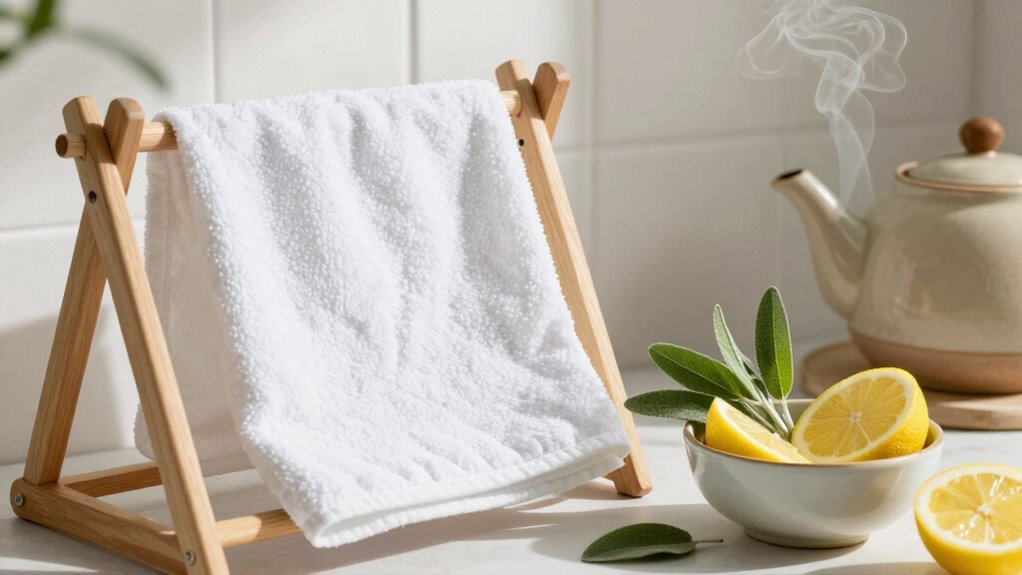
While keeping kitchen towels clean through regular washing remains essential, natural solutions can greatly extend their freshness between loads.
You’ll discover these simple techniques make a noticeable difference in your kitchen routine.
- Baking soda absorbs odors naturally when added to wash cycles.
- Lemon juice cuts through grease while leaving a fresh citrus scent.
- Essential oils like tea tree or lavender provide antibacterial properties.
- Sun drying harnesses UV rays to eliminate bacteria naturally.
- Proper storage in well-ventilated areas prevents moisture buildup.
These methods complement your existing laundry routine without harsh chemicals.
You’ll feel confident that your kitchen towels remain fresh and clean naturally.
Cold vs Hot Water: Which Works Better?
Why does water temperature matter so much when cleaning kitchen towels?
You’re dealing with bacteria, food particles, and oils that cling differently depending on heat exposure. Hot water breaks down grease and kills bacteria more effectively, but it can damage delicate fibers and cause shrinkage.
Cold water preserves fabric integrity and prevents color bleeding while still removing surface dirt. For heavily soiled towels, pre-treat stains before washing in warm water. Lightly used towels clean adequately in cold water.
Consider your towel’s material—cotton handles hot water better than synthetic blends. You’ll achieve excellent results by matching water temperature to soil level and fabric type.
Test your detergent’s effectiveness across temperatures to find what works best for your specific situation and washing machine.
Air-Dry or Machine-Dry – What’s Safest?
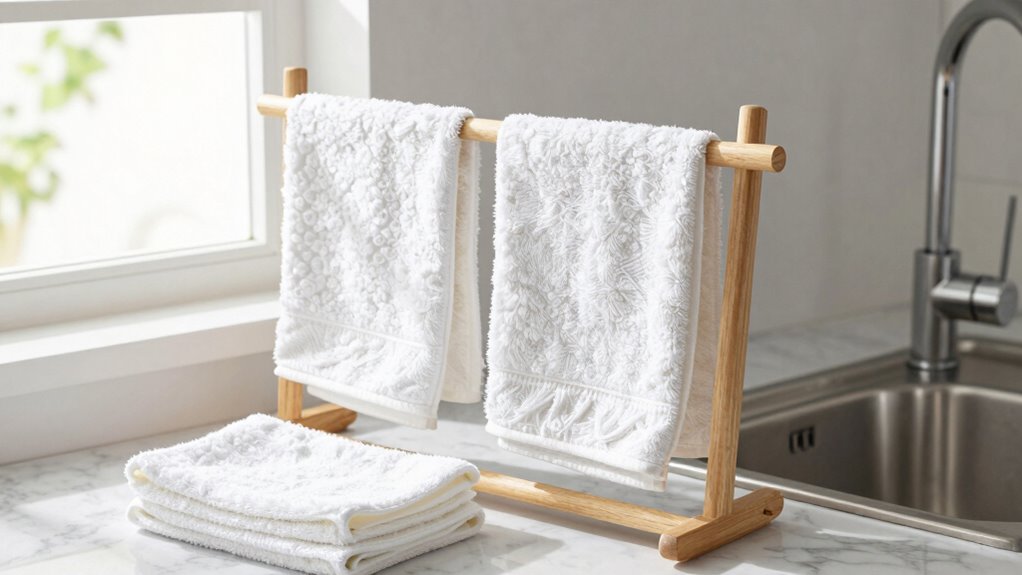
Since both air-drying and machine-drying have distinct advantages for kitchen towel hygiene, choosing the safest method depends on your specific needs and circumstances.
You should consider these key factors:
- Air-drying eliminates heat damage and preserves towel fibers longer.
- Machine-drying kills more bacteria through high temperatures but may damage fabric.
- Air-drying requires more time and space but uses less energy.
- Machine-drying prevents mildew when done promptly in humid conditions.
- Combination approach works best – air-dry partially then finish with low-heat machine cycle.
You control the balance between thorough sanitization and fabric preservation.
Air-drying works well in dry climates with good ventilation, while machine-drying suits busy schedules.
Your family’s health needs and lifestyle determine the safest choice for maintaining clean, odor-free kitchen towels consistently.
Are Microfiber Towels Less Prone to Smell?
How often do you notice that microfiber towels seem to stay fresher longer than traditional cotton ones? You’re not imagining it – microfiber’s synthetic fibers create less surface area for odor-causing bacteria to cling to.
These tightly woven polyester threads absorb moisture quickly and release it faster during washing, reducing the damp environment bacteria love. You’ll find microfiber dries completely between uses, especially when you air-dry properly.
The material’s smooth surface also prevents food particles and oils from embedding deeply, making thorough cleaning easier. However, you must wash microfiber separately in hot water without fabric softener, which can coat fibers and trap odors.
Proper care keeps your microfiber towels smelling fresh longer than expected.
Comparing Cotton vs Bamboo Towel Performance
You’ll want to compare how cotton and bamboo towels handle moisture absorption, as this directly impacts their cleaning effectiveness.
Both materials offer different levels of durability when washed repeatedly, so you should consider which stands up better to daily kitchen use.
Your choice between them also affects how well they resist odors that can develop from food particles and bacteria.
Absorbency Comparison
While both cotton and bamboo towels are popular choices for kitchen use, their absorbency performance differs considerably. You’ll notice distinct differences in how each material handles moisture and liquid spills.
- Bamboo fibers naturally absorb moisture faster than cotton due to their hollow structure.
- Cotton towels require more time to soak up liquid but hold more water volume overall.
- Bamboo towels feel damp longer because they don’t wring out as easily as cotton.
- Cotton fibers swell when wet, creating better capillary action for absorption.
- Bamboo towels excel at quick spills while cotton handles heavy-duty soaking better.
Understanding these differences helps you choose the right towel for specific kitchen tasks. Consider keeping both types available for ideal cleaning efficiency.
Durability Testing
Durability testing reveals significant performance differences between cotton and bamboo kitchen towels under repeated use conditions.
You’ll notice cotton towels withstand more wash cycles before showing wear, maintaining their structural integrity longer.
However, bamboo towels demonstrate superior resistance to tearing and fraying.
When you subject both materials to high-heat drying and frequent laundering, bamboo fibers retain their strength better.
Cotton towels tend to become brittle over time, especially with hot water washing.
You should consider your household’s usage patterns when choosing.
High-traffic kitchens benefit from bamboo’s longevity, while moderate use environments can rely on quality cotton.
Both materials require proper care to maximize lifespan.
Regular washing with mild detergents and avoiding fabric softeners helps maintain towel performance.
Your choice impacts long-term value and replacement frequency.
Odor Resistance
Kitchen towels made from bamboo fiber demonstrate superior odor resistance compared to traditional cotton options. You’ll notice the difference when you’re cooking regularly and need towels that stay fresh longer.
Bamboo towels outperform cotton because they naturally fight bacteria that cause unpleasant smells.
Here’s what makes bamboo towels better for odor control:
- Natural antimicrobial properties – Bamboo contains bio-agents that kill odor-causing bacteria
- Enhanced moisture wicking – Moisture evaporates faster, preventing bacterial growth
- Tighter fiber structure – Resists absorbing food particles that create smells
- Chemical-free processing – No harsh treatments that break down over time
- Longer lasting freshness – Maintain clean scent through multiple uses
You’ll spend less time washing and replacing towels when you choose bamboo. Your kitchen stays more pleasant, and you contribute to a cleaner environment.
Make the switch and experience the practical difference yourself.
Storing Towels Between Uses – Best Practices
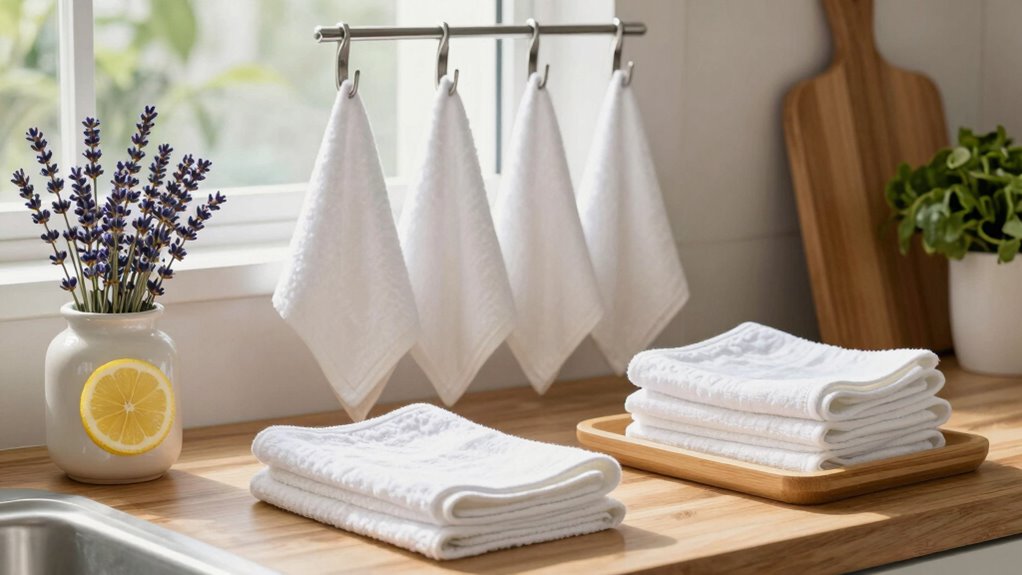
Proper storage between uses prevents bacterial growth and maintains your towels’ freshness.
You should always hang towels on hooks or racks immediately after use, allowing maximum air circulation. Avoid leaving damp towels in piles or closed containers where moisture accumulates. Store clean towels separately from used ones to prevent cross-contamination.
Keep your towel storage area well-ventilated and away from heat sources that can trap moisture. You’ll want to designate specific hooks or spots for each towel type, creating an organized system everyone in your household can follow.
Regularly inspect storage areas for any signs of lingering moisture or odors. Don’t forget to launder towels frequently, even if they don’t appear dirty, since bacteria thrive in kitchen environments.
Prevent Mold Growth in Damp Environments
While storing your kitchen towels properly helps prevent bacterial growth, you must also take specific steps to prevent mold from developing in damp environments.
Mold thrives in moisture-rich conditions, so controlling humidity is essential for keeping your towels fresh.
- Hang towels in well-ventilated areas immediately after use
- Avoid leaving damp towels in closed cabinets or drawers overnight
- Use exhaust fans or open windows to reduce kitchen humidity levels
- Wash towels frequently, especially after handling raw foods or cleaning spills
- Consider using moisture-wicking towel materials that dry faster
These simple practices help maintain a clean, healthy kitchen environment.
You’re not just protecting your towels – you’re safeguarding your family’s health.
Small changes in your daily routine make a significant difference in preventing mold growth and keeping your kitchen fresh.
One Towel for All – Pros and Cons
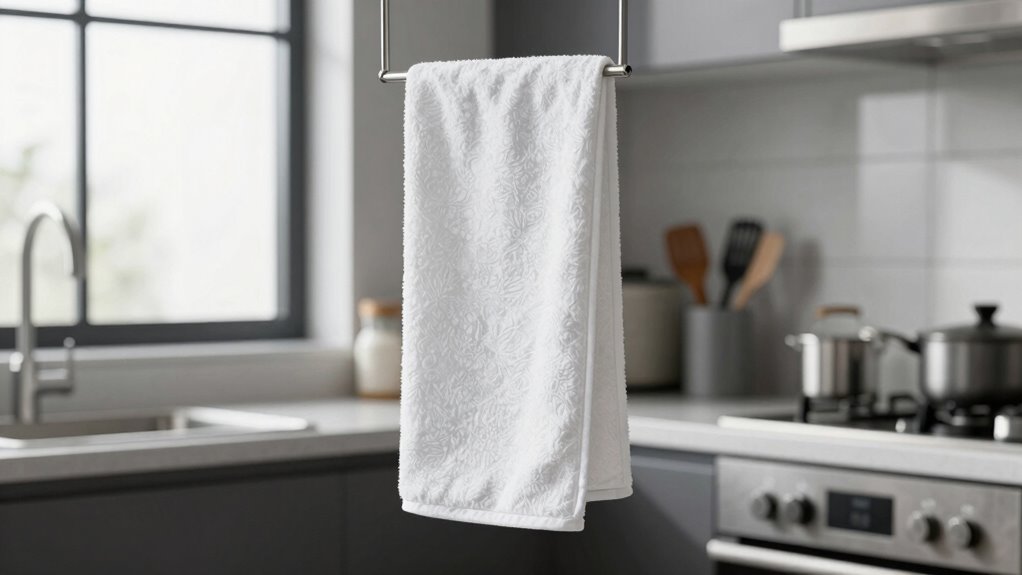
You might think using one towel for all kitchen tasks saves time and money, but this approach creates serious hygiene risks.
While you’ll appreciate the convenience and cost savings, you’re also spreading bacteria from raw meat juices to clean surfaces with every use.
You need to weigh these benefits against the potential for cross-contamination that can make your family sick.
Convenience vs. Cross-Contamination
Using one towel for all kitchen tasks offers undeniable convenience, but it also creates significant risks for cross-contamination. You’ll appreciate the simplicity, yet this approach can compromise food safety throughout your kitchen.
Consider these critical factors:
- Bacterial spread accelerates when you use one towel for raw meats, vegetables, and surfaces.
- Odor buildup becomes overwhelming as moisture and food particles accumulate continuously.
- Cleaning efficiency decreases because you’re not addressing specific contamination zones.
- Health risks increase for family members with compromised immune systems.
- Kitchen hygiene standards suffer when cross-contamination isn’t properly managed.
While using multiple towels might feel excessive, you’re actually protecting your family’s health.
Strategic towel separation prevents harmful bacteria from spreading between food prep areas, creating a safer environment where everyone can enjoy meals without worry.
Cost-Effective but Risky
Although having one towel handle every kitchen task seems like a budget-friendly solution, this approach introduces significant hygiene challenges that can undermine your family’s health.
You risk spreading bacteria from raw meat to clean surfaces, creating cross-contamination hazards. That single towel becomes a breeding ground for germs when you wipe countertops, dry dishes, and handle food preparations.
While you save money upfront, potential medical costs from foodborne illnesses outweigh these initial savings. Your family deserves better protection.
Consider designating specific towels for different tasks: one for raw foods, another for cleaning, and a third for drying. This simple change protects everyone you love while maintaining kitchen efficiency and your peace of mind.
Safe Handling After Contact With Raw Meat
When kitchen towels come into contact with raw meat, they become contaminated with harmful bacteria that can spread illness if not handled properly.
You must treat these towels as potentially hazardous materials requiring immediate attention.
- Wash contaminated towels separately from other linens
- Use hot water and bleach-based detergent for maximum sanitization
- Don’t reuse towels that have touched raw poultry, beef, or pork
- Replace cloth towels immediately after meat preparation sessions
- Consider disposable paper towels for raw meat handling tasks
Your family’s health depends on treating contaminated towels seriously.
Don’t risk cross-contamination by ignoring proper protocols. Make safe towel handling part of your routine kitchen practices.
You’re not just cleaning towels – you’re protecting everyone who shares your meals.
Stay vigilant about towel safety, and you’ll maintain a kitchen environment others can trust.
Risks of Cross-Contamination With Towels
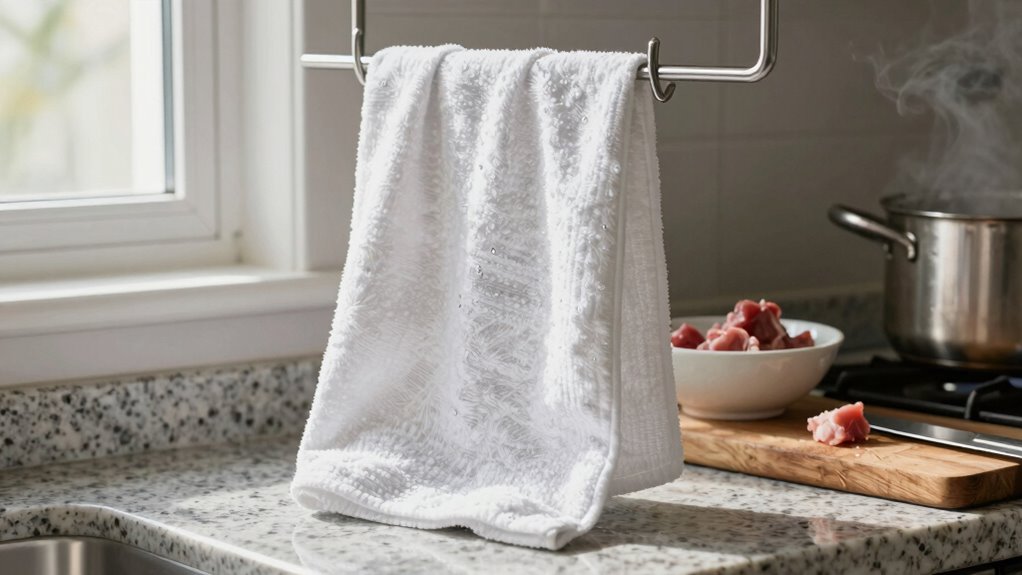
Kitchen towels that contact raw meat carry dangerous bacteria like Salmonella and E. coli, which can quickly spread to other surfaces, foods, and utensils if you don’t handle them properly.
You risk contaminating clean dishes, countertops, and even your hands when using the same towel repeatedly. These pathogens multiply rapidly in warm, moist environments, making dirty towels breeding grounds for illness-causing microbes.
Your family’s health depends on preventing cross-contamination. Always designate specific towels for raw meat cleanup and never use them for drying hands or wiping clean surfaces.
Wash contaminated towels immediately in hot water with bleach or antibacterial detergent. Remember that invisible bacteria can survive on towels for days, so treat them as potential hazards rather than harmless kitchen accessories.
Signs It’s Time to Replace Old Towels
How do you know when your kitchen towels have reached the end of their useful life?
Don’t wait until they’re falling apart to replace them. Keeping your kitchen towels fresh and functional requires knowing when to let go of old ones.
You should consider replacing your towels when:
- They develop persistent odors that won’t wash out
- The fabric feels thin, rough, or shows visible wear
- Stains won’t come out after multiple wash cycles
- They take much longer to dry than usual
- You notice lint shedding onto dishes or surfaces
These signs indicate your towels are no longer serving you effectively.
Regular replacement keeps your kitchen hygienic and your cleaning routine efficient.
Sustainable Towel Choices That Last Longer
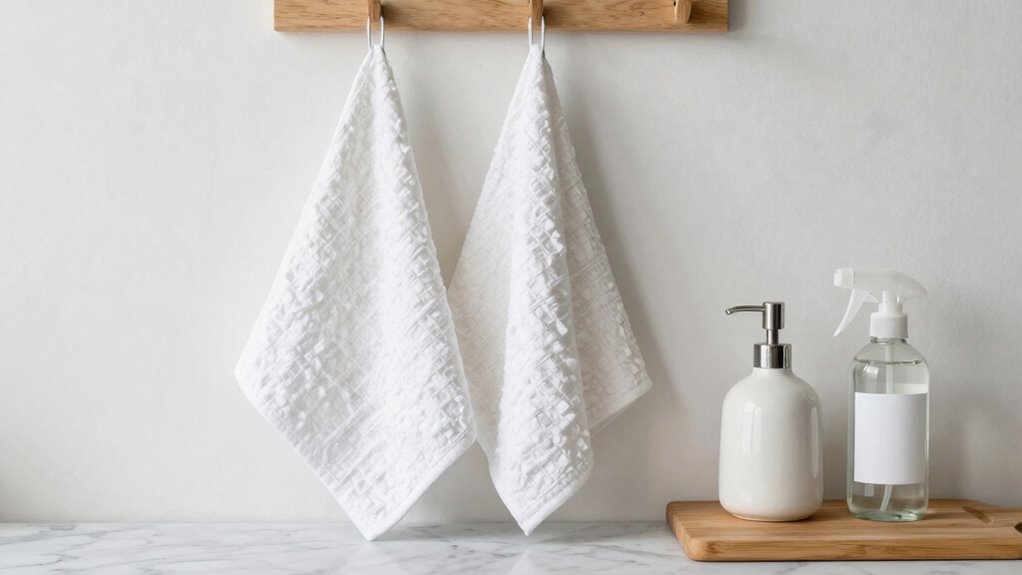
Choosing sustainable kitchen towels that last longer saves you money while reducing waste in your home. You should prioritize materials like organic cotton, bamboo fiber, or linen that withstand frequent washing without deteriorating quickly.
These natural fibers breathe better than synthetic alternatives, preventing odor buildup between uses. Look for tightly woven constructions that resist fraying and maintain absorbency over time. Invest in quality towels from reputable manufacturers who use eco-friendly production methods.
You’ll find that thicker, denser towels typically outlast thinner options, even with daily use. Consider purchasing neutral colors that won’t show stains prominently, extending their usable life.
Store clean towels in ventilated areas to prevent mildew growth. By selecting durable, environmentally conscious options, you’re making choices that benefit both your household budget and the planet’s future.
Must-Have Tools for Spotless Kitchen Towels
While maintaining clean kitchen towels requires consistent effort, having the right tools makes the process far more efficient and effective.
You’ll discover that proper equipment transforms your cleaning routine into a seamless experience that keeps your kitchen fresh and welcoming.
- Microfiber cloths – Capture bacteria and odors effectively
- Baking soda – Eliminates stubborn smells naturally
- White vinegar – Cuts through grease and buildup
- Essential oils – Add fresh scents while boosting antibacterial properties
- Mesh laundry bags – Protect towels during washing cycles
These essential items work together to create a thorough cleaning system.
You’ll notice immediate improvements in your towel quality and kitchen hygiene.
Your family and guests will appreciate the fresh, clean environment you’ve created.
Conclusion
Think of your kitchen towels like trusty soldiers—they serve you faithfully but need proper care to stay battle-ready. Wash them weekly in hot water, replace daily, and inspect regularly for wear. Avoid fabric softener’s false comfort, and embrace vinegar’s honest cleaning power. When odors persist despite your efforts, it’s time to retire them gracefully. Choose sustainable options that stand the test of time, keeping your kitchen fortress clean and fresh.