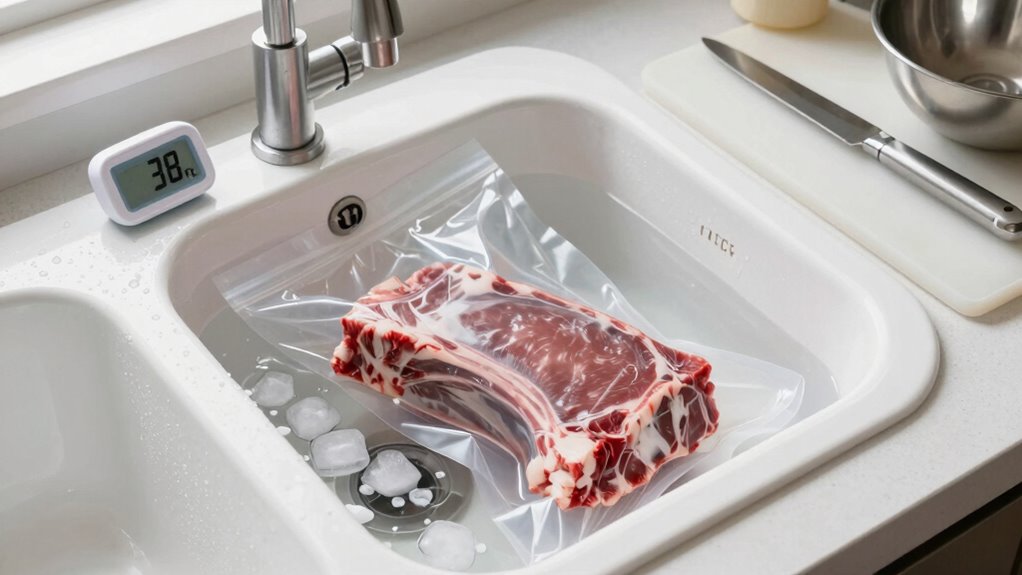
You might not realize that thawing frozen meat at room temperature creates a bacterial breeding ground within just two hours. Safe defrosting requires maintaining temperatures below 40°F throughout the process. While your kitchen space may be limited, proper thawing techniques can prevent foodborne illness and guarantee meal safety. Let’s explore the most effective methods for thawing meat safely in compact spaces.
How to Defrost Frozen Meat Safely in a Small Kitchen
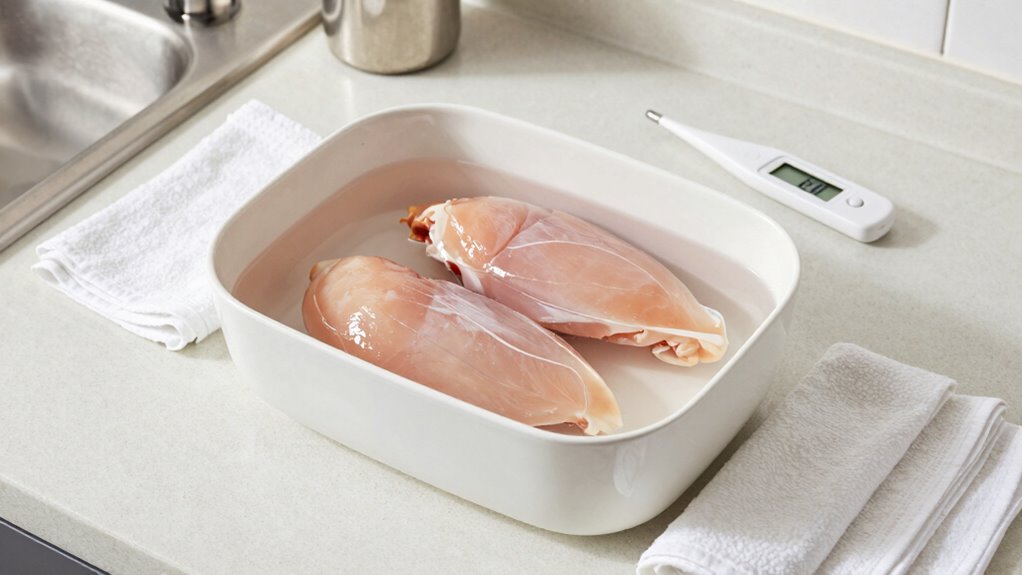
One key challenge when defrosting frozen meat in a small kitchen is maintaining safe temperatures while working with limited counter space.
You should plan ahead and use the refrigerator method, allowing twelve to twenty-four hours depending on meat thickness. Keep meat in its original packaging or place it in a leak-proof bag to prevent cross-contamination.
If you need faster thawing, use the cold water method by submerging sealed meat in cold water, changing the water every thirty minutes.
Never leave meat at room temperature, as this creates dangerous bacterial growth zones. Microwave thawing works for immediate cooking, but you must cook meat immediately afterward.
Designate a specific area for thawing, use a tray to catch drips, and monitor temperatures carefully throughout the process.
Why Safe Thawing Prevents Foodborne Illness
You must control temperatures carefully when thawing frozen meat to prevent harmful bacteria from multiplying rapidly.
Proper thawing methods like refrigerator thawing, cold water immersion, or microwave defrosting keep meat at safe temperatures throughout the process.
These techniques prevent the dangerous temperature zone between 40°F and 140°F where bacteria thrive and multiply quickly.
Proper Thawing Methods
When meat thaws improperly, harmful bacteria multiply rapidly in the “danger zone” between 40°F and 140°F, where pathogens like Salmonella and E. coli thrive. You must use safe thawing methods to protect your family’s health.
- Refrigerator thawing – Place frozen meat on the bottom shelf to prevent cross-contamination.
- Cold water method – Submerge sealed meat in cold water, changing water every 30 minutes.
- Microwave defrosting – Use immediately after thawing to prevent bacterial growth.
- Cook from frozen – Skip thawing entirely and cook meat directly from frozen state.
- Plan ahead – Allow 24 hours of refrigerator thawing time for every 4-5 pounds of meat.
These methods keep your kitchen safe while preparing meals everyone can enjoy together.
Temperature Control Importance
Maintaining proper temperature control during thawing prevents bacterial growth that can lead to foodborne illness. You must keep meat below 40°F while defrosting to avoid the dangerous temperature danger zone where bacteria multiply rapidly.
Frozen meat that thaws at room temperature becomes unsafe quickly, so don’t leave it on counters. Instead, transfer meat to the refrigerator for slow, safe thawing.
You can also use cold water baths, ensuring water stays below 40°F. Microwave thawing works when you cook immediately after.
Remember that once thawed, meat shouldn’t refreeze without cooking first. Your family’s health depends on these temperature controls, so monitor thawing times and temperatures carefully throughout the process.
How Long to Thaw Frozen Meat in the Fridge
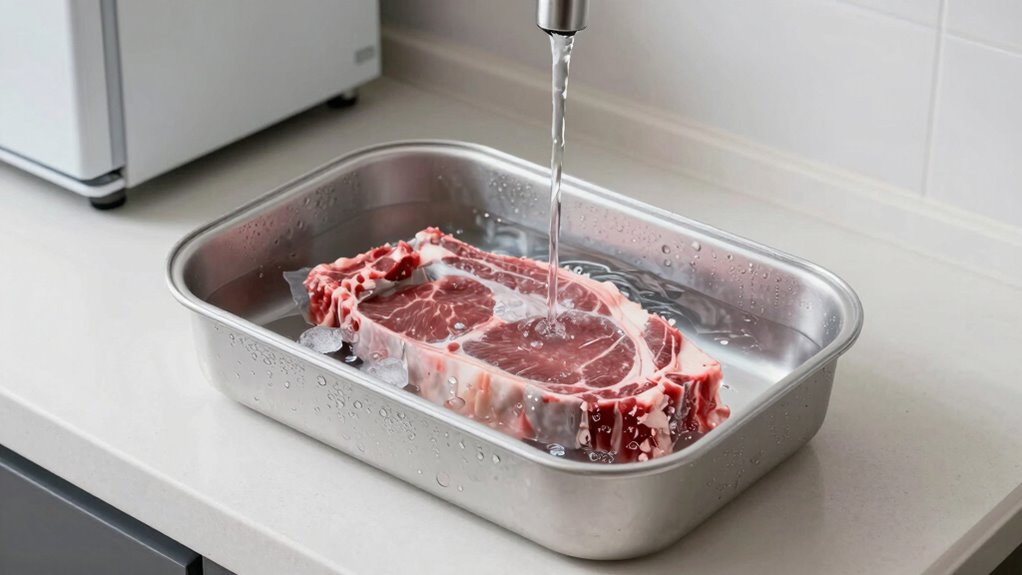
You should plan ahead because thawing frozen meat in the refrigerator takes several hours to days depending on the type and size of the cut.
Keep your refrigerator temperature at 40°F or below to maintain food safety during the thawing process.
Different meats require varying thawing times, so you’ll need to evaluate the specific type of meat you’re preparing.
Safe Thawing Times
Planning ahead is essential for safe meat defrosting, and refrigerator thawing requires the most patience but offers the best safety margin.
You’ll need to calculate thawing times based on meat thickness and type. Don’t rush the process, as improper thawing creates bacterial growth risks that affect your family’s health.
- Ground meat thaws within 1-2 days in the refrigerator
- Small cuts like chicken breasts need 1-2 days maximum
- Larger roasts require 2-3 days depending on size
- Whole turkeys need approximately 24 hours for every four pounds
Always check meat feels soft and pliable before cooking.
Keep meat in its original packaging during thawing.
Place containers on refrigerator shelves, not on the floor. Monitor thawing progress daily. When meat feels uniformly soft without ice crystals, it’s ready for cooking.
Refrigerator Temperature Settings
Refrigerator temperature settings play an essential role in safe meat thawing. You should maintain your refrigerator between 34-40°F for ideal thawing conditions. This temperature range prevents bacterial growth while allowing meat to defrost safely.
Don’t rush the process by increasing your refrigerator’s temperature, as this creates unsafe conditions. Keep your thermometer handy and check temperatures regularly. The cold environment guarantees meat thaws slowly and evenly, preserving quality and safety.
You’ll need approximately 24 hours for every four pounds of frozen meat. Plan accordingly and move meat from freezer to refrigerator well in advance. Proper temperature control prevents foodborne illness and maintains meat’s texture.
Remember that fluctuating temperatures compromise safety, so avoid opening the refrigerator unnecessarily during thawing periods.
Meat Type Considerations
Different cuts and types of frozen meat require varying thawing times in the refrigerator. You need to plan ahead because larger, denser cuts take longer to thaw safely than thinner pieces.
Keep your refrigerator at 40°F or below throughout the process.
- Ground meat: Thaws within 1-2 days
- Small cuts (chicken breasts, steaks): Require 1-2 days
- Large cuts (whole chickens, roasts): Need 2-4 days
- Bone-in cuts: Take longer than boneless varieties
- Thick frozen packages: May need extra time
Always check meat feels soft and pliable before cooking. When in doubt, add another day to your thawing schedule. You don’t want to rush this process.
Use Cold Water to Defrost Meat Faster
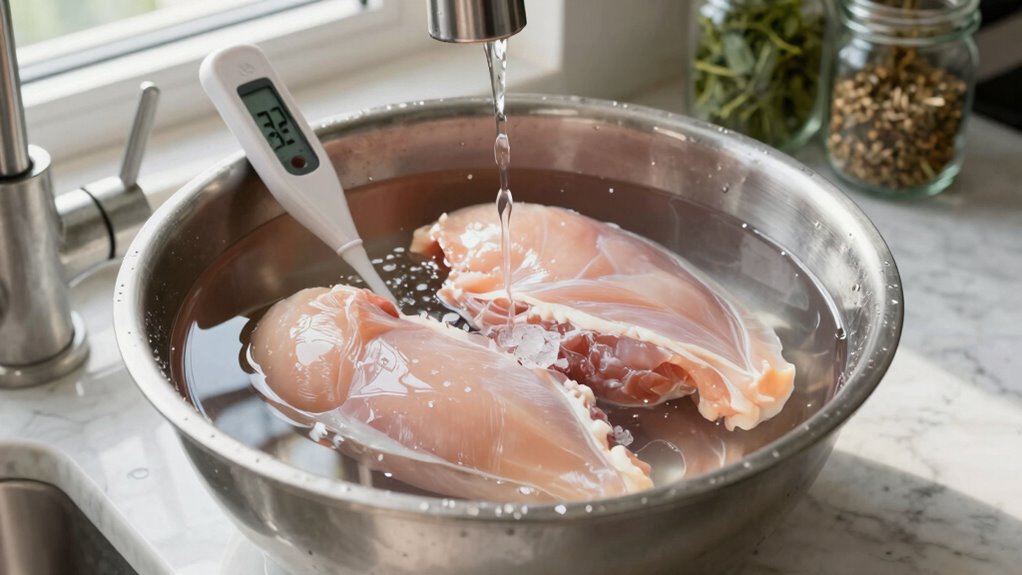
One effective method for accelerating the defrosting process involves submerging your frozen meat in cold water.
You’ll need a large bowl or sink filled with cold tap water. Keep your meat in its original packaging or place it in a leak-proof plastic bag before submerging.
Change the water every thirty minutes to maintain proper temperature and prevent bacterial growth. This method works faster than refrigerator thawing because water conducts heat more efficiently than air.
Don’t use hot water, as it can promote unsafe bacterial multiplication on the meat’s surface. Plan approximately thirty minutes per pound of meat when using this technique.
Check your meat frequently and cook immediately after thawing. This approach helps you prepare meals quicker while maintaining food safety standards in your kitchen.
Safe Microwave Defrosting Tips
While cold water defrosting works well for planning ahead, microwave thawing offers a quick solution when you need meat ready immediately. You must use your microwave’s defrost setting or reduce power to 30-50% to prevent cooking the outer layers while the inside remains frozen.
- Check your meat’s thickness and weight before setting timer intervals.
- Rotate and flip meat halfway through defrosting for even thawing.
- Cook meat immediately after microwave defrosting to prevent bacterial growth.
- Never leave meat unattended during microwave defrosting cycles.
- Use microwave-safe containers and remove any packaging that isn’t microwave-safe.
Microwave defrosting works best for smaller cuts. Larger pieces might require longer times and careful monitoring. Remember that some areas may begin cooking while others remain frozen.
Why Room Temperature Thawing Isn’t Safe
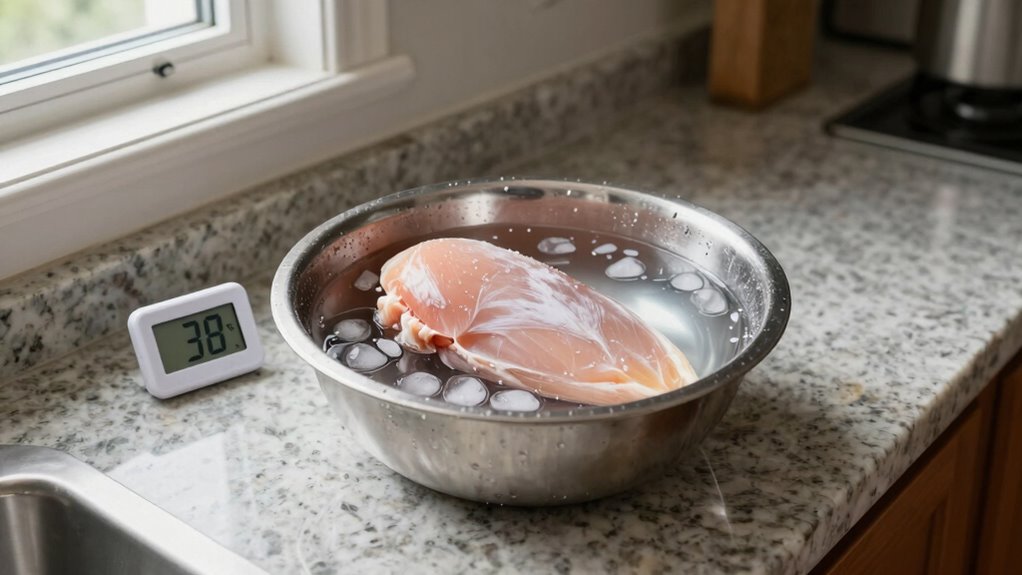
You shouldn’t thaw meat at room temperature because bacteria multiply rapidly when the meat reaches the danger zone between 40°F and 140°F.
The outer layers of your meat warm up faster than the inside, creating an ideal environment for harmful bacteria to grow unchecked. This temperature range accelerates bacterial growth considerably, making room temperature thawing a serious food safety risk.
Bacterial Growth Accelerates
When meat reaches room temperature during thawing, bacterial multiplication accelerates rapidly in what’s known as the “danger zone” between 40°F and 140°F. You mightn’t see or smell harmful bacteria, but they’re multiplying exponentially on your countertop.
- Pathogenic bacteria double every 20 minutes at room temperature, quickly reaching dangerous levels.
- Common foodborne illnesses like Salmonella, E. coli, and Listeria thrive in this temperature range.
- Surface bacteria spread inward as meat thaws unevenly, contaminating previously safe areas.
- Toxic bacterial waste products accumulate rapidly, even if you cook the meat afterward.
- Cross-contamination risks increase when juices drip onto countertops, utensils, and other foods.
You’re not just dealing with spoilage—you’re facing potentially serious health risks that affect everyone sharing your meals.
Temperature Danger Zone
Though thawing meat at room temperature seems convenient, it exposes the meat to rapid bacterial growth within the critical temperature range where pathogens multiply most quickly.
You should avoid this method because bacteria thrive between 40°F and 140°F, doubling every twenty minutes. Leaving meat out creates ideal conditions for Salmonella, E. coli, and Listeria to flourish.
You’re not saving time—room temperature thawing actually increases foodborne illness risk while giving you false confidence about safety. The outer layers reach dangerous temperatures long before inner portions thaw completely.
You need controlled, gradual warming instead.
Trust refrigerated thawing methods that keep meat consistently below 40°F until ready to cook. Your family’s health matters more than convenience.
Prevent Bacteria Spread While Defrosting
The safest approach to defrosting frozen meat requires understanding how bacteria multiply during the thawing process. You must keep meat at safe temperatures to prevent harmful bacteria from spreading rapidly.
- Place meat on a plate or tray to catch drips.
- Keep raw meat separate from other foods in your refrigerator.
- Don’t refreeze thawed meat unless you’ve cooked it first.
- Clean surfaces and utensils immediately after contact with raw meat.
- Monitor your refrigerator temperature stays at 40°F or below.
These steps protect you and your family from foodborne illness.
Remember that bacteria grow fastest between 40°F and 140°F, so keeping meat cold during thawing is essential.
You’re creating a safe environment when you follow these practices consistently.
Best Tools for Safe Meat Thawing
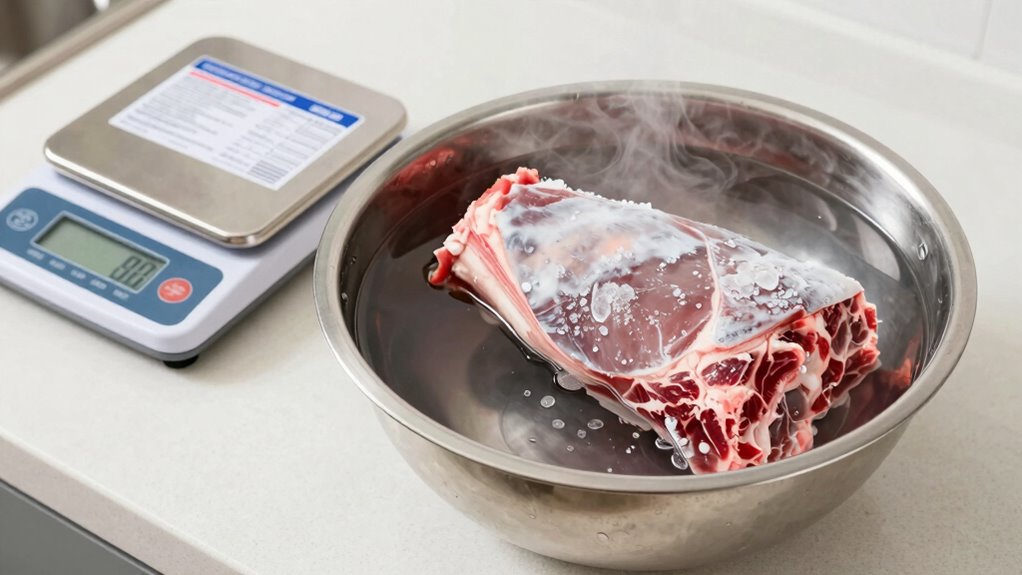
While you’re planning to thaw frozen meat safely, having the right tools makes the process more reliable and hygienic. Use airtight containers or zip-top bags designed for food storage to prevent cross-contamination.
Glass or food-grade plastic containers work best for refrigerator thawing. Keep meat on the bottom shelf to avoid dripping onto other foods. A meat thermometer helps verify safe internal temperatures during cooking.
Clean cutting boards, knives, and utensils thoroughly before and after handling raw meat. Paper towels absorb excess moisture and help maintain cleanliness.
Don’t forget to sanitize your sink and countertops afterward. These simple tools create a safer environment for everyone in your household.
How to Tell If Meat Has Fully Thawed
How do you know when frozen meat has completely thawed? You need to check for these key signs that indicate your meat is ready for cooking.
- Firmness test: Press gently with your finger; thawed meat should feel soft and yield slightly, not hard or frozen in the center.
- Visual inspection: Look for ice crystals or frozen spots on the surface or edges.
- Flexibility check: Bend or fold thinner cuts; they should move easily without cracking.
- Temperature feel: Thawed meat feels cool but not icy cold when you touch it.
- Color consistency: The meat should have uniform color throughout, without dark frozen sections.
Trust these methods to guarantee your meat thaws safely and thoroughly before cooking.
How to Adjust Thawing Time by Meat Type
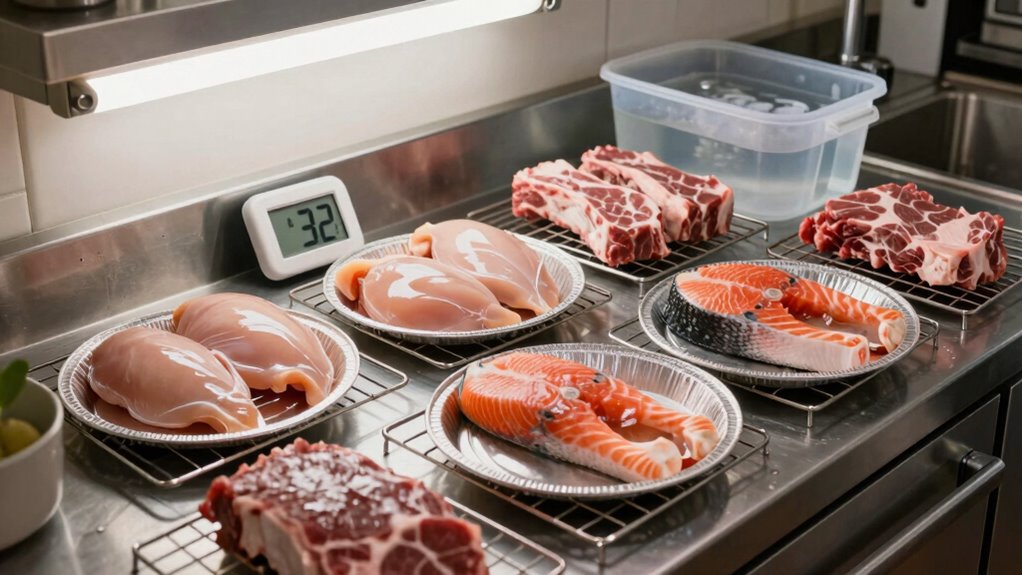
Different meats require different thawing times based on their size, thickness, and density.
You should plan approximately one hour per pound for thin cuts like chicken breasts or fish fillets. Thicker portions need more time—count on two hours per pound for roasts or whole chickens.
Ground meat thaws faster due to its increased surface area, usually within thirty minutes per pound.
Pork shoulders and beef briskets demand patience, often requiring three to four hours per pound.
Don’t rush the process by using hot water, which creates unsafe temperature zones. Instead, maintain consistent cold temperatures throughout thawing.
Remember that overcrowding your refrigerator extends thawing time considerably.
You’re not alone in learning these timings—every home cook develops this intuition through practice. Trust the process and stay safe.
Conclusion
You’ve learned the key methods for safe meat defrosting. Remember that bacteria multiply rapidly above 40°F, making proper thawing essential. Notably, nearly 60% of home cooks admit to using unsafe thawing methods like room temperature or hot water. Don’t risk foodborne illness. Stick to refrigerator, cold water, or microwave defrosting, and always cook meat immediately after microwaving. Your health depends on these simple, careful steps.