You’re heating oil in your nonstick pan when you realize it’s smoking far below the temperature you’ve used before. This sudden performance drop signals coating deterioration from improper maintenance. To prevent this costly mistake, you’ll need to understand how everyday cooking habits either extend or shorten your pan’s lifespan. Mastering proper care techniques keeps your investment performing like new.
How to Use Nonstick Pans Without Damaging the Coating
Using nonstick pans properly requires attention to several key practices that preserve the coating’s integrity. You should always use wooden, silicone, or plastic utensils to prevent scratching the surface. Metal tools will damage the coating immediately.
Heat the pan gradually over medium or low heat settings. High temperatures cause the coating to break down faster. Never preheat an empty pan for extended periods. Add oil or butter before heating begins.
Avoid using cooking sprays, which leave residue that’s difficult to remove. You must monitor cooking times closely because overheated food sticks more stubbornly.
Always allow pans to cool completely before cleaning. Following these practices consistently guarantees your nonstick investment lasts longer while maintaining superior performance.
Clean Your Pans Safely After Every Use
Although nonstick pans require gentle handling during cleaning, you can maintain their performance and longevity by following specific post-use care protocols.
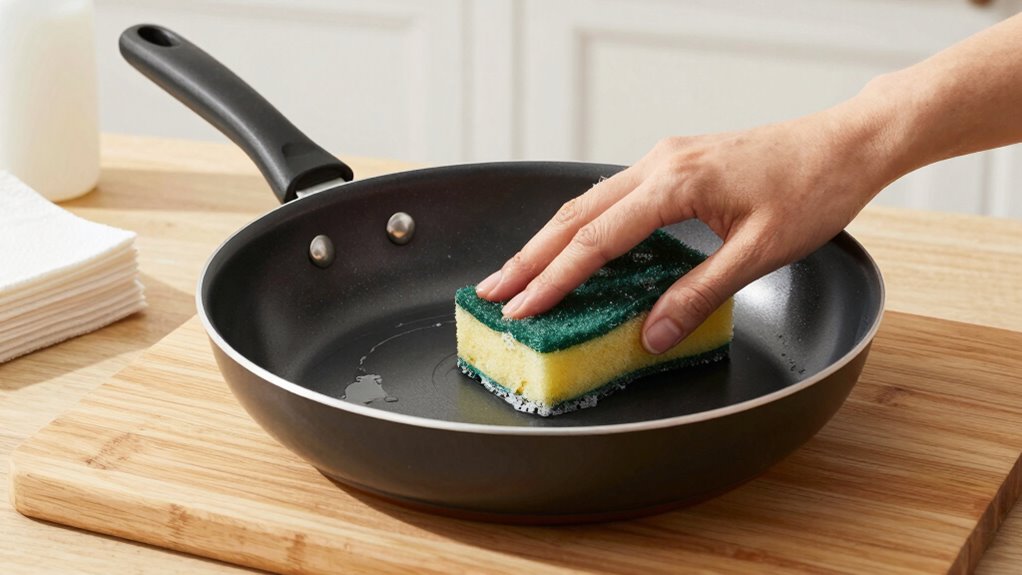
Wait until your pan cools completely before washing. Use warm water and mild dish soap with a soft sponge or cloth. Avoid abrasive cleaners, steel wool, or harsh scrubbing pads that damage the coating.
Rinse thoroughly to remove all soap residue. Dry immediately with a soft towel to prevent water spots. For stubborn food residue, soak the pan in warm soapy water for ten minutes before gentle cleaning.
Never use metal utensils during cleaning. Store pans properly to prevent scratches. Following these steps consistently guarantees your nonstick surface remains intact and functional for extended use.
Which Utensils Won’t Scratch Your Nonstick Surface?
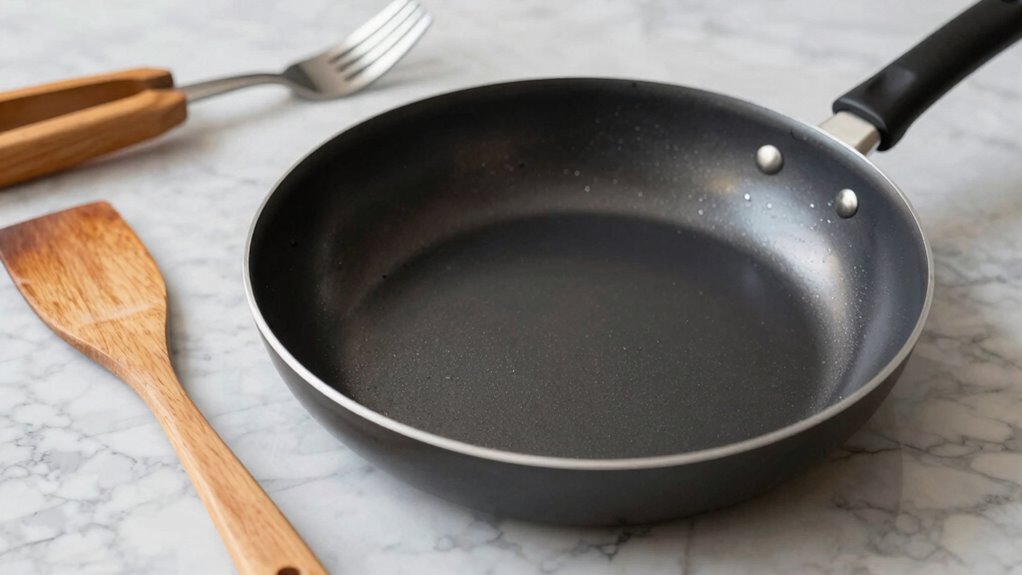
When you select utensils for your nonstick pans, choose materials that won’t compromise the coating’s integrity. Hard metals, abrasive materials, and sharp edges create microscopic scratches that accumulate over time, degrading performance and releasing coating particles into food.
- Silicone utensils – Flexible, heat-resistant up to 450°F, and completely non-abrasive against nonstick surfaces.
- Wooden utensils – Naturally soft, won’t scratch coatings, and provide excellent heat insulation for comfortable handling.
- Nylon utensils – Specifically engineered for nonstick cookware, heat-resistant, and gentle on delicate surfaces.
Avoid stainless steel, cast iron, or any metal utensils. These materials are too aggressive for nonstick coatings.
Your cookware’s longevity depends on protecting the surface from mechanical damage during every cooking session.
Avoid Overheating: Preheat Only With Food Inside
Protecting your nonstick coating extends beyond choosing the right utensils; temperature control plays an equally important role in maintaining pan performance.
You should always preheat your pan with food inside rather than heating it empty. Empty heating causes thermal expansion that damages the nonstick layer, creating microscopic cracks that compromise coating integrity. These fissures trap food particles and oils, leading to buildup that’s difficult to remove.
When you preheat with ingredients present, food acts as a thermal buffer, distributing heat evenly across the surface. This prevents hot spots that accelerate coating degradation. You’ll notice your pan maintains its nonstick properties longer when you follow this practice consistently.
Temperature fluctuations during empty heating also weaken the bond between the coating and pan base, shortening lifespan considerably.
Prevent Scratches When Storing Cookware
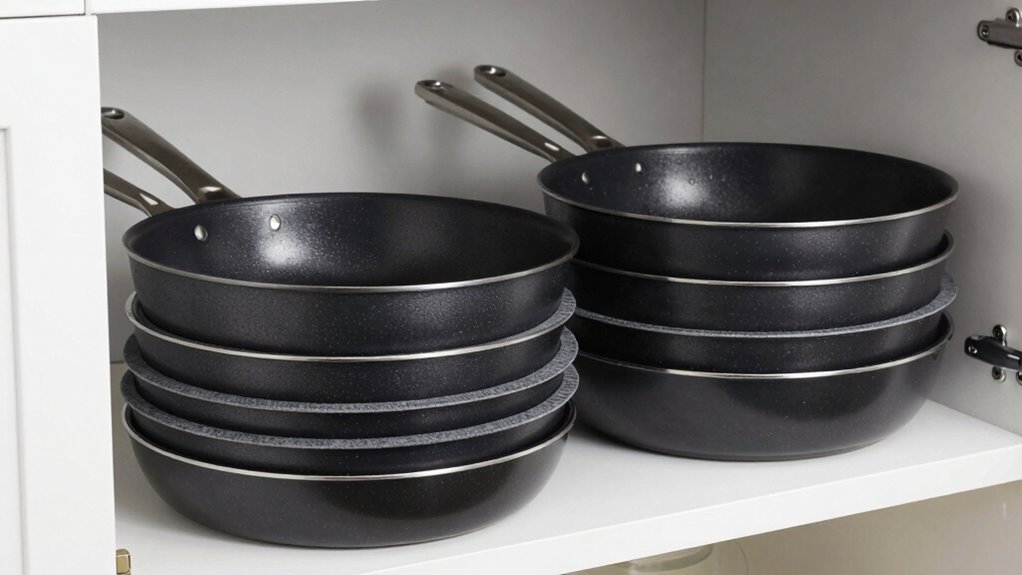
One critical step in preserving your nonstick cookware involves proper storage techniques that prevent surface damage. Incorrect storage creates scratches that compromise the nonstick coating’s integrity and longevity.
- Use protective barriers between pans – Place paper towels, cloth liners, or silicone mats between stacked cookware to eliminate direct metal-to-metal contact that causes scratches.
- Store pans individually when possible – Avoid nesting different-sized pans together, as this creates friction points that damage surfaces during handling and cleaning.
- Choose appropriate storage locations – Store cookware in dry, stable environments away from areas with temperature fluctuations that can cause warping and subsequent scratching.
These storage practices maintain your investment while ensuring peak performance throughout the cookware’s lifespan.
Best Cooking Oils for Preserving Nonstick Coatings
Proper storage techniques alone won’t preserve your nonstick cookware without addressing what you put in the pan. You should choose oils with high smoke points to prevent coating degradation.
Avoid aerosol sprays containing propellants that leave residue. Opt for refined oils like avocado, grapeseed, or light olive oil. These create protective barriers without sticky buildup.
Butter works well but burns easily. You need oils that won’t carbonize at typical cooking temperatures. Heat oil gradually before adding food. Don’t preheat empty pans excessively.
Quality oils maintain coating integrity while providing superior nonstick performance. Your choice directly impacts pan longevity. Select oils that complement rather than compromise your investment.
Remember that improper oil selection accelerates coating deterioration markedly. Make informed decisions about what touches your nonstick surface.
Remove Stubborn Stains Without Abrasive Tools
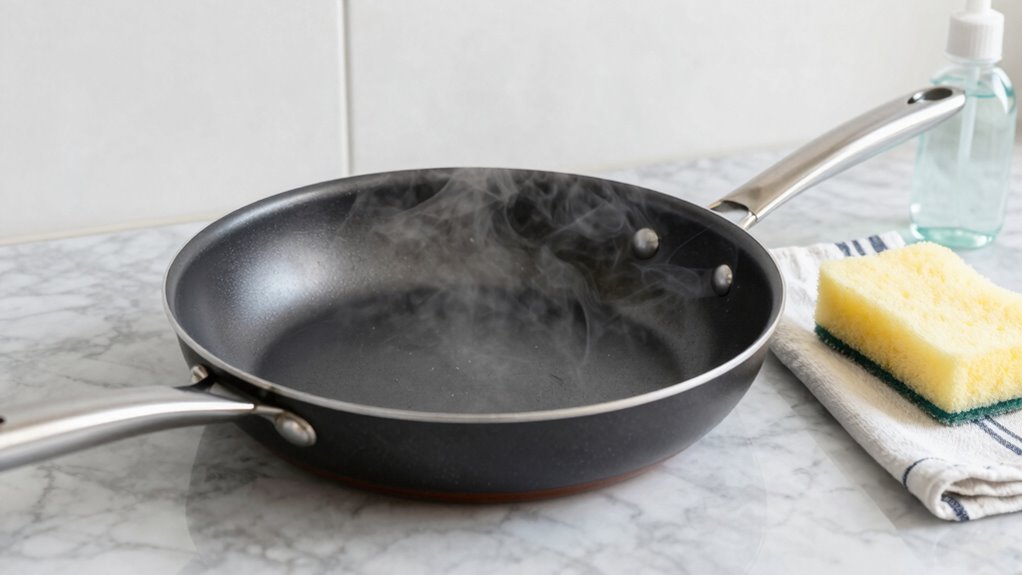
Stubborn stains on nonstick surfaces don’t require harsh scrubbing or abrasive cleaners to remove effectively. You can tackle these blemishes while preserving your pan’s integrity using gentle, proven methods that maintain the nonstick coating’s longevity.
- Baking soda paste: Mix baking soda with water to create a thick paste. Apply directly to stains, let sit for 15 minutes, then gently wipe away with a soft cloth or sponge.
- Vinegar soak: Fill your pan with equal parts water and white vinegar. Bring to a boil, simmer for 10 minutes, then let cool before wiping clean.
- Lemon juice treatment: Sprinkle coarse salt into lemon juice, apply to stained areas, and let sit for 30 minutes before rinsing thoroughly.
Restore a Worn-Out Pan’s Performance
Several methods can effectively restore your worn nonstick pan’s performance when the coating begins to deteriorate.
You should clean the surface thoroughly with baking soda paste to remove buildup that compromises the nonstick properties. Apply gentle circular motions with a soft cloth or sponge. For stubborn areas, let the baking soda sit for ten minutes before wiping clean.
Re-season your pan by applying a thin layer of vegetable oil across the entire cooking surface, then heat it gradually in the oven at 350°F for one hour. Allow cooling completely before wiping away excess oil.
This process rebuilds the pan’s protective barrier and enhances food release properties. Regular maintenance prevents premature wear while extending your pan’s usable lifespan considerably.
Know When It’s Time to Ditch Your Pan
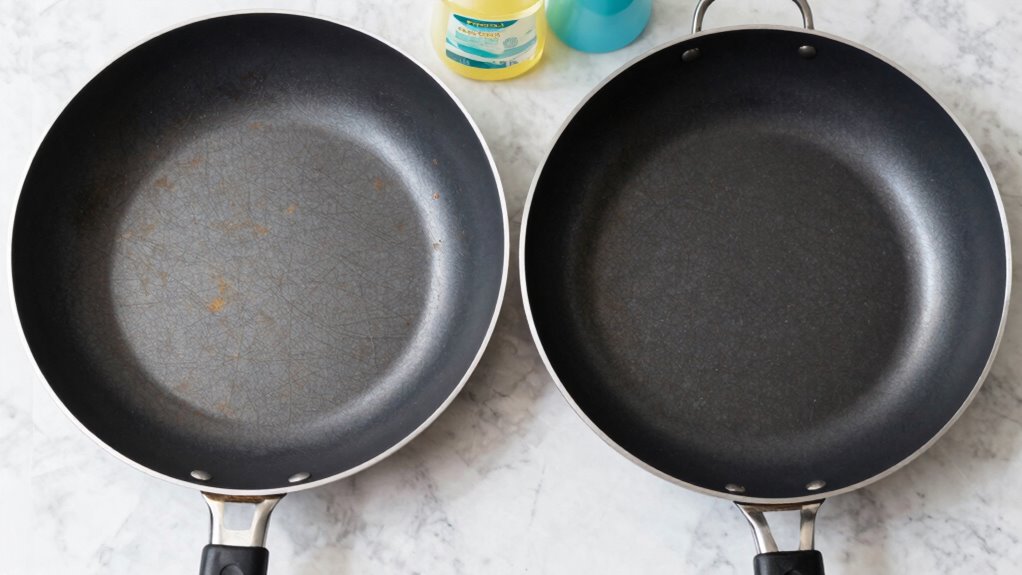
You should replace your nonstick pan when you notice visible coating damage like scratches, chips, or peeling that compromises the surface integrity.
Uneven heating patterns that cause hot spots or cold areas indicate warped construction or degraded heat distribution capabilities.
Persistent sticking issues despite proper maintenance and cleaning signal that the nonstick coating has reached the end of its functional lifespan.
Visible Coating Damage
When nonstick coating begins peeling, chipping, or showing signs of wear, your pan’s effectiveness deteriorates markedly.
You’ll notice food sticking more frequently and cleaning becoming increasingly difficult. Visible damage compromises the pan’s nonstick properties and can contaminate your food with loose coating particles.
- Peeling coating creates gaps where food particles lodge, making sanitization impossible and rust formation likely underneath damaged areas.
- Chipping exposes bare metal surfaces that lack nonstick properties, causing uneven cooking performance and potential metal leaching into food.
- Surface scratching from metal utensils or abrasive cleaners creates permanent texture changes that harbor bacteria and accelerate coating degradation.
Replace your pan immediately when you spot these visible defects.
Continuing use poses health risks and delivers subpar cooking results that frustrate your culinary efforts.
Uneven Heating Patterns
Uneven heating patterns signal another critical failure point in nonstick pan performance that demands immediate attention.
You’ll notice hot spots forming where food cooks faster than surrounding areas, creating inconsistent results. This happens when the pan’s aluminum core warps from thermal stress or improper handling.
Metal utensils, sudden temperature changes, and overheating accelerate this deterioration. Your pan’s heat distribution becomes compromised as the underlying material loses structural integrity.
Warped pans sit unevenly on cooktops, exacerbating heating inconsistencies. You might observe bubbling or rippling in the coating surface. These distortions prevent proper heat transfer across the cooking surface.
When temperatures vary by more than ten degrees across the pan’s diameter, performance suffers greatly. You’ll struggle achieving even browning or proper cooking temperatures.
This uneven heating creates hot spots that burn food while leaving other areas undercooked. Your cooking technique won’t compensate for these physical limitations.
Replacement becomes necessary when warping exceeds manufacturer specifications.
Sticking Food Issues
While nonstick coatings are designed to prevent food adhesion, persistent sticking indicates coating degradation that compromises pan functionality.
You’ll notice food consistently sticking despite proper preheating and oil usage. This degradation occurs from overheating, metal utensil scratches, or normal wear patterns.
When your pan no longer performs as expected, consider these warning signs:
- Visible coating damage – Peeling, bubbling, or scratched surfaces expose bare metal substrate.
- Chronic sticking issues – Eggs, pancakes, or delicate foods repeatedly adhere despite correct technique.
- Discoloration patterns – Darkened areas or rainbow hues signal polymerized oil buildup or coating breakdown.
You deserve cookware that performs reliably.
Don’t struggle with subpar pans that compromise your cooking experience and results.
Prevent Premature Wear Through Daily Habits
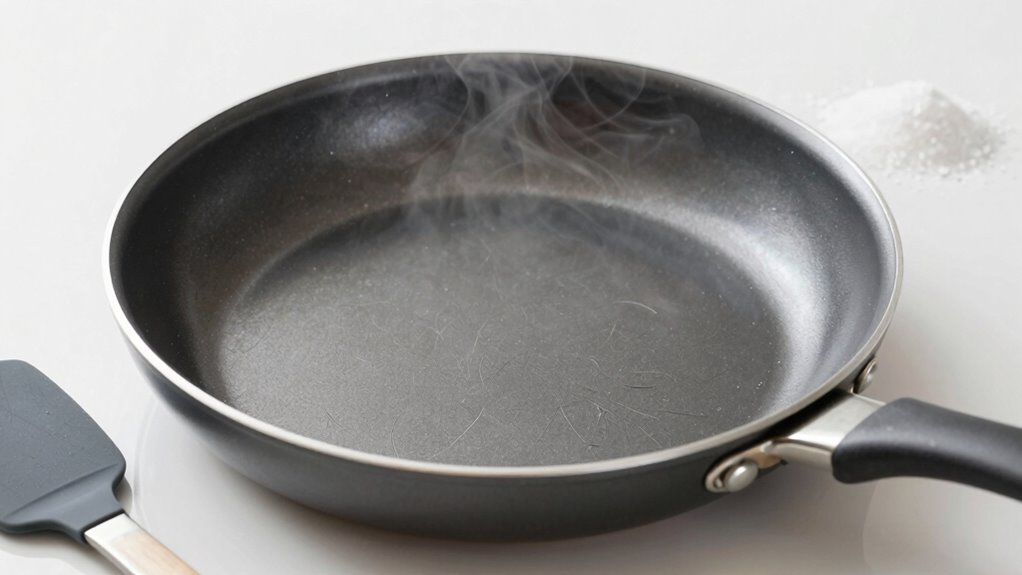
Although nonstick coatings are designed to withstand regular use, your daily cooking habits directly impact their longevity and performance. You should always preheat pans gradually over medium heat, avoiding high temperatures that accelerate coating degradation.
Don’t use metal utensils; opt for silicone, wood, or plastic tools that won’t scratch surfaces. Clean pans immediately after cooling, using gentle dish soap and soft sponges rather than abrasive scrubbers. Avoid cooking sprays, which leave sticky residue that’s difficult to remove completely.
Store pans carefully, using paper towels between stacked pieces to prevent scratching. Never stack heavy items directly on top of nonstick surfaces. You’ll maintain peak performance longer when you treat these pans as precision tools requiring specific care techniques.
Extend the Life of Your Nonstick Cookware
You’ll maximize your nonstick cookware’s durability by mastering proper cleaning techniques and maintaining precise heat control during cooking.
These fundamental practices prevent coating degradation and guarantee ideal performance throughout the cookware’s lifespan.
Following these essential maintenance protocols keeps your investment performing at peak efficiency.
Proper Cleaning Techniques
Proper cleaning techniques extend the life of your nonstick cookware by preventing damage to the coating and maintaining peak performance. You must avoid abrasive cleaners, steel wool, and harsh scrubbing that permanently degrade the nonstick surface.
- Cool completely before washing – Let pans reach room temperature to prevent thermal shock that cracks coatings.
- Use gentle, warm soapy water – Clean with soft sponges or microfiber cloths using mild dish soap solutions.
- Dry thoroughly immediately – Prevent water spots and mineral buildup by air-drying or towel-drying completely.
Following these methods consistently keeps your investment performing like new while preventing premature replacement costs.
Your cooking community depends on reliable tools.
Heat Control Essentials
While maintaining ideal heat control seems straightforward, mastering temperature regulation greatly extends your nonstick pan’s operational lifespan.
You should always preheat pans gradually over medium-low heat, avoiding sudden temperature spikes that damage coatings. Nonstick surfaces begin degrading at 450°F, so monitor your cooking temperatures carefully. Use infrared thermometers for precise measurement when needed.
Don’t leave empty pans on hot burners, and remove pans from heat sources promptly when cooking completes.
Cast iron and stainless steel conduct heat differently than nonstick materials, requiring adjustment periods. You’ll notice better results when matching heat levels to your specific pan’s manufacturer specifications.
Proper heat management prevents warping, coating deterioration, and uneven cooking patterns that compromise performance.
Conclusion
To preserve your nonstick pans’ longevity, treat them gently yet consistently. Use appropriate utensils, clean meticulously, and store thoughtfully. Address wear promptly before it deepens. While these pans won’t live forever, proper care delays their inevitable decline. Your cooking performance depends on protecting that delicate surface. Don’t accelerate their departure from your kitchen through neglect or abuse. Handle them with the precision they require.