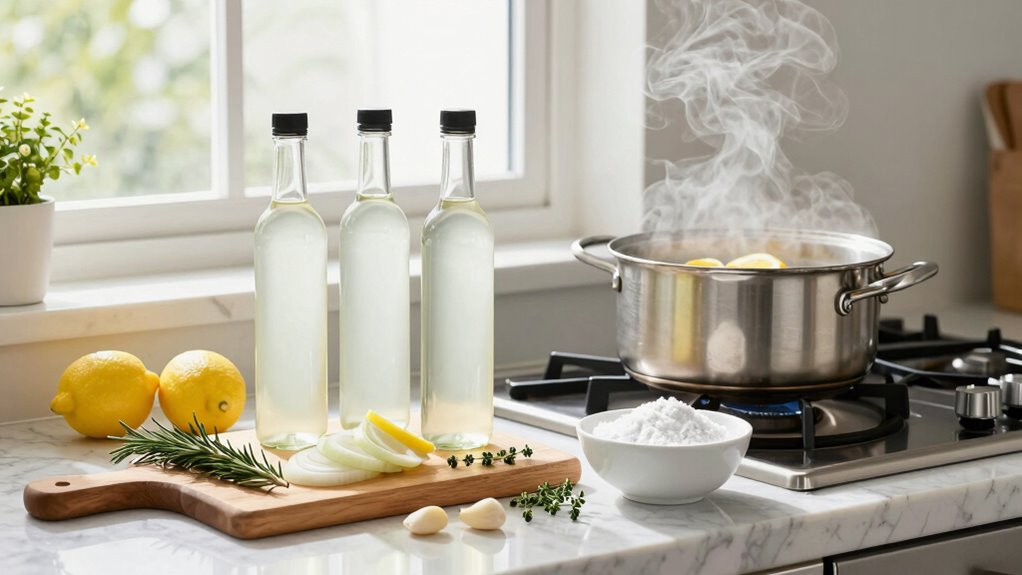
You’ve probably noticed how quickly strong food odors can take over your kitchen after cooking. While expensive air fresheners might mask the problem, you can tackle these smells naturally with items already in your home. Most people overlook hidden odor traps like sponges and refrigerator seals. By using baking soda, vinegar, and citrus strategically, you’ll discover a more effective approach to eliminating stubborn cooking smells permanently.
Identify Where Kitchen Odors Hide
Kitchen odors don’t just linger in obvious places like your garbage disposal or dirty dishes.
You’re probably missing hidden odor sources that trap smells throughout your kitchen. Check your refrigerator seals, which collect food particles and create persistent odors.
Don’t forget about cabinet interiors, especially near the stove where grease builds up. Your kitchen towels and dishcloths harbor bacteria that cause lingering smells. Sponges become breeding grounds for odor-causing microorganisms.
Even your trash can retains strong odors despite regular emptying. Kitchen cabinets absorb cooking vapors through wood pores.
Your sink drain traps food debris that decomposes unnoticed. Identify these hidden sources before attempting odor removal.
You’ll save money and time by targeting problem areas systematically. Regular inspection prevents odors from becoming permanent fixtures. Clean these spots monthly to maintain freshness.
You deserve a kitchen that smells clean and welcoming.
Absorb Lingering Smells With Baking Soda
Once you’ve identified where odors hide in your kitchen, it’s time to tackle those lingering smells with an effective, budget-friendly solution.
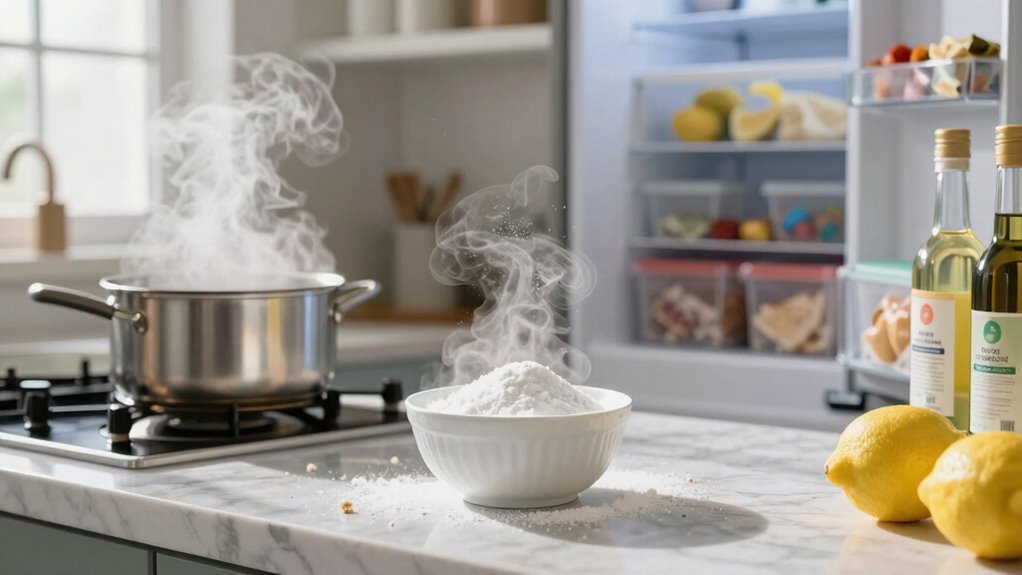
Baking soda naturally absorbs odors through its porous structure, trapping smell molecules effectively. Sprinkle generous amounts on countertops, inside refrigerators, and around sink areas where odors persist. Let it sit for several hours or overnight before wiping away.
For stubborn smells, create a paste using baking soda and water, then scrub affected surfaces. Remember to replace baking soda monthly in odor-prone areas.
This simple pantry staple costs pennies compared to commercial air fresheners, making it an economical choice for maintaining fresh kitchen air. You’ll appreciate how this common household item transforms your cooking space into a welcoming environment for family and guests.
Clean Grease & Residue With Vinegar
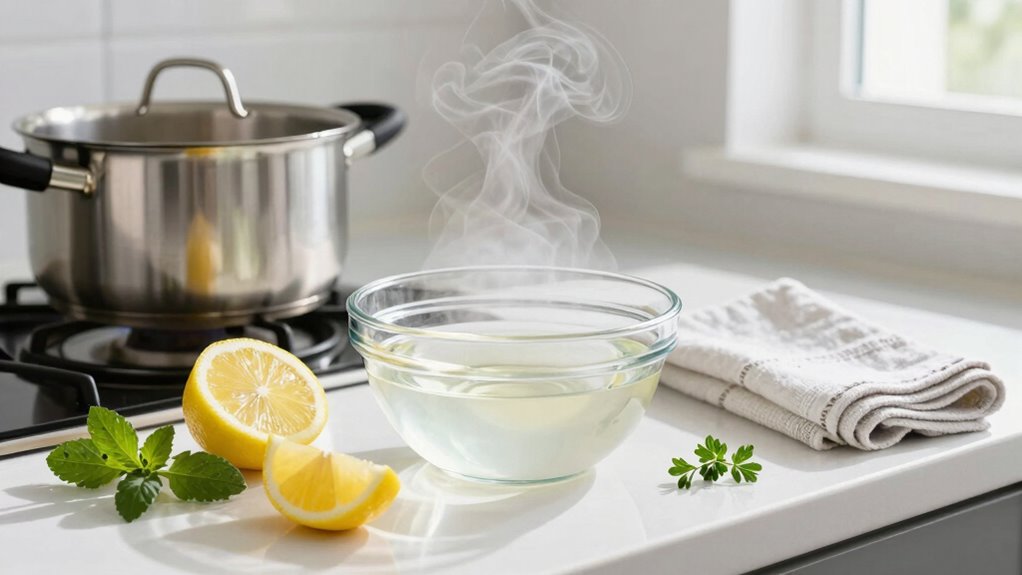
Vinegar cuts through grease and residue buildup that traps food odors in your kitchen. You should mix equal parts white vinegar and warm water in a spray bottle for effective cleaning.
Apply this solution directly to greasy surfaces, letting it sit for several minutes before wiping clean with a damp cloth.
Focus on areas where grease accumulates most: stovetops, oven interiors, exhaust fans, and countertops. The acidic properties of vinegar break down stubborn residue that regular cleaners miss.
You’ll notice how easily grime lifts away, taking trapped odors with it. This method costs pennies compared to commercial degreasers.
Your kitchen surfaces gleam while eliminating odor-causing buildup. Repeat this process weekly to prevent grease accumulation and maintain freshness naturally.
Freshen Air Naturally Using Citrus Zest
Citrus zest transforms your kitchen’s atmosphere naturally while eliminating stubborn food odors.
You can use lemon, lime, or orange peels to create an effective air freshener. Simply collect citrus peels in a small bowl and place them strategically around your kitchen. The natural oils release fresh scent particles that neutralize unpleasant cooking smells.
For stronger impact, simmer citrus peels in water on your stovetop for ten minutes. You’ll notice immediate improvement in air quality. This method costs virtually nothing since you’re repurposing kitchen scraps.
Store leftover peels in your freezer until you’re ready to use them. Citrus zest works particularly well after cooking fish, garlic, or onions. You’re creating a welcoming environment while reducing waste.
The pleasant aroma makes your kitchen feel clean and inviting without harsh chemicals.
Disinfect Cabinets With Essential Oil Sprays
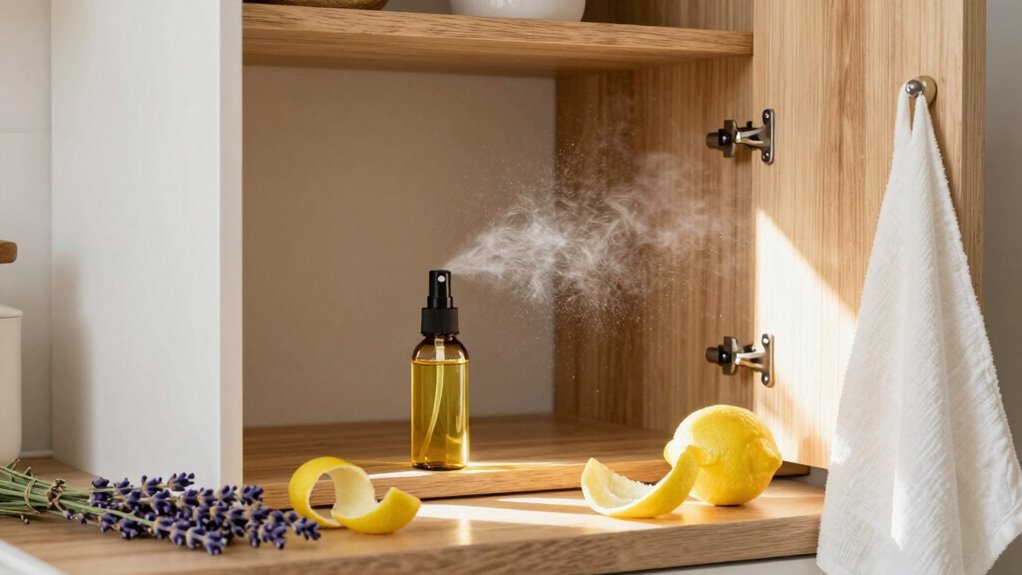
You can eliminate lingering food odors and sanitize your cabinets by creating simple essential oil spray blends using ingredients like tea tree, lemon, and lavender oils.
Apply these homemade disinfectants directly to cabinet surfaces using a fine mist spray bottle, ensuring even coverage without over-saturating the wood.
These natural solutions effectively neutralize bacteria and odor-causing compounds while leaving your cabinets smelling fresh and clean.
Essential Oil Blend Recipes
Three essential oil blends effectively eliminate food odors while disinfecting your kitchen cabinets.
First, combine ten drops each of lemon and tea tree oils with distilled water for a powerful citrus disinfectant.
Second, mix eight drops of eucalyptus, six drops of peppermint, and distilled water creates a revitalizing antibacterial spray.
Third, blend five drops each of lavender and thyme oils with water for a gentle yet effective solution.
These recipes use common household items, making them budget-friendly alternatives to commercial cleaners.
You’ll achieve professional-strength odor elimination without harsh chemicals.
Each blend harnesses natural antimicrobial properties that destroy odor-causing bacteria while leaving pleasant fragrances.
Store mixes in dark glass bottles away from sunlight.
These cost-effective solutions give you control over your kitchen’s cleanliness while creating a welcoming environment your family will appreciate.
Application Techniques for Cabinets
A systematic approach guarantees your essential oil cabinet disinfectants work effectively while protecting your kitchen surfaces.
You should clean cabinets first with mild soap and water, then apply your essential oil spray solution evenly across all surfaces.
Use microfiber cloths for smooth application without leaving residue. Focus on high-touch areas like handles and corners where bacteria accumulate.
Allow the solution to sit for several minutes before wiping down. You’ll want to test your spray on hidden areas first to verify compatibility with your cabinet finish.
Weekly applications maintain freshness while preventing odor buildup. Remember that pine and lemon oils work best for grease-cutting properties.
Store your essential oil blends in dark glass bottles away from sunlight.
This method costs pennies compared to commercial cleaners while delivering professional-strength results. Your kitchen will smell fresh naturally.
Prevent Persistent Cooking Odors Early
Preventing persistent cooking odors requires proactive measures before smells become embedded in your kitchen surfaces and fabrics. You should open windows and turn on exhaust fans during cooking to vent odors outside.
Place bowls of baking soda or white vinegar around your kitchen to absorb airborne particles. Clean spills immediately and wipe down surfaces with lemon juice or vinegar solutions.
Store strong-smelling foods in airtight containers. Use coffee grounds as natural odor absorbers in your refrigerator.
Wash dish towels and pot holders frequently in hot water with baking soda. Run your garbage disposal with citrus peels regularly.
These simple steps prevent odors from settling into porous materials, saving you time and money on intensive cleaning later while keeping your kitchen fresh.
Conclusion
Ready to banish those stubborn kitchen odors for good? You’ve got the natural tools you need – from baking soda’s absorbing power to vinegar’s cleaning strength, citrus freshness, and essential oil disinfection. Don’t let persistent food smells control your kitchen atmosphere any longer. Take action now with these simple, cost-effective solutions and reclaim your fresh, clean cooking space.