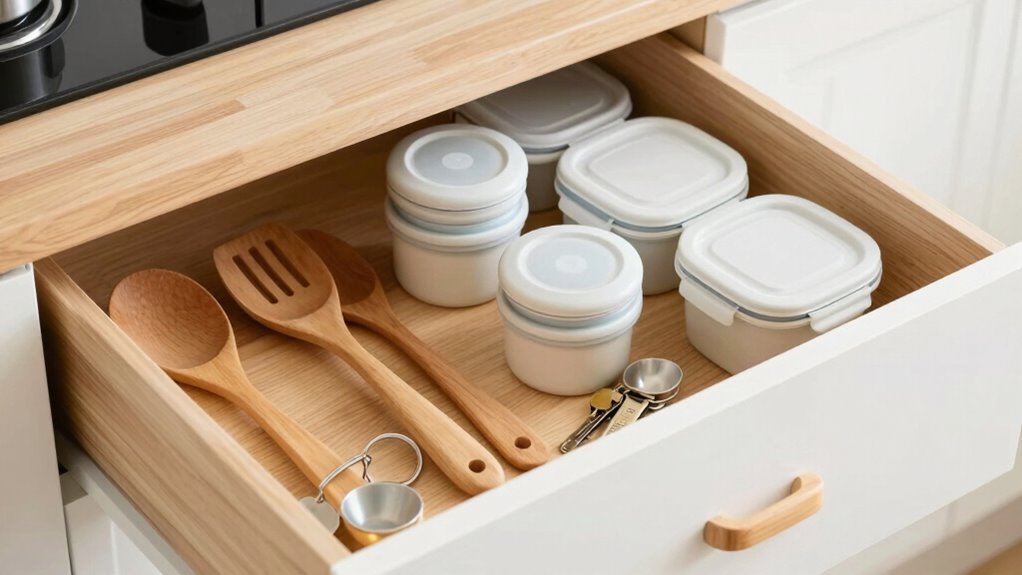
You probably open your kitchen drawers and see chaos staring back. Everything’s crammed, nothing’s where you need it, and you’re tired of buying overpriced organizers that don’t fit your space. What if you could transform those messy drawers using items you already own? You’ll discover simple strategies that take minutes to implement and actually work with your existing storage.
Start Fresh: Empty the Drawer Completely
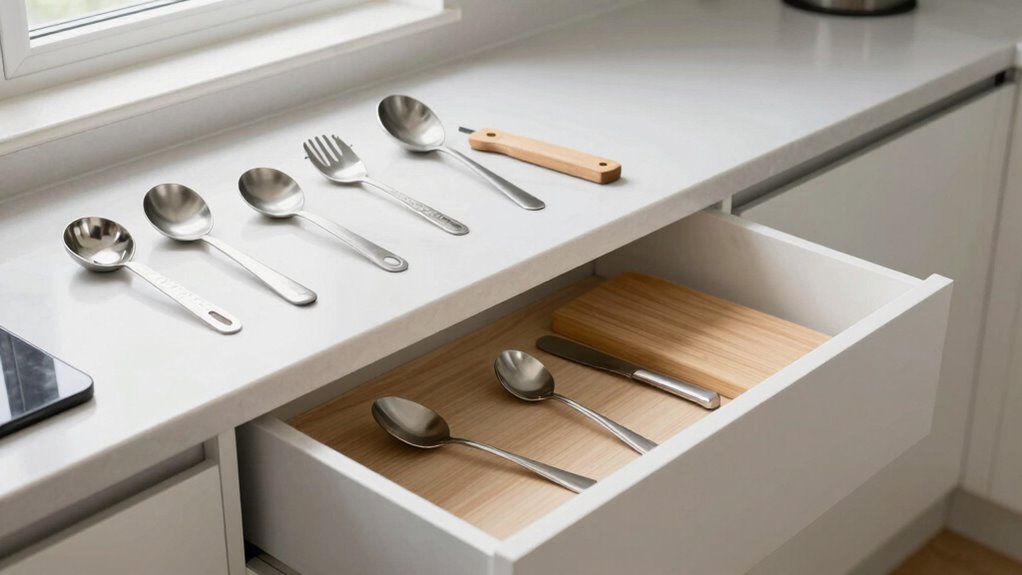
One essential first step transforms your kitchen drawer organization process: remove everything from the drawer completely.
You’ll discover items you forgot existed while creating a clean slate.
Don’t just dump contents on the counter randomly. Sort items into three piles: keep, donate, and trash.
Be ruthless with expired items and duplicates you never use.
Wipe down the empty drawer interior with a damp cloth.
This fresh start lets you see exactly what you own.
You’re not alone in feeling overwhelmed by messy drawers. Everyone faces this challenge.
Taking time to empty drawers properly makes the next steps easier.
Your future organized self will appreciate this thorough beginning.
Group Similar Items Together
After you’ve emptied and cleaned your drawer, it’s time to group similar items together. Sort utensils by type: forks, spoons, knives. Keep measuring tools together.
Group baking supplies separately. Arrange items by frequency of use, placing daily essentials in easy-reach areas. This systematic approach creates order without unnecessary purchases.
You’re not just organizing drawers; you’re creating a kitchen that works for your lifestyle. Everything has its place, making cooking more efficient.
When similar items live together, you’ll spend less time searching and more time preparing meals. This method works because it’s simple, practical, and belongs to you.
Remove What You Never Use
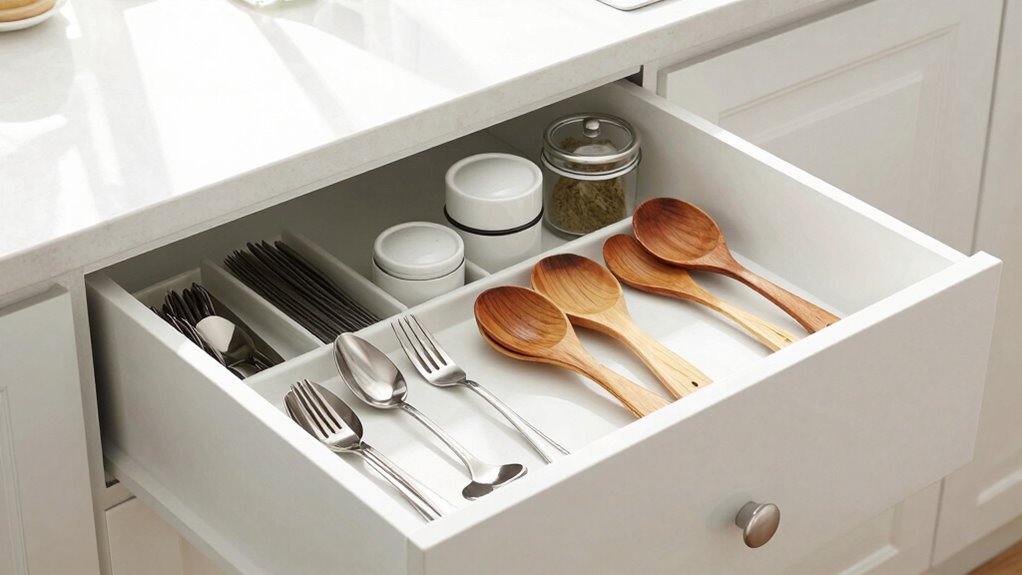
Most kitchens accumulate items you never use. You’ll find duplicates, outdated gadgets, or gifts that don’t fit your cooking style. Removing these unused items creates immediate space and clarity in your drawers.
Start by taking everything out and sorting items into categories. Be honest about what you actually use daily versus what collects dust. If you haven’t reached for something in over a year, it’s probably time to let it go.
Focus on these common culprits:
- Duplicate utensils you never use
- Expired spice packets or seasoning samples
- Kitchen gadgets that seemed useful but aren’t
Keep only what serves your current cooking habits. Donate or discard items that don’t belong in your kitchen anymore. This ruthless approach creates a cleaner, more functional space that reflects your actual needs.
Use Common Items for Dividers
While organizing your drawers, you can create custom dividers using items you already have.
Don’t buy new organizers when you’ve got everything needed at home. Use sturdy cardboard boxes, small containers, or empty toilet paper rolls as dividers. Stack books or magazines wrapped in plastic to create flexible partitions. Old cutting boards or small trays work perfectly for separating sections.
You’re not alone in wanting organized drawers without spending money. Everyone has random items that serve perfectly as dividers.
Empty cereal boxes cut to size make excellent separators. Wine corks glued together create custom-fitted dividers for small items.
Stop thinking you need special tools for organization. Your existing items work better than you realize, fitting your specific drawer dimensions perfectly.
Sort Small Tools With Ice Cube Trays
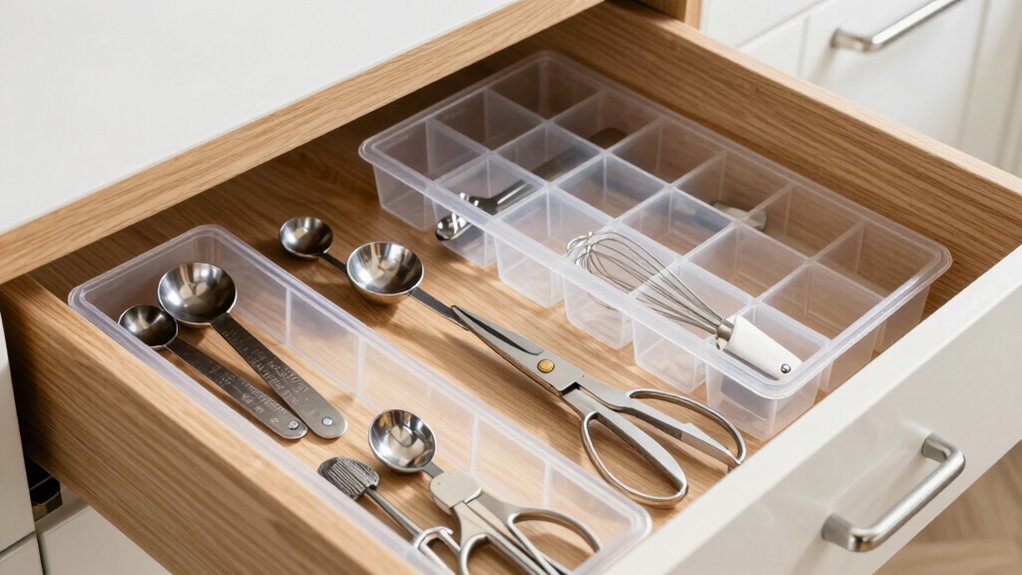
Sort small tools with ice cube trays by repurposing these kitchen staples for maximum organization.
You’ll create compartments that keep everything visible and accessible. Ice cube trays work perfectly for organizing drawer contents because they’re already divided into uniform sections.
- Small utensils: Place measuring spoons, bottle openers, and garlic presses in each compartment.
- Baking tools: Sort cookie cutters, piping tips, and small mixing bowls using tray sections.
- Miscellaneous items: Group rubber bands, twist ties, and kitchen clips together systematically.
This method eliminates clutter while making tools easy to locate.
You’re transforming everyday items into functional organizers. The trays stack or fit neatly in existing drawer space.
Everyone can maintain this system effortlessly. Your kitchen drawers gain instant order without expensive purchases.
This approach creates belonging through shared practical solutions others use successfully.
Place Daily Essentials on Top
You should place frequently used items where you can reach them without bending or stretching.
Keep your most essential tools at eye level and within easy grasp.
Organize everything by how often you actually use it each day.
Keep Frequently Used Items Accessible
Place your most-used items in the top drawer or on the highest shelf for quick access. This simple strategy eliminates daily frustration and streamlines your cooking routine.
You’ll spend less time searching and more time preparing meals when essentials are within immediate reach.
Keep these frequently used items easily accessible:
- Kitchen shears for quick cutting tasks
- Can opener for daily meal preparation
- Measuring spoons for consistent cooking results
Organize systematically by grouping similar items together.
Position items you reach for multiple times daily at eye level or arm’s length. This approach creates belonging in your kitchen space while maintaining efficiency.
Your morning coffee routine becomes smoother when your favorite mug and spoon are readily available.
Store Essentials At Eye Level
Having daily essentials within arm’s reach reduces unnecessary movement and saves time during meal preparation. You should place frequently used items at eye level where you can see them immediately. Keep your most essential tools visible and accessible.
Store knives, cutting boards, and primary cooking utensils in clear sight lines. Don’t bury important items underneath lesser-used ones. Position everything so you don’t need to dig through drawers to find what you need. This simple adjustment eliminates wasted time searching for basic tools. Your kitchen becomes more efficient when essentials aren’t hidden away.
Make sure everyone in your household knows where things live. Consistent placement creates routine and belonging. You’ll develop muscle memory faster when items stay in designated spots.
Visibility matters more than fancy storage solutions. Simple reorganization transforms your cooking experience immediately.
Organize By Daily Usage Priority
The most effective kitchen drawers follow a clear hierarchy where daily essentials occupy the most accessible positions.
You’ll streamline your cooking routine by placing frequently used items at eye level and within easy reach.
Keep your most-used tools organized in these strategic locations:
- Top drawers: knives, spatulas, measuring spoons
- Middle drawers: mixing bowls, cutting boards, canisters
- Bottom drawers: heavy pots, seasonal items, backup supplies
This systematic approach eliminates wasted time searching through cluttered spaces.
You’ll create an efficient workflow that supports your daily cooking habits while maintaining clean, organized drawers.
Assign Tasks to Each Drawer Zone
You should designate specific drawers for utensil storage, spice zones, and prep tools to streamline your cooking workflow.
Keep frequently used items like spatulas and spoons in easy-reach areas, while reserving deeper drawers for specialty tools.
This systematic approach eliminates wasted time searching through cluttered drawers.
Designate Utensil Storage Areas
Once you’ve evaluated your drawer space, assign specific utensils to designated zones based on frequency of use.
Keep everyday items like forks, knives, and spoons in easily accessible areas. Reserve deeper sections for bulkier tools you use less often.
Create distinct zones by grouping similar items together. This systematic approach reduces decision fatigue and makes cooking more efficient.
- Place frequently used utensils at eye level and within arm’s reach
- Store specialty items like garlic presses or zesters in dedicated corners
- Keep measuring tools together near recipe books or cooking zones
Labeling isn’t necessary, but consistent placement helps everyone in your household find what they need quickly.
You’ll develop muscle memory for each item’s location.
Create Spice Drawer Zones
Having established designated areas for utensils, apply the same systematic approach to your spices by assigning specific tasks to each drawer zone.
Create zones based on frequency of use: daily essentials like salt, pepper, and cooking oils go in easily accessible drawers. Reserve less-used spices for deeper compartments.
Group spices by cooking purpose—baking spices together, savory seasonings together. Label each zone clearly so everyone in your household knows where items belong. This system eliminates searching and prevents duplicate purchases.
You’ll find your cooking flow improves when everything has its place. Maintain this organization by regularly decluttering expired spices and adjusting zones as your cooking habits evolve.
Keep frequently swapped items within arm’s reach of your cooking area.
Establish Prep Tool Stations
Three key zones streamline your prep tool organization.
Don’t scatter utensils randomly—assign specific tasks to each drawer zone for maximum efficiency.
You’ll create functional stations that make cooking feel effortless. Your knives belong near cutting boards, measuring tools stay together, and prep utensils cluster logically.
- Cutting station: Keep knives, peelers, and cutting boards together in one drawer
- Measuring zone: Store measuring cups, spoons, and kitchen scales in another drawer
- Prep tool area: Group mixing spoons, whisks, tongs, and prep bowls in remaining space
This systematic approach eliminates searching and creates belonging among your tools.
You’ll know exactly where everything lives, making meal prep faster and more enjoyable.
Gather Loose Pieces in Containers
Small items like spices, tea bags, and snack packets benefit from being grouped into containers. You’ll create order from chaos while making everything easier to find.
Use whatever containers you already have – mason jars, small bowls, or even repurposed food containers. Group similar items together: baking supplies in one container, tea collection in another.
Label containers clearly so anyone can identify contents quickly. This system prevents small items from migrating throughout your drawers. You’ll spend less time searching and more time cooking.
Containers don’t need to match – focus on function over appearance. Clear containers work best for frequently used items. Opaque containers suit seasonal or rarely-used pieces.
Consolidate loose pieces into organized groups that make sense for your daily routine.
Stack Wisely to Maximize Space
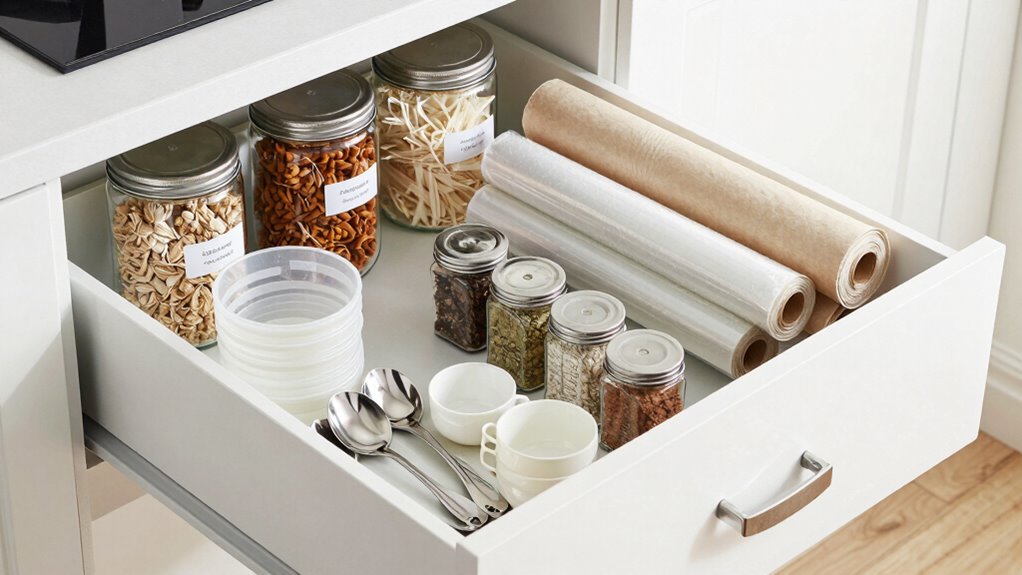
You should stack items vertically to make the most of your drawer space.
Use multi-tiered systems that let you organize different items on separate levels.
This approach keeps everything accessible while maximizing your storage capacity.
Vertical Storage Solutions
One effective way to maximize your kitchen drawer space is by implementing vertical storage solutions that stack items efficiently. You can transform cramped drawers into organized spaces without spending money on fancy organizers.
- Stack cutting boards and baking sheets vertically against the drawer’s back wall, creating a standing storage system that saves horizontal space.
- Layer smaller items like measuring spoons, spice jars, and small containers in graduated stacks, placing heavier items on bottom.
- Use existing items like clean food cans or small boxes as risers to create vertical compartments for knives, utensils, or pantry items.
This approach helps you make the most of your current drawer space while maintaining easy access to everything. You’re creating order from chaos using items you already own.
Multi-Tiered Drawer Systems
Multiple tiers within a single drawer dramatically increase storage capacity when items are stacked thoughtfully.
You’ll maximize every inch by creating distinct levels using adjustable dividers or existing drawer components. Place frequently used items on top tiers for easy access.
Store heavier items on bottom levels to prevent collapse.
Stack similar items vertically rather than scattering them across different drawers. Group utensils by function and size, keeping commonly paired items together.
Use vertical space efficiently by nesting smaller containers within larger ones.
Adjust tier heights based on item sizes.
Don’t force everything into uniform compartments when natural groupings work better. You belong in a kitchen where every tool has its place and retrieval feels intuitive.
Create systems that reflect how you actually cook and live.
Reset Weekly for Long-Term Order
Establishing a weekly reset routine prevents kitchen drawers from reverting to chaotic states. You maintain order by dedicating fifteen minutes every Sunday to reassessing your drawer contents and organization systems.
- Remove expired items like old coupons, expired food samples, or broken utensils that accumulate over time.
- Reorganize frequently used items back to their designated zones after weekly meal prep and cooking sessions.
- Adjust zones based on seasonal cooking patterns – move barbecue tools to front during summer months.
This systematic approach guarantees your kitchen remains functional throughout the year.
You’ll discover what works best for your household’s rhythm while maintaining the simple systems you’ve created.
Keep It Simple, Not Perfect
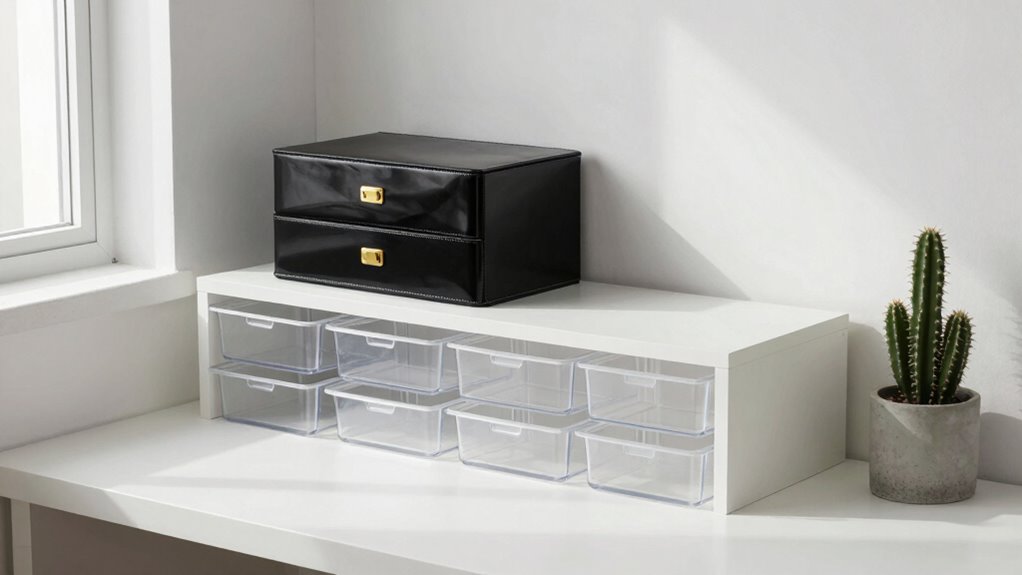
While you might feel tempted to create elaborate organizational systems, keeping your kitchen drawers simple prevents the frustration that comes with overcomplicated solutions.
You don’t need perfect dividers or color-coded sections. Group similar items together: utensils with utensils, gadgets with gadgets.
Keep frequently used items easily accessible. Let less-used tools live deeper in drawers. Don’t overthink placement. Trust your instincts about what belongs where.
Simple systems work because you actually maintain them. Perfect systems fail because they’re too rigid. Your kitchen drawers should serve you, not stress you.
Aim for functional, not Pinterest-worthy. Remember, belonging comes from using your space comfortably, not from having the most organized drawers.
Keep it simple, keep it practical.
Conclusion
You don’t need fancy organizers to create functional kitchen drawers. Use what you already have—cardboard, containers, and trays—to build custom storage solutions. Group similar items together and assign specific zones for daily essentials. Maintain order with quick weekly resets. Keep it simple and practical. Statistics show that households waste an average of 200 hours annually searching through disorganized drawers, making efficient organization a worthwhile investment in time saved.