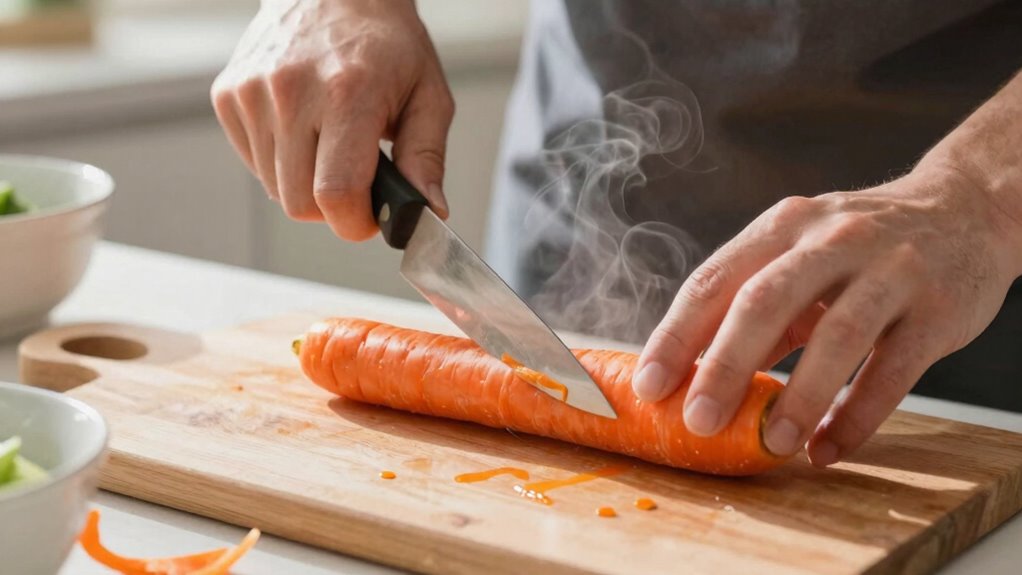
You don’t need perfect knife skills to start cooking, but the right techniques can transform your kitchen anxiety into confidence. While sharp knives might seem intimidating, they’re actually safer than dull ones when you know how to use them. You’ll discover that proper grip, steady cutting rhythm, and simple safety habits make all the difference. Ready to turn your fear into kitchen mastery?
Overcoming Your Knife Fear for Better Cooking
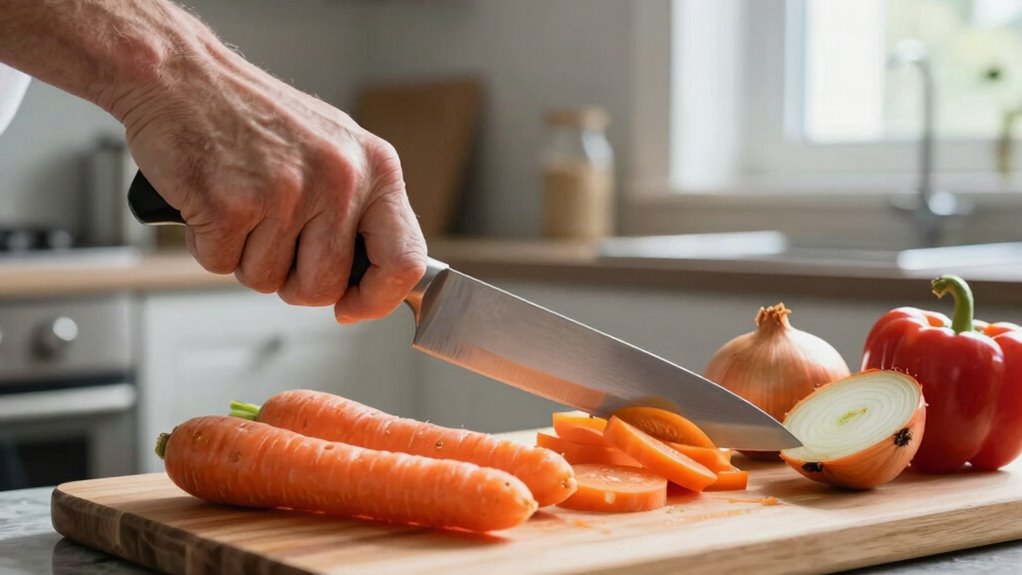
Many home cooks struggle with knife anxiety, but mastering proper knife techniques can transform your entire cooking experience.
You’re not alone in feeling intimidated by sharp blades, yet developing confidence starts with understanding your knife’s purpose. Grip the handle firmly, position your fingers safely, and let the blade do the work.
Practice basic cuts repeatedly until they become natural movements. You’ll discover that proper technique eliminates most accidents while dramatically improving your speed and efficiency.
Soon, chopping vegetables won’t feel like a chore but rather a satisfying rhythm. Your meals will taste better because ingredients are cut uniformly, cooking evenly.
Embrace this essential skill, and you’ll join the community of confident home cooks who’ve conquered their fear.
How to Choose a Safe, Comfortable Knife
You’ll want to select a knife that feels secure in your hand and matches your cooking style.
Consider different grip styles and blade lengths that suit your comfort level and the tasks you’ll tackle most often.
A well-chosen knife makes every cut safer and more precise.
Safe Knife Selection
Choosing the right knife for your kitchen starts with understanding what makes a blade both safe and comfortable in your hand. You want a knife that feels balanced and secure, not too heavy or unwieldy for your grip.
Look for blades with smooth, clean edges that aren’t overly serrated, as these provide better control. The knife should feel solid but not intimidating – you’re building confidence, not wrestling with equipment.
Consider starting with an 8-inch chef’s knife, which offers versatility for most cutting tasks. Avoid knives with damaged or excessively worn blades, as these can slip and cause accidents.
Comfortable Grip Options
While selecting a knife that feels secure in your hand is essential, understanding how different grip styles and handle designs affect your comfort and safety is equally important.
You should test how the knife sits in your palm—does it feel natural or awkward? Handles come in various materials like wood, plastic, or metal, each offering different textures and weights.
Don’t be afraid to grip the knife firmly; a secure hold prevents slipping and builds confidence. Your fingertips should rest comfortably along the handle’s spine.
Some handles feature ergonomic curves that nestle into your hand perfectly. Trust your instincts during testing—your knife should feel like an extension of your hand.
Proper Blade Length
The right grip sets the foundation for everything else, and now it’s time to match that comfort with proper blade length. You don’t need the biggest knife possible – you need the right size for your hand and tasks.
Hold knives with blades ranging from 6 to 8 inches and notice how each feels. Your thumb should rest naturally near the blade’s base without straining. Shorter blades offer better control for detailed work, while longer ones handle bigger cutting jobs efficiently.
Don’t let others pressure you into buying oversized knives that feel unwieldy. Trust your instincts when testing different lengths. A comfortable, properly-sized knife transforms cutting from intimidating to manageable, making you feel confident and capable in your kitchen.
How to Hold a Knife Safely and Correctly
You’re ready to master the fundamentals of knife handling, starting with how you grip and position yourself with your blade.
Your stance and grip form the foundation of all safe cutting techniques, so let’s get these basics right from the start.
With proper knife control, you’ll work faster, safer, and build the confidence to tackle any recipe.
Proper Grip Techniques
Mastering proper knife grip transforms your cooking experience from frustrating to fluid.
You’ll discover confidence when you hold your knife correctly. Grip the handle firmly but not tight, letting your fingers wrap naturally around the handle. Your thumb and forefinger should pinch the blade’s base, creating control and stability.
This pinch grip prevents slipping and gives you precision. Don’t let your fingers dangle or wrap around the blade – that invites accidents. Keep your grip consistent throughout cutting tasks.
You’re not alone in feeling intimidated initially, but proper grip technique makes everything easier. Practice this fundamental skill and you’ll join thousands of confident home cooks who’ve mastered their kitchen tools.
Safe Cutting Stance
One essential step toward becoming a confident cook involves establishing a safe cutting stance that protects you while maximizing efficiency.
Your body positioning directly impacts both your safety and knife control during food preparation.
- Stand with feet shoulder-width apart, creating a stable base that prevents slipping or wobbling while you work.
- Position your non-knife hand in a claw shape, fingertips curled under and knuckles forward, keeping them safely away from the blade’s path.
- Keep your knife hand relaxed but controlled, maintaining a firm grip on the handle while allowing fluid wrist movement.
- Angle your body slightly to the side rather than standing directly behind the cutting board, reducing strain and improving visibility.
This proper stance builds muscle memory that keeps you protected while developing confidence in your kitchen skills.
Knife Handling Basics
Everyone should grip their knife properly to prevent accidents and achieve better control during cutting tasks.
Hold the handle firmly with your dominant hand, wrapping your fingers around the grip while keeping your thumb and forefinger pinched on the blade’s bolster. This pinch grip gives you precise control and reduces fatigue.
Your non-dominant hand guides the food safely. Curve your fingertips under and away from the blade, using your knuckles as a guide. Keep your wrist straight and relaxed throughout the cutting motion.
Practice this grip daily until it becomes natural. You’ll gain confidence quickly when you master proper knife handling techniques that keep you safe.
The Best Cutting Board Setup for Safety
When you’re setting up your cutting board for safe knife work, stability and proper positioning make all the difference in preventing accidents.
You’ll feel more confident and secure when everything’s properly arranged.
- Choose a non-slip cutting board that won’t slide around your counter – bamboo or plastic with rubber feet work perfectly.
- Position your board near your dominant hand so you can maintain natural cutting motions without overreaching.
- Place a damp kitchen towel underneath to create extra grip and prevent dangerous shifting while you work.
- Ensure adequate lighting by positioning your board under bright kitchen lights or near a window where you can clearly see what you’re cutting.
This setup creates a safe, efficient workspace that’ll make you feel like a pro.
How to Master Basic Cuts Without Injury
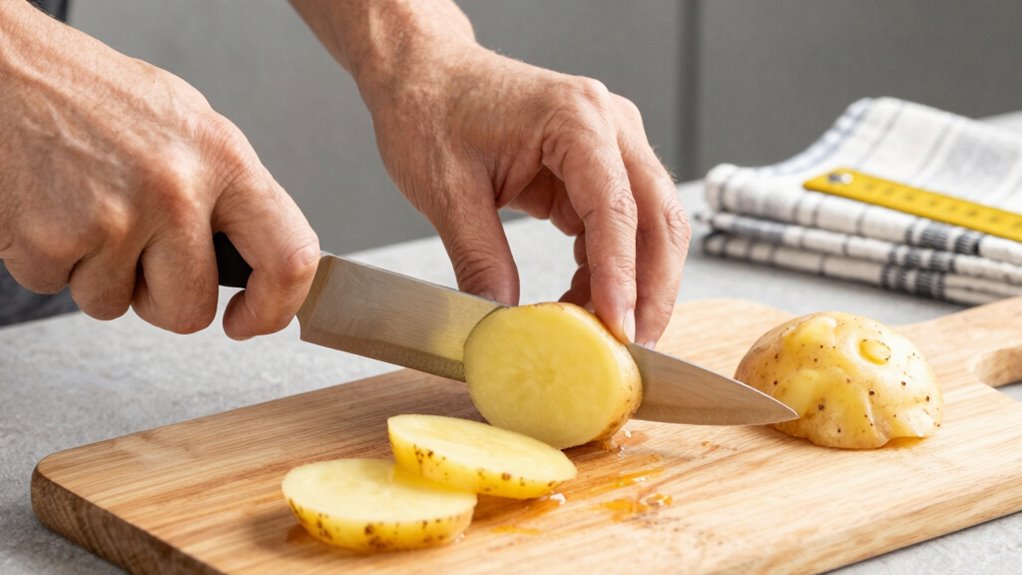
Now that your cutting board is properly set up for safety, you’re ready to focus on the fundamental techniques that will keep your fingers protected while you slice, dice, and chop like a professional.
Keep your fingers curled under and away from the blade at all times. Use your knuckles as a guide, letting them touch the knife’s side for better control. Hold the knife firmly with your dominant hand, keeping your wrist straight.
Make clean, decisive cuts instead of sawing back and forth. Your non-knife hand should form a claw shape, with fingertips tucked safely inward. Practice these movements slowly until they become natural.
How to Prep Vegetables Safely and Efficiently
While you’re mastering those fundamental cuts, you’ll want to apply the same principles to vegetable preparation so you can work quickly and safely through your meal prep.
Keep these key practices in mind:
- Grip your vegetables firmly with your non-dominant hand, tucking your fingertips under and away from the blade while guiding the food.
- Use a stable cutting board that won’t slide around, positioning it near the edge of your counter for better control.
- Keep your knife sharp and maintain a consistent rocking motion, letting the blade do the work without forcing through tough spots.
- Work in batches by grouping similar vegetables together, washing and chopping them all at once to build rhythm and speed.
You’ve got this!
How to Safely Slice Herbs and Delicate Foods
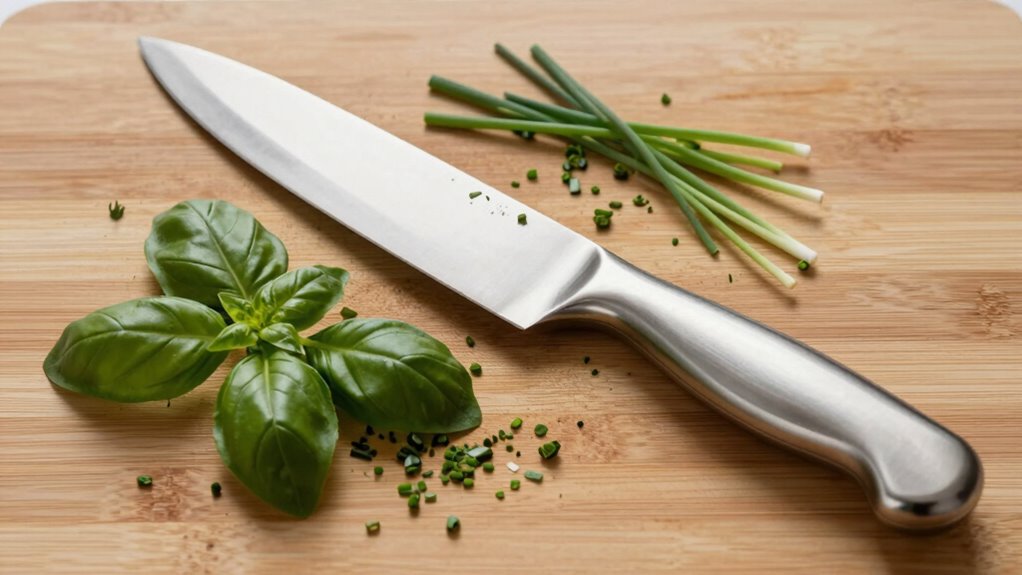
Mastering the art of slicing herbs and delicate foods requires a gentle touch and proper technique to preserve their flavor and texture.
You’ll want to use a sharp paring knife or chef’s knife with a light, rocking motion. Place your herbs between two pieces of parchment paper to prevent bruising and slipping. Hold the knife blade flat against the cutting board, using your fingertips to guide the herbs. Slice with quick, confident movements rather than sawing.
For delicate items like basil or cilantro, stack leaves and roll them tightly before cutting. This prevents wilting and guarantees even slices. Trust your knife’s sharpness to do the work. Your herbs should look fresh and vibrant, not mashed or discolored.
Practice makes perfect, and soon you’ll feel confident handling any delicate ingredient.
Avoid These Common Knife Mistakes That Cause Accidents
Having honed your technique with herbs and delicate foods, you’ll want to turn attention to safety practices that prevent kitchen mishaps.
These common mistakes can quickly lead to accidents that ruin your cooking flow and confidence.
- Don’t rush through cuts – take your time and focus on each slice instead of hurrying to finish dinner prep.
- Keep your knife sharp – dull blades require more pressure and slip easily, while sharp knives glide through ingredients safely.
- Mind your non-knife hand – keep fingers tucked under and away from the blade path, creating a claw shape that protects your fingertips.
- Clean up immediately – wipe spills and put away ingredients right away to prevent slips and maintain clear cutting space.
These habits protect both you and your kitchen rhythm.
Build Confidence With Safe Knife Practice
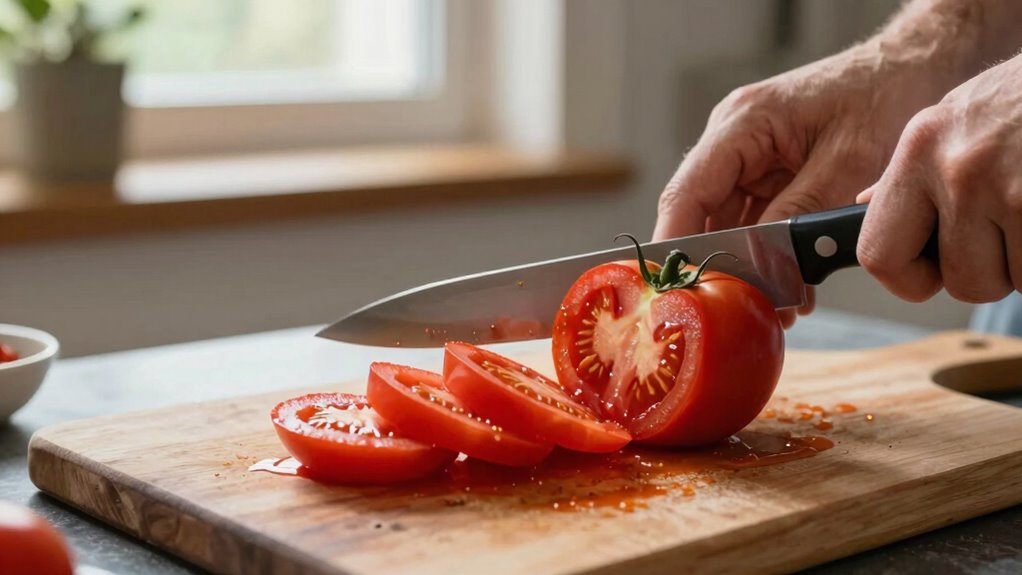
Building confidence with safe knife practice starts with understanding that proper technique protects you while making prep work more efficient. You’ll feel more secure when you grip the knife firmly with your dominant hand, wrapping your fingers around the handle just above the blade.
Keep your other hand’s fingertips tucked under, creating a claw shape while guiding food. Practice this positioning repeatedly until it feels natural.
Start with softer vegetables like zucchini or cucumber, which require less pressure and build muscle memory safely. Focus on maintaining steady, controlled movements rather than rushing through cuts.
Conclusion
You’ve got this! Remember, every pro chef was once afraid of their knife. Start small, practice regularly, and watch how your confidence blooms. Soon you’ll be slicing through meals like a natural, wondering why you ever felt scared. Your kitchen adventures await!